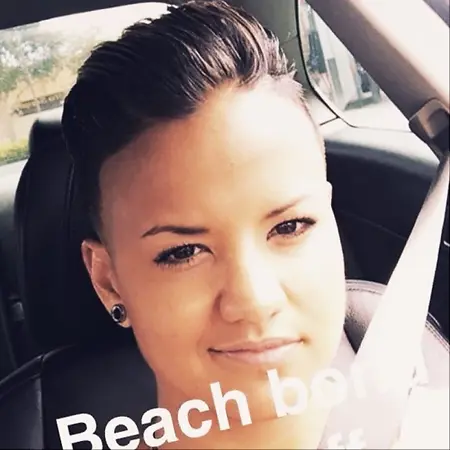
Her Story
About Maria-Elizabeth
Maria-Elizabeth Cardona is a dedicated Critical Care Registered Nurse specializing in Neuro Intensive Care and emergency response at Cleveland Clinic Martin Health in Port St. Lucie, Florida. With over six years of nursing experience, she has developed expertise in managing complex and life-threatening conditions, particularly in neurological and critical care environments. Maria began her nursing journey shortly before the global challenges of the COVID-19 Pandemic, gaining invaluable experience while caring for high-risk patients and strengthening her ability to respond effectively in demanding clinical situations. Throughout her career, Maria has held multiple specialized roles, including Neuro ICU Nurse, and Medical Emergency Team (MET) RN; a Rapid Response Nurse. Her work involves responding to stroke alerts, code blue events, and other emergency situations across hospital facilities, administering advanced cardiac life support medications and stabilizing critically ill patients for transfer to higher levels of care. Earlier in her career, she worked in oncology-hematology, where she became certified to administer chemotherapy and provided compassionate care to patients facing complex diagnoses. Her clinical background reflects a broad skill set in critical care nursing, emergency response, chemotherapy administration, and patient advocacy. Maria earned her Associate of Science in Registered Nursing from Indian River State College, where she built the academic foundation for her clinical career. Known for her calm presence and strong patient-centered philosophy, she emphasizes honest communication, teamwork, and compassionate care in every interaction. As she continues to advance her professional path, Maria is pursuing opportunities that align with her long-term goal of specializing in trauma and flight nursing, where she can expand her impact in high-acuity and emergency medical settings.
Her Interview
Ten minutes with Maria-Elizabeth
01What do you attribute your success to?
I attribute my success to my emotional resiliency and ability to work well under pressure, using my critical thinking and judgment. My strong communication skills and being a team player have been crucial, along with my commitment to learning and adaptability. I've learned to have confidence but stay humble, and most importantly, to be an advocate for my patients and families. This dedication earned me a Guardian Angel Pin, which came from a family who was so grateful for the care we provided. My coworker Bonnie and I worked well as a team, and we were very passionate about what we did. We thoroughly cared about these people, asked them about their families, their dogs, whether meetings went well, and really connected with them on a human level. That recognition showed me that when you truly care and go the extra mile, it makes a profound difference.
02What’s the best career advice you’ve ever received?
The best career advice I've received is to never limit yourself and never say you can't do something. Always know your scope of practice and understand your roles. Know that there's always somebody there to reach out to and help you answer the questions you need to know. Understand that administration is administration, and your job is your job, and everybody plays their part. As long as you come to it with full force and honesty, and you're ready to be the student, or be the teacher, or be the instructor, whatever the case may be, you'll always have some successful niche. And most importantly, don't skip steps. Don't go from a novice nurse to an ICU nurse. Take your time at an acute care floor, learn how to handle six patients, learn how to assess them and put your priorities of care in the right order. Don't skip the licks, because it's only going to increase burnout.
03What advice would you give to young women entering your industry?
My advice to young women entering nursing is to look for the nurse who will challenge you, not your best friend. Don't look for the easy nurse to be your preceptor. Look for that nurse that will ride you, call you out, and ask where you went wrong, but not in a demeaning way. Find someone who will help you learn from mistakes so that when you're on your own, you can take a moment, breathe, and follow the proper steps without making a critical mistake. Learn to adapt, keep learning and stay humble, and keep challenging yourself for growth. Know that nursing is a team effort. It's not a one-person job. You have to look out for the people next to you, no matter what. If you start that culture early of helping each other, then people will follow suit. Don't walk past call lights or beeping pumps thinking it's not your problem, because everybody's going to have a moment with a patient where they're going to need an extra hand. And please, don't all try to be ARNPs right away. Earn your rank, earn your licks, and you will learn so much and see the world.
04What are the biggest challenges or opportunities in your field right now?
The biggest challenges in critical care nursing are that it can be emotionally taxing managing high acuity complex patients. There's a lot of pressure and long hours for constant monitoring, and the shifts are unpredictable. You give yourself in every aspect to your patients all day long, and they are either trying not to die, or they are going to die, or they're coming in with a million questions. Before you leave, you become completely almost disassociated, so it's really important on your days off that you find something that helps you regain that energy. However, it's a very rewarding career with many opportunities. You truly get to know that you are part of a larger function helping individuals learn how to adapt to their new lives and cope with their new deficits. There are opportunities for advanced clinical skills, career advancement paths, and the ability to make a deep impact on patients and their families. There's also that moment of human connection when a patient finally trusts you and looks at you and goes 'okay, I'm okay,' and that's something you can't get from anything else.
05What values are most important to you in your work and personal life?
The most important values to me are having really strong ethical and moral values that you hold. I tell people that when you come into a hospital, you need to keep your religious beliefs and denominations separated from what you're doing with patients. Everybody there is different and might believe something different. We are not here to pass persecution. If a family wants to pray and you are not Christian, just close your eyes and give a kind thought. That's it. If your convictions are so strong that you need to carry them with you everywhere you go in such a way, then nursing is not the place for you. We are here to be open to any way that we can reach patients, and the ultimate goal is to help them heal or to help them pass away with dignity. You also have to be honest. If you mess up and make a mistake, just say it. I made a mistake. Accountability is a big thing. You will never stand before the nursing board and lose your license because you are accountable and you made a mistake. The patient comes first, and you need to make sure that you're honest when you make a mistake.
Join Influential Women and start making an impact. Register now.