
Exploring how organizations can support middle managers in AI implementation while preventing burnout through systemic resilience, psychological safety, and thoughtful leadership practices in healthcare.
“
From chasing titles to chasing purpose, I redefined success as the impact created for others by opening doors for nurses, patients, and future generations to rise.
Maria Reila Molina · In Her Own Words
Her Story
About Maria
Dr. Maria Reila (Belarmino) Molina, DNP, PhD (h), ACNP-BC, AGACNP-BC, FAANP, is an internationally recognized nurse leader, clinician, educator, and scholar with over three decades of nursing experience and 17+ years specializing in cardiology, advanced heart failure, and heart transplantation. She currently serves as an Advanced Practice Nurse in Heart Failure at Virtua Health and teaches the next generation of healthcare leaders at Columbia University, CUNY–Hunter-Bellevue, and Rutgers University.
A Fellow of the American Association of Nurse Practitioners and former President of the International Transplant Nurses Society, Dr. Molina has contributed to more than 150 publications, presentations, and abstracts and has presented internationally across more than 20 countries. Her work bridges clinical excellence, genomics and precision medicine, implementation science, informatics, leadership, and health equity.
From her beginnings in public health in the Philippines to advanced cardiovascular practice, academia, and global leadership, her mission remains clear: translate science into practice, develop the next generation of leaders, and bring precision healthcare to the communities that need it most.
Her Interview
Ten minutes with Maria
01What do you attribute your success to?
Persistence, purpose, and the courage to create my own opportunities. When doors did not open, I did not wait—I built new ones through education, volunteerism, scholarship, and leadership.
My journey from board member to President of the International Transplant Nurses Society reinforced one powerful lesson: Never let someone else’s inability to see your potential become your limitation.
Roadblocks did not stop my journey. They redirected my energy—and became the runway for something greater.
02What’s the best career advice you’ve ever received?
Never give up on what truly matters to you. Careers rarely follow a straight path—there will be closed doors, unexpected detours, and people who may not see your potential. Stay anchored to your values and purpose, because they will guide you when the path is uncertain.
I have learned that rejection is not always a verdict; sometimes it is a redirection toward something greater.
Know your worth. Stay true to your purpose. Keep moving forward—and never let someone else’s “no” become the limit of your “yes.”
03What advice would you give to young women entering your industry?
I would make it more powerful, polished, and inspirational—while keeping your voice and turning APA: Assess. Purpose. Action. into the memorable centerpiece:
What advice would you give to young women entering your industry?
Stop comparing your journey to someone else’s. Your path was never meant to look like theirs.
I always begin with assessment: What do you truly want? Not what others expect of you. Not what looks impressive on paper. What matters deeply enough that you are willing to work, sacrifice, and persevere for it?
I call my philosophy APA: Assess. Purpose. Action.
Assess what you want and recognize the strengths you bring.
Purpose gives meaning to the destination—know why it matters.
Action turns possibility into reality—because purpose without action remains only a dream.
That philosophy shaped my own journey. When I discovered my passion for cardiology, I pursued it relentlessly. Along the way, mentors, opportunities, and unexpected connections appeared—not because the journey was easy, but because I kept moving toward something I believed in.
There will be roadblocks. You may enter highly competitive environments where your ambition is misunderstood, your potential is underestimated, or opportunities do not come when you believe you have earned them. Do not allow rejection to waste your energy. Redirect it. I redirected mine into volunteerism, scholarship, professional leadership, teaching, and service—and some of those “detours” ultimately opened doors I could never have planned.
My success was never accidental. I worked for it. I stayed disciplined. I kept showing up.
So my advice to young women is simple: Never surrender something deeply valuable to you simply because someone else cannot yet see your potential. Take responsibility for your growth. Seek mentors and sponsors. Create opportunities when doors remain closed. Stay accountable to your purpose—and keep taking action.
You do not need everyone to believe in you before you begin.
You need to believe enough to begin—and the discipline to keep going.
APA: Assess. Purpose. Action.
Know what you want. Know why it matters. Then move—because dreams do not become destinations until you act.
04What are the biggest challenges or opportunities in your field right now?
One of healthcare’s greatest challenges is not only the nursing shortage—it is the shortage of nurse educators who prepare the next generation. We cannot solve a workforce crisis if we do not have enough faculty to educate the nurses waiting to enter the profession. This is one reason I have increasingly expanded my work into academia: the future of nursing begins with who we prepare today.
My PhD (h) work in Healthcare Management has further shaped how I view this challenge—not simply as a staffing problem, but as a systems and workforce-design issue. We must rethink how healthcare organizations develop talent, support resilience without normalizing burnout, integrate technology and AI responsibly, and build sustainable pathways from education to clinical practice and leadership.
At the same time, I believe there has never been a more exciting time to enter nursing. Nursing is no longer defined by a single career path. A nurse can become a clinician, researcher, educator, executive, informaticist, entrepreneur, policy leader, or expert in genomics, AI, and precision health. Even professionals entering nursing as a second career can bring expertise from finance, technology, business, or data science and transform how healthcare is delivered.
Nurses represent the backbone of the healthcare workforce—but our opportunity now is to become even more: not only the workforce that delivers healthcare, but the leaders who redesign its future.
05What values are most important to you in your work and personal life?
At the center of my values is humanity—putting people first. In my clinical work, that means translating evidence into practice and bridging research, informatics, and bedside care to improve outcomes, reduce unnecessary variation, and advance value-based healthcare. But the Quadruple Aim reminds us that excellent healthcare is not only about outcomes, experience, and cost—it also requires caring for the people who provide that care. We cannot sustainably care for others if we continually sacrifice ourselves.
Intersectionality has also shaped how I see leadership and belonging. We each enter the workplace carrying multiple identities and experiences—generation, culture, immigration history, gender, profession, education, and socioeconomic background. These intersections influence how we experience opportunity, adversity, and belonging. Inclusive leadership means recognizing those differences as strengths and ensuring that every voice has value, regardless of title or hierarchy.
As a Gen Xer and first-generation immigrant, I learned independence, resilience, and an intense work ethic. For many years, being constantly busy felt synonymous with being successful. But younger generations—including my son—have taught me something equally important: achievement without balance is not sustainable success. Work matters deeply, but so do family, health, relationships, and the life we build beyond our titles.
That is why I value humility, equity, lifelong learning, service, and reciprocity. I may mentor younger generations, but they mentor me too. Leadership should never be a one-way transfer of wisdom.
The best workplaces are not defined by hierarchy, but by humanity—where we learn across generations, honor our intersecting identities, care for one another, and recognize that everyone has something to teach and something to learn.
Her Content Hub
Articles by Maria
The Real AI Challenge Isn't Technology—It's Leadership.
Why AI Implementation Fails Without Supporting the People Who Lead It
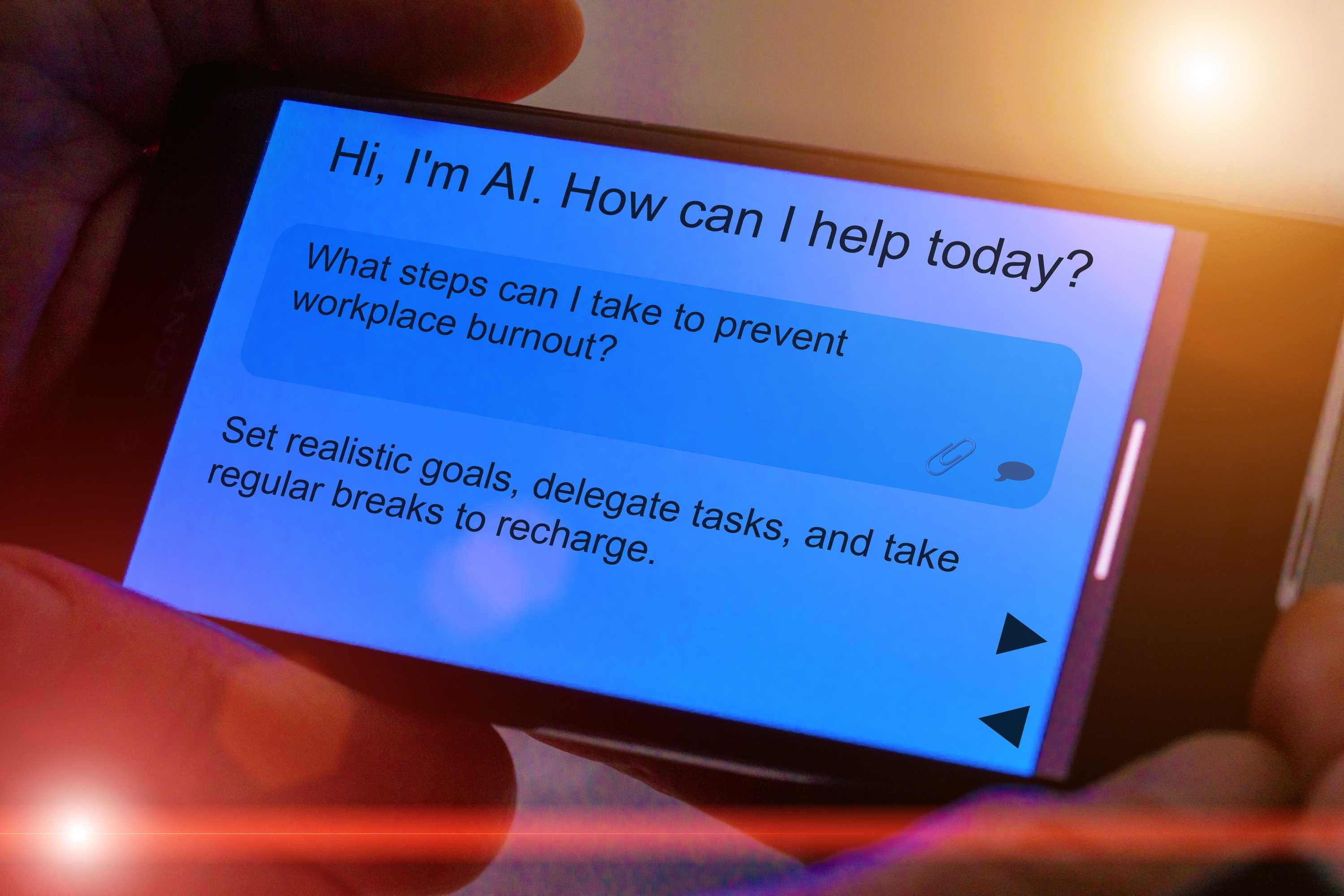
Everyone is talking about AI. Few are talking about the people expected to make it work.
A recent Harvard Business Review article by Julia Shin and Sandra J. Sucher argues that successful AI adoption depends on middle managers—the leaders tasked with implementing AI while simultaneously maintaining quality, supporting their teams, and delivering results.
Organizations that fail to invest in these leaders risk turning AI into another source of workplace overload rather than a catalyst for organizational transformation.
This resonates deeply with my work on the Burnout-Resilience Paradox.
Technology does not create resilience. Systems do.
When organizations layer AI on top of already overwhelming workloads without providing protected learning time, psychological safety, clear governance, and leadership support, they inadvertently increase the burden on the very people expected to lead change. The result is compensation rather than resilience—high-performing professionals quietly absorbing additional cognitive and emotional demands until performance, engagement, and well-being begin to erode.
AI implementation is not simply a digital transformation. It is a human transformation.
Resilient organizations recognize that sustainable innovation requires:
- ✅ Protected time to learn and experiment.
- ✅ Recognition for coaching, collaboration, and knowledge sharing.
- ✅ Clear governance that reduces uncertainty.
- ✅ Leaders who are empowered—not overwhelmed—to guide their teams through change.
As nurses and healthcare leaders, we must remember:
The future of AI in healthcare will not be determined by algorithms alone. It will be determined by how well we support the people who use them.
As I continue developing the Burnout-Resilience Paradox and the Molina Compensation-Collapse Framework™, I am increasingly convinced that resilience is not an individual trait—it is an organizational outcome created through thoughtful leadership, healthy work systems, and psychological safety.
When we invest in people, AI becomes an amplifier of human potential—not human exhaustion.
Reference: Shin, J., & Sucher, S. J. (2026, July 16). AI Adoption Is Overloading Your Middle Managers. Harvard Business Review.
#Leadership #ArtificialIntelligence #HealthcareLeadership #Burnout #Resilience #NursingLeadership #OrganizationalPsychology #FutureOfWork #PsychologicalSafety #ImplementationScience #DigitalTransformation #MiddleManagement #AI #BurnoutResilienceParadox #MolinaFramework
Explore how emotional regulation, not suppression, builds true resilience in leaders. Discover why vulnerability and empathy strengthen organizations while burnout stems from flawed systems, not individual weakness.
The Leadership Mask: Where Strength Meets Silent Suffering
How emotional regulation—not suppression—builds authentic resilience and stronger organizational cultures.

The Burnout-Resilience Paradox: Why Strong Leaders Must Stop Hiding Their Humanity
Leadership has long rewarded the image of the unshakable leader—the executive who never cries, the clinician who never falters, the manager who carries every burden without complaint.
But that is not resilience.
That is often the beginning of burnout.
My work on the Burnout-Resilience Paradox suggests that organizations frequently mistake emotional suppression for strength. High-performing leaders often become experts at compensating—absorbing stress, protecting their teams, and maintaining performance—until the hidden cost becomes emotional exhaustion.
The goal of leadership is not to eliminate emotion.
It is to regulate it.
Ancient Stoic philosophers such as Marcus Aurelius and Epictetus never advocated emotional numbness. They taught mastery over our responses, not denial of our humanity. Modern neuroscience supports this perspective: leaders who pause, reflect, and regulate their emotions make better decisions, build greater trust, and foster psychological safety.
Conversely, leadership rooted solely in control, emotional distance, and relentless performance may produce short-term results but often erodes engagement and well-being over time. Power may secure compliance, but empathy earns commitment.
This is where genetics, neuroscience, and organizational psychology converge.
Our temperament may influence how we experience stress, but it does not determine how we lead. Environment, recovery, healthy relationships, sleep, nutrition, mindfulness, and supportive organizational cultures all shape resilience. Biology creates predispositions; leadership cultivates outcomes.
The healthiest leaders do not suppress emotion.
They channel it.
They combine empathy with boundaries, compassion with accountability, and vulnerability with emotional discipline.
As organizations embrace artificial intelligence, digital transformation, and constant change, we should stop asking leaders to wear heavier masks.
Instead, we should build systems where leaders do not have to hide behind them.
Because burnout is rarely an individual failure.
It is often the predictable outcome of organizational design.
The strongest leaders are not those who feel the least.
They are those who have learned to carry emotion without being consumed by it.
Leadership is not about hiding your humanity. It is about mastering it.
Selected References
- Aurelius, M. Meditations.
- Epictetus. The Enchiridion.
- Goleman, D. (1995). Emotional Intelligence.
- Gross, J. J. (2015). Emotion regulation: Current status and future prospects. Psychological Inquiry, 26(1), 1–26.
- Meaney, M. J. (2010). Epigenetics and the biological definition of gene × environment interactions. Child Development, 81(1), 41–79.
- Sapolsky, R. M. (2017). Behave: The Biology of Humans at Our Best and Worst.
Explore how ambitious nurse leaders can transition from achievement-driven metrics toward purpose-driven leadership, preventing burnout through strategic recalibration, energy management, and legacy-focused impact in healthcare systems.
Recalibration and Redirection: When Ambition Evolves into Purpose-Driven Leadership
From Burnout to Purpose: Recalibrating Ambition in Advanced Nursing Leadership

Abstract
Ambition has long been a defining characteristic of high-performing nurse leaders. However, as careers advance, the same drive that once fueled success may lead to misalignment, fatigue, and decreased fulfillment. This article reframes this experience not as burnout, but as a critical phase of professional evolution, recalibration, and redirection.
Drawing on contemporary perspectives on high achievement and work orientation, this paper explores how nurse leaders can transition from achievement-based metrics toward purpose-driven, high-impact leadership. Practical strategies for energy management, role redesign, and redefining success are discussed to support sustainable leadership and long-term influence in complex healthcare systems.
Keywords: nurse leadership, career development, professional identity, burnout, purpose-driven leadership, advanced practice nursing, implementation science
Introduction
Ambition is foundational to leadership development in nursing. Early career trajectories often emphasize productivity, responsiveness, and achievement, reinforcing external markers of success such as promotion, recognition, and clinical output.
However, as nurse leaders progress, these metrics may no longer align with evolving professional values or desired impact. Emerging discourse suggests that high achievers may experience exhaustion not from diminished capacity, but from sustained misalignment between effort and meaning (Knight, 2026). This phenomenon is frequently mischaracterized as burnout. Instead, it represents a transition point requiring recalibration of priorities and redirection of professional energy.
Recalibration: From Output to Alignment
Recalibration is the process of reassessing how work aligns with personal and professional values. Early success is often driven by volume and performance; over time, these strategies may become unsustainable or insufficient in producing meaningful fulfillment.
Rebecca Knight (2026) suggests that changes in motivation may reflect either diminished capacity or evolving sources of engagement. For experienced nurse leaders, the latter is more common. The shift involves moving from asking, “How much can I do?” to “Where can I create the greatest impact?”
This transition reflects a movement from efficiency to intentionality. Recalibration requires:
- Re-evaluating definitions of success
- Identifying high-impact activities
- Letting go of roles or expectations that no longer align
Redirection: From Performance to Purpose
Following recalibration, redirection focuses on aligning professional roles with purpose-driven outcomes. This stage represents a maturation of leadership, characterized by influence that extends beyond individual performance.
Nurse leaders often redirect their efforts toward:
- Mentorship and workforce development
- Evidence-based practice and Implementation Science
- System-level innovation and policy influence
This aligns with the concept of work as a “calling,” where intrinsic meaning sustains long-term engagement (Knight, 2026). Ambition is not diminished but refined—shifting from the accumulation of achievements to purposeful contribution.
Energy as a Strategic Resource
A critical component of recalibration is recognizing energy as a finite and strategic resource. Sustained high performance without intentional energy management leads to diminishing returns.
The concept of job crafting—reshaping one’s role to emphasize meaningful tasks—provides a practical framework (Knight, 2026). For nurse leaders, this may include:
- Increasing time dedicated to mentoring or teaching
- Leading strategic initiatives
- Reducing low-value administrative tasks
Effective leadership requires not balance, but alignment between energy expenditure and impact.
Redefining Success: Internal Metrics Over External Validation
Traditional markers of success in healthcare often emphasize productivity and external validation. However, reliance on these measures may contribute to chronic dissatisfaction and misalignment.
Recalibrated leadership prioritizes internal metrics, including:
- Patient outcomes and quality improvement
- Advancement of the nursing profession
- Development of future leaders
- Contributions to health equity and systems change
This shift fosters autonomy, reduces dependence on external validation, and strengthens professional identity.
From Excellence to Legacy
The culmination of recalibration and redirection is the transition from excellence to legacy. While excellence focuses on individual performance, legacy emphasizes sustained impact beyond the individual leader.
For nurse leaders, legacy-building includes:
- Establishing enduring programs and systems
- Mentoring the next generation of clinicians
- Advancing innovations that reshape clinical practice
This perspective reframes leadership from personal achievement to collective advancement.
Implications for Advanced Practice Nursing
Advanced practice nurses operate at the intersection of clinical care, leadership, and systems influence. Recalibration and redirection are essential for sustaining effectiveness in these roles.
Key strategies include:
- Conducting regular energy and role audits
- Prioritizing high-impact activities
- Leveraging leadership platforms for broader influence
- Aligning career decisions with long-term purpose
- Integrating implementation science frameworks to maximize impact
These approaches support sustainable leadership and enhance contributions to complex healthcare environments.
Conclusion
Experiencing exhaustion amid sustained ambition does not necessarily indicate burnout. Instead, it may signal a need for recalibration and redirection. For nurse leaders, this transition represents an opportunity to refine ambition, align work with purpose, and expand influence.
Ambition evolves—not by diminishing, but by becoming more intentional, strategic, and impactful.
Reference
Rebecca Knight. (2026, April 16). When your ambition starts to exhaust you. Harvard Business Review.
Join Influential Women and start making an impact. Register now.