Influential Woman · Professional Coaching | Counseling | Higher Education | Blindness and Vision Loss Advocacy
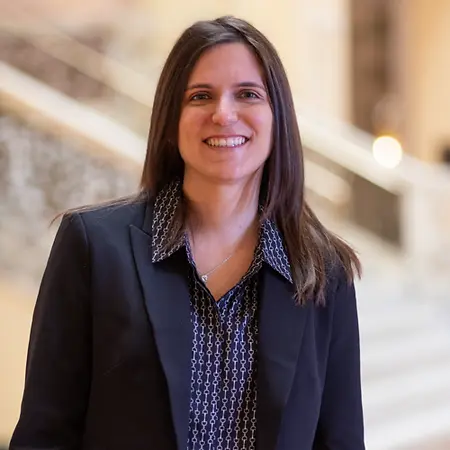
Mariagrazia Buttitta, MA, NCC
Motivational Speaker | Career Coach & Counselor | Author | Mental Health, Disability & Cone-Rod Dystrophy Advocate, Embracing Your Differences
NJ 08527
Her Story
About Mariagrazia
Mariagrazia Buttitta, MA, NCC, is a National Certified Counselor, career coach, motivational speaker, author, and disability advocate based in New Jersey. Originally from Sicily, Italy, Mariagrazia grew up with cone-rod dystrophy, a rare, inherited eye disease that profoundly shaped her early experiences and perspective. After moving to the United States in her twenties, she connected with vision support services and began pursuing new academic and professional opportunities.
Mariagrazia earned her bachelor’s degree in Communication Studies from The College of New Jersey and her master’s degree in Clinical Mental Health Counseling. She currently serves as a Career Coach at Monmouth University, where she works with students and alumni on career exploration, résumé development, interview preparation, and professional growth.
She is also the author of Now I SEE: How I Battled Blindness, Mental Illness, an Espresso Habit and Lived to Tell the Tale, in which she shares her experiences with vision loss and mental health challenges. Through her writing and speaking, Mariagrazia encourages others to recognize their strengths, persevere through challenges, and pursue meaningful goals.
As a passionate disability and mental health advocate, Mariagrazia is committed to challenging misconceptions about vision loss and promoting greater understanding, inclusion, and self-acceptance. Through her advocacy platform, Embracing Your Differences, she speaks to schools, universities, and organizations about resilience, disability awareness, mental health, and the power of embracing what makes each person unique.
Drawing on her lived experience, counseling expertise, and passion for storytelling, Mariagrazia inspires audiences to move beyond perceived limitations, embrace their differences, and recognize their potential.
Her Interview
Ten minutes with Mariagrazia
01What do you attribute your success to?
I attribute my success to strong family support, faith, resilience, determination, and the self-awareness I have developed throughout my life. Growing up with vision loss brought challenges and uncertainty, but those experiences taught me to adapt, persevere, and grow through difficult moments. My mother has been one of my greatest sources of support, always encouraging me to take risks and believing in my potential, even when I struggled to believe in myself. I was also motivated by moments when others doubted me. Rather than letting those doubts define me, I learned to use them as motivation to work harder and pursue the goals and opportunities that mattered most to me. Therapy has also played an important role in helping me better understand myself, navigate difficult experiences, and develop healthier ways to cope with setbacks, bullying, and mental health challenges. I have learned that strength also means being willing to admit when you are not okay. It is easy to scroll through social media and see highlight reels of lives that look perfect, while the harder moments—such as anxiety, depression, and uncertainty—often remain behind the scenes. It takes courage to be honest when you are not simply “fine.” Resilience does not mean never facing difficulties; it means continuing to grow through them. Today, I measure success not only by my accomplishments but also by my ability to use my experiences to help, encourage, and advocate for others.
02What’s the best career advice you’ve ever received?
The best career advice I’ve ever received is to find work that gives you a sense of purpose and fulfillment. As cliché as it may sound, when you love what you do, it doesn’t always feel like “work”—not because it is easy, but because it has meaning. I moved from Sicily to the United States, learned to navigate life with vision loss and personal challenges, and eventually found a career that combines my experiences, education, and passion for helping others. Since we spend so much of our lives working, I believe it is important to find something that both challenges and fulfills us. Just as importantly, the right work environment can make all the difference. Feeling accepted, valued, and empowered to be yourself matters. As a career coach, I love inspiring students to pursue their dreams and reach their full potential, while showing them that challenges do not have to define what they can achieve. My students and colleagues often tell me they forget about my disability, which I consider one of the greatest compliments I can receive. To me, it means they see me for who I am and recognize my abilities and the impact I can have on others. Living with vision loss has taught me that meaningful work is not about having a perfect path—or finding one perfect “dream job.” It is about recognizing your strengths, continuing to learn, and finding a place where you can contribute, grow, and feel valued. What others once saw as a disability, I now see as one of my greatest abilities and superpowers.
03What advice would you give to young women entering your industry?
My advice to young women entering this industry—or any industry, for that matter—is to be persistent and stay committed, even when faced with setbacks or rejection. Not getting it right the first time is part of the process, and being told “no” can often be a stepping stone rather than a roadblock. I once heard someone say that rejection can redirect us toward greater opportunities, and that really stuck with me. It’s important to surround yourself with people who believe in you, but it’s equally important to believe in yourself. Some of our greatest growth happens when we are willing to step outside our comfort zone and take a chance on ourselves. People will always have doubts or opinions about what you’re capable of, but don’t let them shake your confidence. My experiences with bullies and critics have taught me to keep my head held high, not to seek others’ approval, and to focus on becoming the best version of myself. If you stay true to who you are, you can take pride in the person you are becoming.
04What are the biggest challenges or opportunities in your field right now?
One of the biggest challenges in my field is helping people better understand the different experiences of blindness and disability and challenge misconceptions, such as the assumption that someone who is blind must “look blind.” Blindness exists on a spectrum. About 85% of people with eye disorders have some remaining sight, while only about 15% are totally blind. My vision loss includes day blindness, legal blindness, nystagmus, photophobia, and color blindness, so bright or changing lighting, glare, and unfamiliar environments can make it much harder for me to see and navigate. Because of my light sensitivity, I wear sunglasses and use my white cane, Casper, when needed to navigate safely and independently. As someone with cone-rod dystrophy, I may be able to read large print or ride a bike while still struggling to recognize faces or navigate certain environments. People sometimes assume I’m faking it because I may not fit their traditional image of blindness. Having usable vision does not make my blindness or the challenges I experience any less real. These experiences have shaped the way I approach my work as a career coach. I help students and professionals recognize their strengths, build confidence, and navigate a changing job market. For people with disabilities, that can also mean learning to advocate for themselves and navigate accessibility and accommodations. As AI continues to change the way we work, career development is becoming more about adapting, communicating your value, and finding meaningful opportunities. Ultimately, I hope to increase understanding, promote inclusion, and help people see possibilities they may not have thought possible.
05What values are most important to you in your work and personal life?
The values that are most important to me in both my work and personal life are family, faith, gratitude, self-belief, and authenticity. My family loves me for who I am and believes in me like no one else, while my faith gives me strength, especially on the days when I find myself asking God, “Why me?” Those moments challenge me, but they also remind me of the strength I have developed and the importance of continuing to move forward. I also value education, self-care, and supporting others. Living with cone-rod dystrophy has shaped many of these values and taught me that challenges can also lead to growth. I would not be the person I am today without the experiences and obstacles I have faced—and continue to face—along the way. People often ask me, “Wouldn’t you want full sight?” The honest answer is no, because if I had the chance to see the world the way most people do, I might have missed more than the naked eye can ever see—a life full of vision beyond sight.
Join Influential Women and start making an impact. Register now.