Her Story
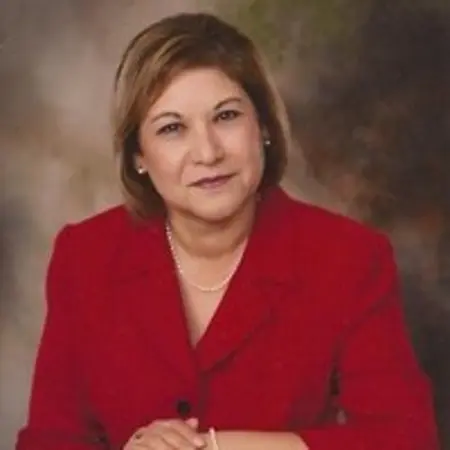
About Maria Isabel
Maria Isabel Ibarra is a seasoned public service professional and community leader with more than 25 years of experience serving residents across the State of Texas. Her career began in the legal field, where she worked as a paralegal supporting low-income clients through legal aid services, including immigration assistance, administrative hearings, and public advocacy. She later advanced through private law firms and into the Texas Attorney General’s Office as an investigator, where she managed complex caseloads, prepared cases for court, and earned recognition for her outstanding performance. Maria concluded her public service career as a Senior Disability Examiner, applying federal regulations to evaluate Social Security Disability claims while mentoring and training new staff. Following her retirement, Maria has dedicated her time and energy to community engagement, volunteerism, and education. Known for her exceptional organizational skills and ability to mobilize others, she has led volunteer initiatives, coordinated fundraising efforts, and supported numerous civic and community programs. During the COVID-19 pandemic, she organized a volunteer sewing team that produced and donated over 900 masks to local organizations, demonstrating her commitment to service and her ability to respond to community needs with creativity and leadership. In addition to her public service and volunteer work, Maria is a respected sewing instructor and costume maker specializing in historical period garments. She teaches through workshops, summer camps, and one-on-one instruction, and contributes her expertise as a judge for regional sewing and handwork competitions. A published author, she has written on the history of the paper pattern industry and a history of a local textile mill reflecting her deep passion for textile arts. Maria continues to blend her professional expertise, creative talents, and dedication to community service to make a lasting impact in both her local community and beyond.
Her Interview
Ten minutes with Maria Isabel
01What do you attribute your success to?
I attribute my success to my mother. She always had this way of saying with her little accent, "you have to try mija." She called me mija, which means "my daughter" in Spanish. And sometimes I would think, okay, I have to try, I have to try, and then I succeeded. For example, when I started fundraising. I thought I couldn't organize an event. But then it started becoming easy. So then I kept fundraising and then helped fundraise for other organizations and I enjoyed it. Mom always said, you have to try, you have to educate yourself, you never stop learning. You never stop learning something new, and sometimes, people don't want to learn anything new, they just want to do the least amount of thinking or effort. You have to challenge yourself. You can't just be stagnant. You have to continuously challenge yourself to keep your mind alert and your body active.
02What’s the best career advice you’ve ever received?
I guess, for starters, was to make sure and get an education. Back in the 70s, after I graduated high school, there were so many young girls opting to get married. I wanted to do other things before I decided to settle down and get married. I didn't get married until I was in my late 20's because I was trying to finish my education, working as a paralegal, making an income, paying for my car and I eventually buying my own home. People need to get an education. My degree did not necessarily coincide with the legal profession because my actual ambition was to be a Foreign Service Officer. I think an education helps you in the long run. At least a minimum of a bachelor's degree.
03What advice would you give to young women entering your industry?
. Start from the bottom, because I knew some ladies that were secretaries, went to paralegal school, and eventually filled a vacancy as paralegals. They finished their education, applied, and they gave them the job. And they turned out to be very good paralegals, even though they started from the bottom. Consider what else you can do. Office manager, HR, try to move up and advance. In other words, try to advance in your career. I've worked with people that were secretaries their entire life, and I'd ask them, don't you want to be a paralegal, or don't you want to make a higher salary? Don't you want to advance? And they'd say no, I'm happy here. I think if you concentrate on trying to find a way to advance in your field, by all means, take it. Take it and work on it. Improve yourself as best you can. You have to work your way up sometimes.
04What are the biggest challenges or opportunities in your field right now?
As a paralegal, preparing for trials can be challenging. I did work for a gentleman who was considered one of the top trial lawyers in the United States, Mr. Seagal Wheatley. We would prepare for days, sometimes weeks, before a trial. And this was back in the 80s, back before we had all these computer programs and we would actually prepare cases with volumes of pages. Nobody had laptops or iPads or any of the conveniences we have now. Now every business is practically paperless. We would prepare for days, sometimes weeks, before a trial. And that was a challenge, trying to put together all the exhibits, labelling everything, making sure all parties were provided documents and sometimes
running back and forth to the courthouse. Sometimes we had to copy exhibits overnight to be ready for court the next morning. We basically prepared what we called a trial notebook for the attorney. It was a binder with all the necessary information that the attorney needed. If he was at trial, he could just refer to that book, and he had all the information readily available during the trial. Meanwhile, the rest of us were scattering in the background, trying to make sure he had everything he needed to present at the trial.
05What values are most important to you in your work and personal life?
My maternal grandfather always believed that your word is what's important to your character. If you give someone your word that you are going to do something, you better comply with it and follow through. My maternal grandfather was known as a man of his word. His word was as good as gold because he was reliable. Reliable, trustworthy, and honest. And he lived to be 99 and in my eyes, he was a very perfect model of what an honest, trustworthy man should be. And that's how I feel. If I tell you I'm going to do something, I'm going to do it.
Join Influential Women and start making an impact. Register now.