A heartfelt message to loved ones supporting someone through cancer treatment, emphasizing the importance of showing up, checking judgment at the door, and maintaining normalcy through everyday conversations during this difficult journey.
Verified Member
Influential Woman · Healthcare
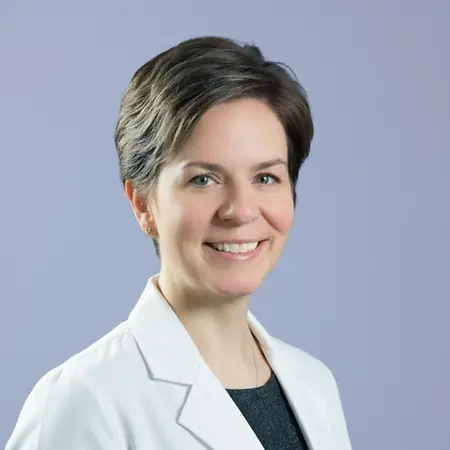
Marian Steininger, MD
Founder, Equilibrium Menopause
Allen, TX 75013
1Year experience
1Article published
Her Story
About Marian
Dr. Marian Steininger, MD is a physician, founder, and menopause medicine specialist based in Allen, Texas. She is the founder of Equilibrium Menopause, a telemedicine practice launching in 2025 that focuses on personalized, patient-centered care in menopausal health, with a particular emphasis on perimenopause, menopause management, and cancer survivorship support. Her clinical approach is grounded in evidence-based medicine and shaped by a strong commitment to accessibility, education, and individualized patient advocacy.
Dr. Steininger earned her Bachelor of Science in Biology from Texas Christian University and completed her Doctor of Medicine degree at UT Southwestern Medical School. She went on to complete an obstetrics and gynecology residency at Parkland/UT Southwestern, followed by a pelvic surgery fellowship at Texas Health Presbyterian Hospital Dallas. She practiced as a full-scope OB-GYN for several years, where she provided comprehensive women’s health care, including deliveries and surgical procedures, before transitioning into a subspecialty focus on menopausal medicine.
In 2020, Dr. Steininger experienced a personal breast cancer diagnosis that significantly influenced the direction of her career and deepened her focus on women’s health in midlife and survivorship care. Following this experience, she shifted her practice toward menopause medicine, eventually specializing in care for complex patients, including cancer survivors. Today, through Equilibrium Menopause, she combines her clinical expertise with a telemedicine model designed to reduce barriers to care while emphasizing patient empowerment, education, and compassionate, responsive support.
Her Interview
Ten minutes with Marian
01What do you attribute your success to?
I meet people where they are.
I created this business on my own after working in corporate medicine for about a decade. The sphere of healthcare is so big, so impersonal. Corporate medicine is getting in the way of providers being able to just treat our patients, to just listen to our patients, to meet people where they are and hold their hand through their next steps. The thing I am proudest of stepping off the usual path and creating a company that allows me to cut through all of paperwork and just be present with people. I love using my knowledge to help women achieve a better quality of life.
02What’s the best career advice you’ve ever received?
Remember the practice of medicine always comes down to you and the person in front of you. Make choices that will allow you to sleep with a clear conscience.
03What advice would you give to young women entering your industry?
When I was younger, I wish I had known how powerful networking is. I now know how important it is to continue those multi-generational relationships, to connect with mentors, to not be afraid to call upon them, and ask them questions, even later in life. I wish I could tell my younger self, don't be afraid to utilize that relationship, that wisdom. You are not a burden when you ask for help from somebody who's walked that path before.
04What are the biggest challenges or opportunities in your field right now?
Disseminating complicated information. I am very grateful for my colleagues who are in perimenopausal and menopausal medicine putting out incredible research. Especially in the last decade, there's been a lot coming out, and a lot of new tools that we can use. But all of that conversation takes time, and I realized as a mainstream OBGYN delivering babies on call, my schedule just didn't have time to have the in-depth conversations that were needed. The research is coming out so fast, which is beautiful and wonderful. It's like drinking from a fire hose because we're trying to catch up on 50 to 70 years of research that has happened in every other specialty of medicine but hasn't happened yet until now on menopause.
05What values are most important to you in your work and personal life?
I want to leave the world slightly better for me having been in it.
I want each person I contact to have a slightly better day. I want each person to have learned something or grown. That's what Equilibrium Menopause is about, education and empowerment.
This fits perfectly with my two hobbies: Gardening and Non-profit work. It's all cultivating and nurturing something better. When I was at my lowest moment, when I didn't know if I was going to survive breast cancer or not, gardening fed my soul. It gave me such hope to plant things that could possibly outlive me, that could bear fruit in the future.
I am on the board of directors for Send Hope, a nonprofit that runs a children's home on the Mosquito Coast in Honduras. We help medically fragile children whose parents don't have the resources to care for them. We help babies who would otherwise die of a cleft lip and palate. We also run a nutrition program because we found that starving parents would preferentially feed their children until the parents died, and left the children orphans. In order to keep the number of orphans down, we started feeding the children so the parents could concentrate on feeding themselves and keeping themselves healthy to care for the children. We change lives. That's a powerful statement, and it sounds corny, but it's awesome.
Her Content Hub
Articles by Marian
What I want you to know about my breast cancer
Finding strength in presence: A cancer patient's letter to loved ones
To Those I Love—
Your job is to show up and check your baggage at the door. Your relationship with me hasn't changed, but in so many ways, it has. I may have been your pillar of strength before, but I need you to be mine now.
This is scary, but it's scarier for me than it is for you. A natural reaction to things that are difficult or frightening is to withdraw and rationalize reasons why this person doesn't really need us or doesn't want to hear from us.
I do.
And if I don't, I won't answer the phone. It's still important that you called.
The best phone calls I have received are the ones where we didn't even talk about cancer—just ordinary, everyday things. They made me feel normal. Sometimes, I am more afraid of bringing everyone else down, so it's your job to show me that you're stronger than that. Show me that my cancer won't end our relationship.
The hardest part about going through cancer treatment isn't the treatment itself: the chemo, the surgery, the radiation, and everything else. It is sometimes feeling like I am going through this alone or, worse, seeing how my cancer is hurting my friends and family.
Look up Crisis, Ring Theory (Psychology Today).
You don't have to understand everything. Your job is simply to show up.
Join Influential Women and start making an impact. Register now.