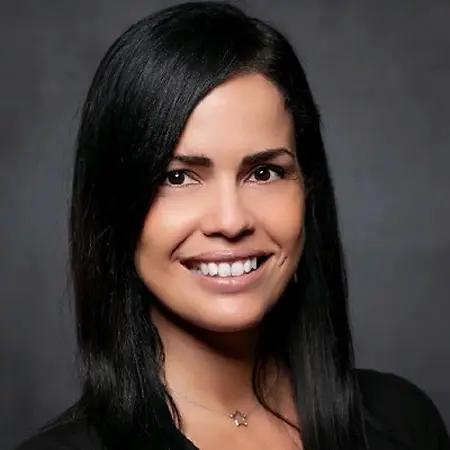
Her Story
About Marianela
I've dedicated the past 20 years to higher education, with a particular passion for international education and creating access for students. After completing my PhD in California, I moved to the Middle East and accepted a role in English Language Services in Doha, Qatar, where I worked with international students and private companies designing curriculum for English preparation courses. I then became a professor and faculty coordinator in the Academic Bridge Program at Stenden University in Doha, spending almost 5 years there. I even had the opportunity to work in the Netherlands for one semester, where I developed study abroad programs and international partnerships. After a year in Seattle working in the private sector with AP courses and Rosetta Stone, I moved to Minnesota as a visiting faculty member in the Department of Spanish and Portuguese at the University of Minnesota. Then I settled in Florida for 11 years at Florida Gulf Coast University, where I served as Associate Professor of Spanish and was promoted to that rank while simultaneously completing my second doctoral degree in higher education. I also served as Coordinator of the Foreign Languages Division, COIL Fellow, and Provost Fellow, which helped me realize my true calling was focusing on international education and providing access for students. Currently, I am seeking leadership opportunities in higher education where I can continue advancing international education initiatives, expanding access to global learning experiences, and supporting students, faculty, and institutions in building meaningful international partnerships. Throughout my career, what has mattered most to me is the impact on students, seeing them grow from the time they arrive on a study abroad trip to when they leave, and hearing from former students years later about how they've succeeded.
Her Interview
Ten minutes with Marianela
01What do you attribute your success to?
I think it's the people that life put in my way. I was lucky enough to have women professors who encouraged me and provided me with the guidance and information I needed. I started as a pre-med student, so my career would have been very different, but those women I encountered during my bachelor's degree in Puerto Rico and then my master's in the U.S. were key for me. I didn't even know how academia worked - it wasn't that I chose to be in academia. It was the people that life put in my way, and that's how I became who I am. One of my supervisors many years ago told me, “Don’t build a CV; build relationships.” And that stuck with me throughout my career. No matter if I'm teaching or in my personal life, it's about how you connect with people and create meaningful relationships, and how that helps you move forward. I'm a believer in collaboration and communication, and I think support and opening doors, not only for ourselves but for others, is what matters. I’ve been fortunate to have mentors who opened doors for me, and that has shaped the way I approach leadership, mentorship, and working with students and colleagues today.
02What’s the best career advice you’ve ever received?
The best career advice I ever received was from one of my supervisors many years ago, who told me: “Don’t build a CV; build relationships.” That advice really stayed with me throughout my career. No matter if I'm teaching or in my personal life, it's about how you connect with people, build trust, and create meaningful relationships, and how that helps you move forward. I'm a believer in collaboration and communication, and that's something that really matters to me, both professionally and personally. I’ve learned that opportunities, mentorship, and growth often come from the relationships we build and the way we support others along the way.
03What advice would you give to young women entering your industry?
I would encourage them to trust their voice and not wait until they feel 100% ready to step into opportunities. Many times I thought I wasn't ready, and I think we are all, as women, taught that we need to be over-prepared. We doubt ourselves so often, so I think growth comes from stepping into uncomfortable spaces and challenging yourself even when you feel uncertain. That's a must for you to grow. My advice would be to trust yourself, and don't wait till you are 100% ready, because you're never going to be. Sometimes you grow into the opportunity rather than before it. Just do it. It's unfortunate that still women have to give so much more than men for the same recognition, and I think that intimidates a lot of girls nowadays. So I try to encourage my students and colleagues, and provide them with as many opportunities as possible, whether through mentorship, grants, scholarships, or simply helping them see their own potential, because I know money and access are major barriers for many of them.
04What are the biggest challenges or opportunities in your field right now?
I think one of the biggest challenges in higher education and international education right now is access. Study abroad and international experiences can be transformative, but for many students they still feel financially or personally out of reach. We continue to see inequities in who gets access to those opportunities, and I think institutions really need to rethink what international education can look like. At the same time, I also think this is one of the biggest opportunities in the field. Technology, virtual exchange, and other global learning initiatives are allowing us to create impactful international experiences for students who may never be able to travel abroad. That doesn’t replace immersion experiences, but it does expand access in powerful ways. Another challenge is helping students and institutions understand why international education still matters in a world that often feels politically divided and financially uncertain. I strongly believe global learning is not a luxury; it helps students develop empathy, communication skills, adaptability, leadership, confidence, and the ability to work across cultures and perspectives. Those skills are essential today.
I also think faculty and staff are being asked to do more with fewer resources, so collaboration and institutional support are critical. The institutions that will really thrive are the ones that understand international education is not just about sending students abroad, but about creating a culture of global engagement across the entire university.
05What values are most important to you in your work and personal life?
Empathy, collaboration, and communication are the values that matter most to me. It's about how you create relationships with people and how that helps you move forward, both career-wise and personally. Support and opening doors, not only for ourselves but for others, is what matters to me. I'm a strong believer in using my role to encourage students to go further in life and to help them see possibilities they may not have imagined for themselves. The most rewarding thing for me has been seeing my students years later and hearing about how they've succeeded, the places they've gone, or the goals they've achieved. As a teacher and educator, you don't do this work for the money; it's truly a vocation. You feel called to it. And when you see the impact of your work reflected in someone else's growth or opportunities, it's incredibly meaningful.I also think education gives us hope. Sometimes the world feels so negative, especially when you turn on the news, and then you hear from a student who got into graduate school, received a scholarship, studied abroad, or changed the direction of their life, and you remember why this work matters. Those moments stay with you.
Join Influential Women and start making an impact. Register now.