Discover how women in their 60s can embrace reinvention by saying yes to new experiences, environments, and relationships. This article challenges age-related narratives and explores how joy, learning, and intentional choices fuel transformation.
Verified Member
Influential Woman · Higher Education/Corporate
Dr. Mari Ann Callais
Coach
Professional Speaker, Leadership Consultant, Facilitator, Strategist, Coach, Dr. Mari Ann Callais Consulting Company
Hammond, LA 70401
1Article published
5Awards received
In Conversation
Dr. Mari Ann Callais for Bold. Brilliant. Unstoppable.
Read the transcript
Dr. Mari Ann Callais: Speaker: Dr. Mari Ann Callais, Ph.D., Professional Speaker, Leadership ConsultantWhat does being an Influential Woman mean to you?Dr. Mari Ann Callais, Ph.D.: For me, being an influential woman means that I show up in spaces where I can not only represent myself, but I can also represent other women in those spaces. I think as an influential woman, my goal throughout my whole professional and personal career. Has been to have an impact where I can to make a difference, to be authentic, and to, I hope, open doors and spaces for women not only now but in the future. What I would tell a young woman who is looking to say what do I wanna do with my life? I would say to make sure that you don't become what you do but you represent who you are always. Somebody asked me one time they said, who are you, Marianne? And I gave them all the titles of all the roles that I played and that person looked at me and said, I didn't ask you what you did. I asked you who you are. I think as women we forget that we have an unbelievable opportunity to make a difference in spaces that we may not have even known we had the opportunity to do so. So I was raised by strong women and a strong dad. I was always put in places where there were folks who believed in me and didn't just say oh I think you can do this, but said, let me introduce you to this person let me offer this bit of advice let me be somebody who can help you become and accomplish the dreams that you want to. I know. So in this moment in my life, I would not be where I am or who I am if I were not, if I didn't have those mentors and those women in my life, who have helped guide me and helped me to be where I am today. The other thing I would tell young women is don't be afraid to make mistakes. I've made some mistakes in my life and I feel like, and I hope that I lived a life where I corrected those mistakes and I made sure that I learned from them. We're all gonna fall. We're all gonna be not always be, as Simon Sinek says. He says it's not about failing, it's just about falling and getting back up. So, as a younger person, we're always trying to, at least I was trying to prove myself to others, and one of the most important things is to say I would. Be OK now with falling, because I know I would know that there was always a lesson to be learned from that. So, being an influential woman, I think is all of our responsibility. I just happen to have a platform, to be able to hopefully have an impact and to make a difference and so, that's where I hope I step into spaces where I can support other women as they have supported me.What's one piece of advice you would give to younger women chasing their dreams?Dr. Mari Ann Callais, Ph.D.: What would I tell young women chasing their dreams? I'd tell them to chase them and to chase them with all that they have and to be bold and to not be afraid to fall because falling doesn't mean failing. It means that you learn something and you get up and you move forward. In my life, I know I've fallen many times, whether it was trying to get a PhD or whether it was applying for a job I might have really wanted, but those folks didn't feel like I was the right person. Maybe it was a relationship, whatever it was, right? You're gonna fail in life. There's gonna be times when you're not gonna reach your goals and that's OK because it gives you the opportunity to reset. To look back and to say, what, maybe that wasn't the right time or the right person or the right whatever it was, but chasing your dreams is what gives you energy and gives you life, at least that's what it's been for me, I'm from a little bitty small town in South Louisiana, grew up in a fishing village. My parents were a florist and a, a commercial fisherman and a machinist and so for me. I didn't know that I would end up in some of the spaces that I've ended up in, in boardrooms and other meetings and conferences and spaces where people were making decisions that would impact others' lives. And so for me, dreaming big, I don't know that I really knew what that was. I just knew that my grandmother had told me one time there was a big world out there and I needed to go discover it, so. I would say if anybody, no matter what your dream is chase it, find out what the what the challenges might be, find out what you're good at, find out what you maybe are good at in some parts but not in others, but at the end of the day chase your dreams and don't be afraid to fall. Thinking you're failing because in actuality that may be the pivot or the opportunity or the whatever it is that you might need so dream big, chase them, and, always, always live the life that you were meant to live.
Full transcript available
Her Story
About Mari Ann
Mari Ann Callais, Ph.D., is a higher education professional, speaker, consultant, and facilitator with nearly 40 years of experience in the field. She was raised in the small fishing village of Buras, Louisiana, in a family where hard work and community were central values—her father was a commercial fisherman and her mother a florist. Education was not initially a structured expectation in her household, but it became a defining path in her life. She earned her bachelor’s degree from Loyola University New Orleans, a master’s degree from the University of Holy Cross, and a Ph.D. in Educational Leadership and Research from Louisiana State University, where her dissertation focused on sorority rituals and their influence on contemporary student behavior.
Throughout her career, Dr. Callais has worked extensively in higher education, student development, and leadership programming, with a strong emphasis on connection, belonging, and women’s development. She spent 15.5 years with Tri Delta (Delta Delta Delta) Fraternity as Senior Director of Strategic Initiatives, where she designed programs, led organizational initiatives, and traveled to nearly 1,000 college campuses to work with students, advisors, and institutional partners. Her work has centered on helping individuals and organizations align values with behavior while strengthening leadership capacity and community culture across educational environments.
Today, Dr. Callais serves as a professional speaker, consultant, and instructor, working with higher education institutions, student leaders, faculty, and corporate teams. She focuses on leadership development, generational understanding, and building environments of belonging and engagement. In addition to her consulting work, she teaches adult learners through Northshore Technical Community College, helping students prepare for the HiSET and pursue new educational and career opportunities. Guided by a lifelong commitment to service, she continues to expand access to education while fostering meaningful connection and opportunity for diverse learners and communities.
Her Interview
Ten minutes with Mari Ann
01What do you attribute your success to?
I attribute my success to my parents and grandparents teaching me that there was nothing I couldn't do. They never told me there was anything I couldn't do. My parents never said that because we were girls, we couldn't do something that was typically something that boys would do. We never felt like they treated us like we were girls, so we couldn't do something. We didn't grow up being afraid to try things that were different. My parents and my grandparents always exposed us to things that would allow us to push those boundaries, and I think as a result, it allowed us to feel confident in what we were capable of doing. My mom and my grandmother were my two folks who really helped guide me on what I was capable of doing. Having a dad that believes in girls, like, as a little girl, that makes all the difference. My dad would take us on his boat shrimping. Growing up with a dad, specifically, who always just taught us what we needed to know instead of doing it for us, that gave me all the courage to say I can believe that I can do something, and then I can actually do it. Girl dads, great girl dads, I think are some of the strongest, most amazing men in the world, because they give the world a special gift. When dads love their daughters and encourage them, it's a game changer.
02What’s the best career advice you’ve ever received?
I think for me, when I look at my career trajectory, I had no idea this is where I was going to end up. I didn't even know that you could work in higher education. It was always about where can you have the greatest impact with the gifts and the talents that you have. For the folks who influenced me as a young adult, there was a high level of accountability to try to be the best at whatever you were going to be about, or whatever you were going to do. I think it was about work ethic. It was about really committing to something and becoming good at it. I wanted to know and to be the best at whatever it was that I could do. The other thing, especially in today's world, is that it's not just about the degrees that you have, or the experience, but it really is about the relationships you develop. Relationships take you on a journey in life. Every job I've ever gotten is because someone helped me get there. Whether they recommended the job, whether they hired me, whether they made the phone call, whether they made the introduction, whatever that was. I think all of those things go back to growing up in a small community where everybody knew everybody. My job was to help somebody benefit and move forward, and then, as a result, you too would be successful.
03What advice would you give to young women entering your industry?
If you're going to be in higher education specifically, or in this space, go as far as you can from an education perspective, because in higher ed, a doctorate is still a launching pad for opening doors. That's the first thing. Second thing is, if you have an opportunity to bring other women along, bring them along. Because that's the only way that I've gotten to where I am today. I think the third one is to be willing to work hard and accept that when you do something well, recognize that you did the work. When you tell a man he did a great job, he's like, oh, thank you very much, I worked really hard. When you tell a woman that she did a great job, she's always like, oh, it was a group effort, there were a lot of people who contributed. We never want to take the credit. Another thing is be a woman. You don't have to walk into a leadership role and try to be in the male persona. The gift of women is to develop community, we bring people in. I think that is our superpower, is that we want people to be included. I like being in a room where I'm not the smartest person, because I can continue to learn. Why would you want to be in a room where you're the smartest person in the room? The other thing is, don't ever have to depend on someone else to take care of you. You should always be self-sufficient.
04What are the biggest challenges or opportunities in your field right now?
I think one of the greatest challenges right now is, what do you do if there aren't policies and departments or whatever who are holding businesses and corporations or communities accountable for equitable experiences? Universities have been getting rid of DEI offices, and policies are changing as it relates to DEI. A lot of people don't understand that DEI does include women. I think today, it's about not depending on policies or positions to open opportunities. It's about women and men opening opportunities for people who don't necessarily have a place at the table. To me, that's the only way any population is going to move forward. The greatest challenge now is how do you continue to open spaces for people who may not have a natural trajectory into those areas or into those spaces. I think in higher education especially, it's kind of a mess in some regards. Faculty members would hate that I say this, but one of the things I love about Holt International Business School is that they don't have tenure. In the age of technology, you can't just keep doing things the way that you've always done them. Where higher education is struggling is that it didn't have to for a long time. Now in the industry of workforce development, you have to be innovative. You have to be open to new ideas, and you have to be open to the fact that the generations who are coming to us today are so smart, and they just want somebody to listen to them and respect that they know some things too. Instead of looking at what divides us, if we could look at what could bring us together, that would be so much more productive. We have to figure out how to continue to evolve as the students who are coming to us are evolving. If not, they're going to go get that experience somewhere else. If you can't embrace people who are different than you, you're going to struggle. Our differences are what makes us stronger. It's not what makes us weaker.
05What values are most important to you in your work and personal life?
Everything is about showing up for people. Being able to trust the human, the folks that you work with, that you live with, all the things. I think it's really about having a sense of responsibility in being responsible for what you say you will do. Family, faith, love, all those things have always guided my purpose in life. And I think that's what's important to me.
Her Content Hub
Articles by Mari Ann
Reinvention Isn’t a Reset—It’s an Expansion: What Women Over 60 Already Know
Redefining Your 60s: Why Reinvention Is Not Behind You, It's Ahead
There’s a quiet narrative that often emerges as women move into their 60s.
It whispers things like:
“Slow down.”
“Step aside.”
“You’ve already done your part.”
Others begin asking, “When are you retiring?”
But what if you’re not ready to retire? What if you still have a great deal to contribute?
Are men asked the same question with the same frequency? Are men and women over sixty viewed through the same lens?
Often, men are perceived as wiser with age, while women are too often devalued.
But what if that narrative is incomplete?
What if this season of life isn’t about winding down, but about widening out?
Reinvention Doesn’t Start with a Plan—It Starts with a Yes
We often assume reinvention requires a grand strategy—a roadmap, a carefully outlined next chapter.
But in reality, reinvention usually begins much smaller.
It begins with a yes:
- Yes to trying something new
- Yes to going somewhere different
- Yes to meeting people you don’t already know
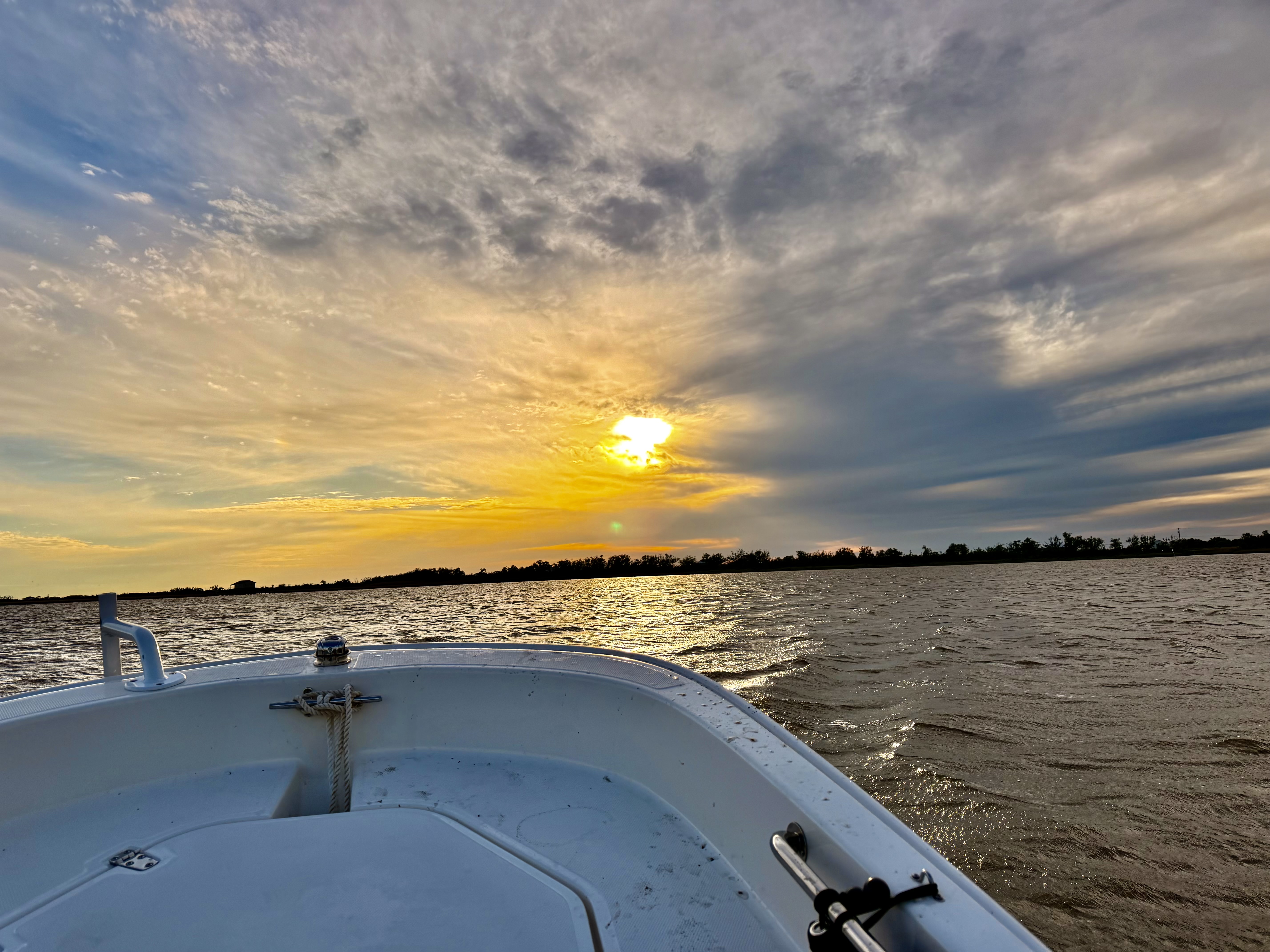
For me, that “yes” appeared in an unexpected place: a fishing camp in South Louisiana.
Not a metaphor. A real place. On the water. Outside my routine. Outside my usual world.
What I didn’t realize at the time was this:
That environment wasn’t just a change of scenery—it was a catalyst for change within me.
New Environments Unlock New Versions of Ourselves
When we remain in the same spaces, we often remain in the same roles.
But when we step into something unfamiliar, something shifts.
At the camp, I found myself:
- Learning skills I had never needed before, or rediscovering abilities I hadn’t used in years
- Engaging in experiences that felt both unfamiliar and energizing
- Seeing myself outside the confines of my professional identity
And here’s what became clear:
Reinvention doesn’t happen because we force it.
It happens because we place ourselves in environments that invite it.
Reinvention Requires Relational Courage
One of the most powerful aspects of this season hasn’t just been the experiences—it’s been the people.
Actively pursuing new relationships, partnerships, and connections can feel uncomfortable at any age. But especially later in life, it can be tempting to stay within what is familiar.
But growth rarely happens in isolation.
Choosing to meet new people means choosing to:
- Expand your perspective
- Challenge your assumptions
- Build relationships based on who you are now, not who you used to be
That isn’t always easy.
But it is essential.
Staying a Learner Changes Everything
There is a particular freedom that comes with learning at this stage of life.
You are no longer learning to prove something.
You are learning because you genuinely want to.
At the camp, learning has shown up in simple yet meaningful ways:
- Developing new skills
- Adapting to a different pace of life
- Embracing the humility of not having all the answers
That willingness—to be new at something again—is where growth truly lives.
Joy Is Not a Distraction—It’s a Strategy
Too often, reinvention is framed as serious, difficult, and heavy.
But what if joy is actually part of the strategy?
The laughter.
The time spent on the water.
The building of something meaningful, like Camp Sip & Fish.
The small, fulfilling moments that may not feel like work, yet still move you forward.
These are not distractions from reinvention.
They are reinvention.
Because when something brings you joy, it brings you energy.
And energy is what sustains transformation.
From Roles to Design
Earlier in life, many women operate within predefined roles:
Professional titles. Family responsibilities. Community expectations.
While those roles can be meaningful, they can also become limiting.
This season offers something different:
The opportunity to transition from a life largely structured by obligation into one intentionally designed by choice.
Reinvention is not about becoming someone entirely new.
It is about becoming more fully who you already are.
It is about saying yes to:
- Experiences that stretch you
- People who reflect your growth
- Environments that allow you to evolve
Not because you have something to prove.
But because you still have something to explore.
The Invitation
If you find yourself wondering what’s next, consider this:
You do not need a complete plan.
You do not need permission.
You do not need to have everything figured out.
You simply need to begin with one yes.
Because reinvention is not behind you.
It is already happening—every time you choose expansion over expectation.
Join Influential Women and start making an impact. Register now.