Her Story
About Marilyn
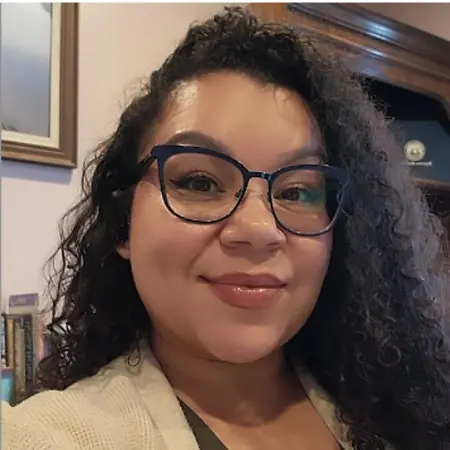
Marilyn Garza is a proud U.S. Army Veteran, Associate Marriage and Family Therapist (AMFT), and passionate advocate for veterans, first responders, and their families. Drawing on her own military experience as a combat medic, Marilyn understands the unique challenges faced by those who serve, including post-traumatic stress, military sexual trauma, depression, and survivor’s guilt. After raising three children with her husband, she pursued her master’s degree in Clinical Psychology from Pepperdine University, graduating in 2024, and has since dedicated herself to providing trauma-informed, culturally competent mental health care.
Currently, Marilyn is the Founder and Executive Director of GFORCE HEROES, INC, a 501(c)(3) nonprofit organization she established to expand access to free therapeutic support for veterans, first responders, and their families. In the pre-launch phase, she is building strategic partnerships, securing founding donors, and designing trauma-informed programs that are culturally and faith-aligned. Under her leadership, the organization emphasizes creating safe spaces where healing, resilience, and relationship strengthening are central to care, delivered by clinicians who are military-adjacent and deeply familiar with the culture of service.
Marilyn’s professional philosophy centers on compassion, cultural competence, and purpose-driven care. She specializes in mental health services for individuals, couples, teens, young adults, and groups within the veteran and first responder communities. Over her career, she has received commendations and recognition from the County of Los Angeles, U.S. Senators, and local veterans’ organizations for her advocacy and service. Beyond her clinical work, Marilyn is committed to building resilient communities and fostering a supportive network for those who dedicate their lives to protecting and serving others.
Her Interview
Ten minutes with Marilyn
01What do you attribute your success to?
I attribute my success to my Heavenly Father. I have experienced many things in life, and I would not know where I would be if it wasn't for my relationship that I have with God. He has really brought me through. He's the reason why I'm a therapist and why I went to school for clinical psychology. It was a gift that was given to me before I was even born, and I've nurtured it and have created what I believe is something very exceptional for a very exceptional population of people.
02What’s the best career advice you’ve ever received?
The best career advice I ever received came from my professor at Pepperdine University, Dr. Dein Kloner, who casually mentioned in class that 'even broken crayons color' - a statement shared by David Weaver. This statement absolutely changed the way that I thought about life in general. As a mother, I had thrown away so many broken crayons without thinking about their value, and it made me realize how many times we don't value ourselves because we're broken, because we're challenged, because we couldn't do something or because it was difficult, and we just say it's not even worth it. But the entire crayon is useful, it's colorful - you could use the entire crayon. This insight transformed my perspective on resilience and worth, and Dr. Kloner has remained my mentor ever since. If I need anything, any help, any guidance, he is the person that I go to.
03What advice would you give to young women entering your industry?
Know yourself. There's a lot of internal work that we need to do as therapists to be able to hold space for another human being. A lot of the things that we may learn during the journey and that we may learn in the room working with people could potentially trigger us, and so it's really important to know who you are as an individual. Know the things that you require and give yourself grace. Really, people will fall short, and you'll never truly know success until you fail. So, know yourself. It is okay to fail. The issue is never that you failed, it's if you stay down instead of getting up to become successful.
04What are the biggest challenges or opportunities in your field right now?
Some of the biggest challenges are working with grantors and contracts. There's a lot going on right now in the world, and so there's a lot of fraud, which makes getting the money to put together an organization like mine very difficult. My organization, GeForce Heroes, has not been around for 5 years - we're very new in the nonprofit world - and so getting funding is very difficult, especially the type of funding that would allow me to provide therapeutic care for free to veterans and first responders. One of my biggest challenges is trying to find the donors, trying to find grantors, trying to find the specific contracts to work for this organization that do not hinder my integrity and that align with what it is that we are doing. On the opportunity side, providing specific care to veterans and first responders is extraordinary. They are what keeps us safe, and so their mental health and well-being should be top priority. When we get to work with veterans who are passionate about their job but also passionate about getting mental health care, it's a beautiful thing to see someone go from really struggling with their mental health but able to fully function and perform, to being healthy mentally. It's extraordinary.
05What values are most important to you in your work and personal life?
Communication is extremely important. I have worked with veterans and done this in my own life - it is very important for me to understand the operational definitions of what people are feeling and what they're experiencing, because I can say I love you, and you can say I love you, and my love is based off of how I grew up, my relational experiences, my friendships, and your love may not mean the same as my love. So it's really important to be able to communicate with those that you love and those that you care about, even in the therapeutic room, to understand what someone means when they say something, because the English language is very complex. Trust is also very important - just making sure that I have confidence in the people who are in my circle, the people that I work with, my family, being able to know that my family, my husband, my children are reliable, and they know that I'm reliable, so that we can create a secure and emotionally safe relationship. And integrity - acting with honesty, morality, and transparency in all aspects of life and all aspects of relationships.
Join Influential Women and start making an impact. Register now.