Her Story
About Marion
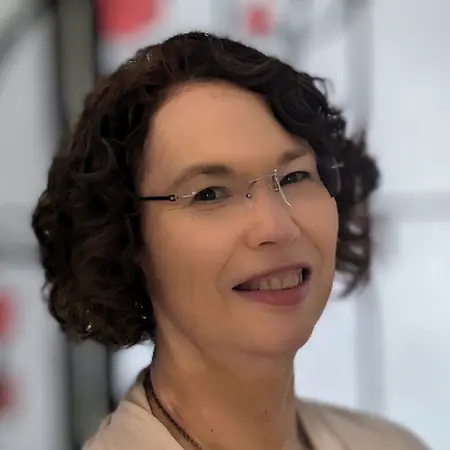
Marion Friebus Flaman is an accomplished educational leader, cross-cultural advocate, and nonprofit executive whose career has been shaped by her bicultural heritage. With a Japanese mother and American father who met in Japan while he served in the Navy, she grew up immersed in two languages and cultures, viewing herself as a bridge between the U.S. and Japan. She began her professional journey teaching English at a university in Japan before returning to the United States for a 25-year career in public education as a teacher and administrator. In that time, she helped establish a Japanese-English dual language program, serving first as a teacher on special assignment providing coaching, then as assistant principal and dual language coordinator, and ultimately as principal of the school for five years. She later spent 10 years as a district office administrator overseeing language acquisition programs. After retiring from education, she transitioned to the nonprofit sector and has now embarked on her third year as Executive Director of the Japan America Society of Chicago, where she creates opportunities for people-to-people, business-to-business, and institution-to-institution relationships across the U.S. and Japan. She remains actively involved as a member and former regional chair of the U.S.-Japan Council and as a board member of the Japanese American Service Committee.
Her Interview
Ten minutes with Marion
01What do you attribute your success to?
If I've had any success, I'd attribute much of it to two things: knowing my core values, and the people I've been fortunate to work alongside and empower.
Early on, I learned how important it is to be clear on your core values — on what's truly non-negotiable for you. That clarity allowed me to follow a career path that stayed true to what mattered most, and that alignment is what gave me the strength and stamina to push through difficult times.
When your work matches your values, you can sustain the effort even when it's hard, because you're not fighting against yourself.
The second is teamwork — specifically, learning how to empower the people around me rather than trying to do everything myself. When team members are empowered to work to their fullest potential, everyone succeeds. I've come to see that as much of a driver of my own success as anything I've done individually.
02What’s the best career advice you’ve ever received?
The best advice I ever received was to leverage what you've already built, even when you're considering a change in direction. This came at a pivotal moment — when I was applying to my Ph.D. program and seriously weighing a pivot into International Relations, a field that wouldn't have built on my background in Education at all.
I was advised instead to stay rooted in my Education degrees and find a way to bring my interest in international relations into that foundation, rather than starting over from scratch. That advice reshaped how I thought about my career: instead of treating a new interest as a reason to abandon what I'd already invested in, I learned to ask how it could deepen and extend the path I was already on. It's guidance I've carried with me ever since — that your accumulated experience is rarely something to set aside, but rather something to build from.
03What advice would you give to young women entering your industry?
First, believe in yourself. So much of this work — whether it's education or the nonprofit sector — is built on who you are and what you actually want to achieve, not on a title or a résumé line. Nobody goes into these fields measuring success by income. It's measured by impact, and impact starts with trusting your own perspective, even in rooms where you might be one of the only women at the table.
The other piece is working genuinely well with others — finding ways to draw out what people bring, and letting them do the same for you. Some of the best outcomes come through other people's work as much as your own.
And make sure you're claiming your seat at the table, not just occupying it. Speak up, and don't let someone else get credit for saying what you already said. Your voice matters just as much as your presence in the room.
Believe in yourself, and work genuinely well with others — that combination will take you far.
04What are the biggest challenges or opportunities in your field right now?
I think the biggest challenge and the biggest opportunity are actually two sides of the same coin: relevance. Organizations like ours were built on a model of cultural exchange that made sense a generation ago, and the question we're constantly asking is how that mission stays meaningful for a new generation of donors, members, and partners — people whose sense of connection to Japan, or to cross-cultural work generally, looks different than it did decades ago.
On the challenge side, nonprofit funding continues to be unpredictable, and organizations like ours are competing for attention and resources in a much more crowded landscape than before. At the same time, that's exactly where I see the opportunity. There's real hunger right now for authentic connection — between people, between communities, between countries — and organizations that can build genuine relationships, rather than just programming, are the ones that will thrive.
This moment feels especially significant for us because we're approaching our 100th anniversary in 2030. A milestone like that forces you to hold two things at once: honoring the depth of relationships and trust this organization has built over a century, while also making sure we're not simply preserving the past. We're using this run-up to the centennial very intentionally — bringing younger professionals, students, and new voices into spaces that have historically been defined by longtime members, and strengthening ties not just between Chicago and Japan, but across generations within our own community. If we can do that well, we're not just marking one hundred years of history — we're making sure this organization still matters for the next hundred.
05What values are most important to you in your work and personal life?
A few values guide me in both.
The first is authenticity — leading and living in a way that's true to who you are, not performing a version of success that doesn't fit. The moments I've felt most effective, whether as an educator or now leading this organization, have been the moments I was most aligned with my own values.
The second is connection — genuinely valuing relationships and staying curious about other people's experiences. That's shaped how I've approached my career, from bridging language and culture in education to building bridges between Chicago and Japan today, and it shapes how I try to show up personally as well.
The third is empowerment — making sure the people around me have the trust and the tools to do their best work, rather than leadership being about having all the answers myself.
And underlying it all is a commitment to impact over recognition. I measure success by the difference made, not by external markers of achievement.
Join Influential Women and start making an impact. Register now.