Her Story
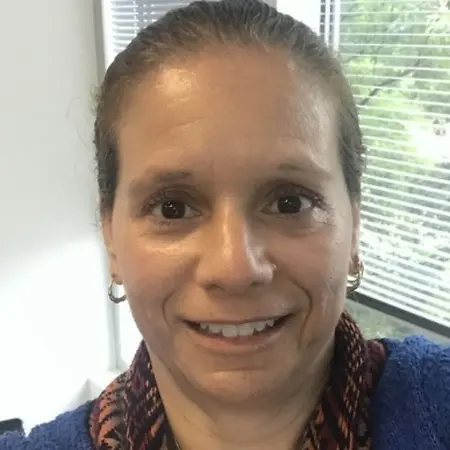
About Marisa
Marisa Munoz-Vourakis is a highly experienced court reporter and the president of Munoz-Vourakis & Associates, Inc., a freelance court reporting firm she has led since 2003. Based in North Carolina, Marisa specializes in civil depositions across a wide spectrum of cases, including medical malpractice, personal injury, trademark disputes, and expert witness testimony. Her work emphasizes speed, efficiency, accuracy, integrity, and professionalism, ensuring that attorneys and clients receive precise and timely transcripts for legal proceedings. Marisa began her career as a freelance reporter until she obtained a federal court reporter position with the Southern District of New York, where she worked from 1992 to 2003. There, she gained invaluable experience covering both civil and criminal trials and learned from some of the most respected and proficient professionals in one of the busiest courthouses in the country. Her time in Manhattan instilled a strong work ethic and deep respect for the legal process, which she has carried into her freelance career. A graduate of Johnson & Wales University, Magna Cum Laude, with an Associate of Science degree in Court Reporting, Marisa has earned the prestigious Registered Merit Reporter (RMR) designation, reflecting her speed and accuracy as a court reporter. She also obtained the Certified Realtime Reporter designation, which has enabled her to provide realtime translation at depositions simultaneously to attorneys or paralegals as the deposition is taking place. Marisa attributes her success to hard work, dedication, curiosity, and a love for the variety and challenges that each new case brings.
Her Interview
Ten minutes with Marisa
01What do you attribute your success to?
When I started in federal court, I was very naive and young, but I wound up working with some of the most accomplished, respectable, and amazing court reporters. I learned from them. Many of them were older than me and had been in federal court for a long time, and they just took me under their wing. I really gained a great work ethic working in that courthouse, because it's one of the busiest in the country. Those mentors really influenced me and shaped my approach to the profession. I learned the importance of discipline, precision, and continuous practice. Getting my speed up to 260 words a minute for the Registered Merit Reporter(RMR) designation was one of my proudest achievements - I used to practice all the time, even watching the news to keep up with how fast they speak. The foundation is having the basic theory of the machine, and then practice is the key. Practice, practice, practice. That's what I did, and that's what allowed me to thrive in this field for 39 years.
02What’s the best career advice you’ve ever received?
The best career advice I’ve received came from mentors in the court reporting community who demonstrated excellence, precision, and calm under pressure—lessons that guided me as I transitioned from federal court work to building my own successful freelance practice.
03What advice would you give to young women entering your industry?
My advice would be to just work hard and be open to learning about the new technology that's being utilized out there. Continue to listen to older peers, you know, mentors, if you will. Believe in yourself! The biggest challenge is being able to get that speed in order to work in our profession. It is tough on the machine to write that quickly. But if you have the foundation, which is the basic theory of the machine, you'll be able to thrive. New reporters need to embrace practice and should make it a point to practice every single day. Also, if you feel you can't handle a certain job, be upfront with your agency and say, look, this isn't for me. Honesty and integrity is so important in life as well as the court reporting profession. Be realistic with regard to your abilities.
04What are the biggest challenges or opportunities in your field right now?
The biggest challenge is being able to get that speed in order to work in our profession. It's very tough on the machine to write that quickly. But if you have the foundation, which is the basic theory of the machine, you'll be able to thrive. Practice is the key. I used to practice watching the news, because they have to get all the segments in and speak so fast. That's how I built up my speed over the years. Another important aspect is being open to learning about the new technology that's being utilized out there. The field is evolving, and staying current with technology is essential for success in court reporting today.
05What values are most important to you in your work and personal life?
I feel the values that I try to live by are integrity and honesty. If you feel you can't handle a certain job, be upfront with your agency and say, this isn't for me. People tend to lack that integrity and honesty these days, so that's important to me - honesty and integrity in everything I do. In my personal life, I value staying active and engaged. I play ice hockey with the North Carolina Trailblazers, a recreational women's hockey group that I joined about 13 years ago, and I play every Sunday. I also play pickleball regularly - that's a big hobby of mine as well. I love the camaraderie and the physical challenge of these activities. Even though I started hockey very late in life, after moving to North Carolina in 2003, I've committed to it fully. My husband and I took skating lessons together, as I wanted to learn how to ice hockey skate. However, he didn't want to pursue hockey regularly, but I embraced it. Being active and maintaining those commitments keeps me grounded and helps dealing with the stresses of my job.
Join Influential Women and start making an impact. Register now.