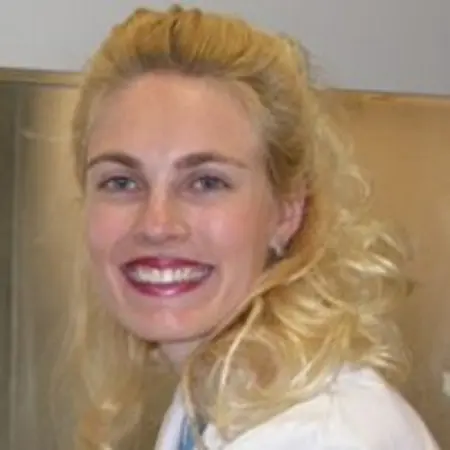
Her Story
About Marissa
Marissa Nichole Rylander is a distinguished professor and biomedical engineering researcher at The University of Texas at Austin, where she has built a career centered on innovation, teaching, and mentorship. After earning her PhD in Biomedical Engineering from UT Austin, she began working in her field in 2006 and later returned to her alma mater in 2014 following a faculty appointment at Virginia Tech. She was recently promoted to Full Professor, a milestone that reflects years of dedication to research, student development, and academic leadership.
Her research focuses on cancer engineering and tissue-on-a-chip technologies, creating human-based tumor platforms that better mimic real tumors for testing therapies and studying disease progression. By combining mechanical engineering, biomedical engineering, and computational methods, she works to bridge the gap between laboratory discoveries and clinical impact. Her work includes major collaborations on inflammatory breast cancer, liver cancer, and vascularized skin for burn injury, supported by NIH, NSF, and Army funding.
Beyond her research, Marissa is deeply committed to teaching and expanding opportunity in engineering. She leads the ElevateMe program, which is designed to recruit and retain outstanding students with a strong emphasis on women and underrepresented minorities. Known for her mentorship and service, she continues to inspire the next generation of engineers and scientists while balancing the demands of teaching large undergraduate classes, graduate instruction, and high-impact research.
Her Interview
Ten minutes with Marissa
01What do you attribute your success to?
I attribute my success to determination and passion. When you really want something, being passionate and determined about it and putting your best toward it is key. I was actually born legally blind with a lot of visual disabilities, and my mom was definitely my biggest champion, always there pushing me along. When I see a challenge, I find that exciting - if you're going to tell me no, I can't do it, then I'll find a way to do it. It's just kind of my personality to rise above things. From the very beginning, I had challenges, but I overcame them, and I think that's what I want other people to realize - no matter what your barriers are, with hard work and passion and support from your family, you can accomplish those things.
02What’s the best career advice you’ve ever received?
The best advice I ever received was just not to give up, no matter what. From an early age, there were people along the way who didn't say 'oh, you're too young, you don't know what you want.' Instead, they gave me opportunities - like when I was in fifth grade spending time in the hematologist's office with my sister who had a rare blood condition, people gave me amazing books to read about the immune system. They gave me opportunities to volunteer at the hospital, at the doctor's office where they gave free care to people who couldn't afford it, and at a school for the handicapped. All along the way, they fed my interest, and I'm grateful to people that gave them to me and for my mom helping me find them.
03What advice would you give to young women entering your industry?
Hold on to your dreams and prepare the best you can, but ultimately do think about what you want out of life. Do you want to have a family? Because that might affect your choices in the future of your career path. But you also can't think about it too soon because you might miss opportunities. The thing is just grab onto all the opportunities that come toward you. Don't think that I'm not good enough - rise to the occasion and take every opportunity while you're young to travel and to do exciting things that challenge you. The things that scare you are the things that grow you. Looking back when I was younger, I think oh, I should have tried this study abroad, I should have done this or that, I wish I had even had more confidence. But doing the things that scare you are the most important.
04What are the biggest challenges or opportunities in your field right now?
A big challenge for young women is having an identity and seeing other women that are doing it. Sometimes that's difficult because there's not enough people to identify with, so they don't always even think about these kinds of careers. The challenges are, one, being prepared - it's a really highly competitive environment now with a lot of people that have great grades. Students have to really be able to get different experiences that show they're committed, and kids really have to start at an early age figuring out what they want to do and setting themselves for that path. There's been a lot of studies that say in middle school, girls start to falter and lose their confidence. It's important for them to see role models and to have the support and to realize that they can do anything they want to do. It's definitely hard balancing family and different levels of challenges. I love my job because I have a lot of flexibility as a professor to be able to be there for my kids but also do exciting work. Finding role models and people that can support them and guide them through this process is crucial. We as women just have to give back to those that are after us because of the people that came before us - that mentoring process is really, really important.
05What values are most important to you in your work and personal life?
Having strong character is very important, and ultimately kindness. When we think about cancer and all these things that we're trying to solve, it's to make other people's lives better, and hopefully they'll survive it and also do great things. Character is very important, along with passion and service - giving back. Our motto at Virginia Tech was Ut Prosim, which means 'how may I serve?' I think that's a big part of what we do, to help others and inspire others that life is beautiful, it's challenging, but it's beautiful. Every moment that you have is a gift - you don't know how much you have. I'm religious, so prayer is a very big thing for me to overcome things. Having that faith is a big part of my life as you go through challenges as well.
Join Influential Women and start making an impact. Register now.