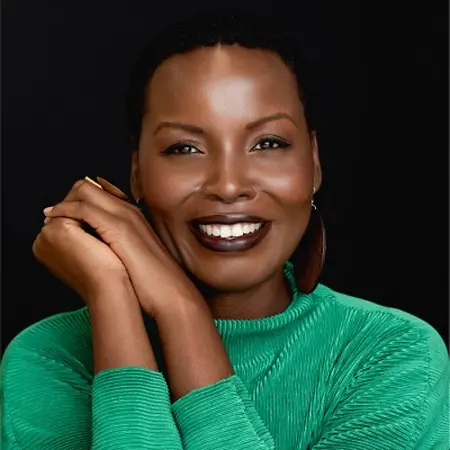
Her Story
About Marjorie
On a day-to-day basis, I do a few different things. I do a lot of writing, and I also see individual clients for therapy. My work is more somatic-based, so I do a lot of somatic work with both women and men, particularly women and men of color. I also do supervision - my supervision is more reflective supervision, and it's really consultation for clinicians in the field to ensure that they're providing quality care, but also that they're taking care of themselves in the process. That's typically what my day looks like: a lot of writing, a lot of consultation, and then also doing the one-on-one individual therapy work that I do. What I'm most proud of is people walking away from my work and feeling seen in a way they've never felt seen before, and because of that, changing their standard of what care should look like.
Her Interview
Ten minutes with Marjorie
01What do you attribute your success to?
I attribute my success to curiosity and imagination - for me, curiosity and imagination is the superpower. I remain curious in the work, whether it's in therapy, whether it's in supervision, whether it's in writing. I have a curious mind, and I'm always asking questions. And imagination is being able to see something bigger than what shows up in front of you, being able to see something beyond what is presented. Whether it's a complex problem, being able to see the potential of the solutions available.
02What advice would you give to young women entering your industry?
Your why can evolve, but you have to be grounded in what your why is. You have to find some time to be curious and develop your why, but also allow your why to evolve over time. Because what your why is today might look different 10 years from now, and so leave space for the evolution of you and the thing that you care about.
03What are the biggest challenges or opportunities in your field right now?
The biggest challenge is that with the growth of mental health tech companies, mental health is shifting. People are looking for a relational aspect that doesn't exist with A.I. - A.I. can provide something, but it really doesn't provide the relational aspect. I'm also finding that mental health is looking different, where a lot of those small practices are having to close down because they cannot keep up with the demand in the way that the big companies, the big tech mental health companies, can. Insurance reimbursement is looking less and less and less, which is impacting smaller practices and forcing them to move either into big tech companies or just close. I think it definitely is impacting community health, because a lot of people are seeking that relational piece that may be missing. But social workers or other providers aren't able to cater anymore in the way that we used to, prior to this landscape change.
04What values are most important to you in your work and personal life?
For me, it's curiosity, flexibility, and transparency. I value transparency over honesty, because I think you can be honest and not transparent. Those are the values that are important to me, both professionally and personally.
Join Influential Women and start making an impact. Register now.