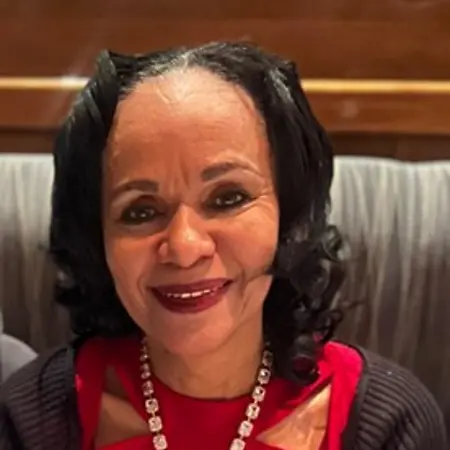
Her Story
About Marta
Marta Idowu is a Policy Analyst with the City of Seattle in Seattle, Washington, where she has dedicated more than four decades to public service and civil rights work. Throughout her career in city government, she has focused on advancing equity, inclusion, and anti-discrimination efforts across multiple communities. She currently works within the Seattle Office for Civil Rights, where she supports the coordination and oversight of civic commissions that advise city leadership on issues affecting marginalized populations.
In her role, Marta manages and collaborates with four major city commissions—the Human Rights Commission, Women’s Commission, LGBTQ Commission, and Disability Commission—each composed of community-appointed commissioners who help guide policy and advocacy efforts. Her responsibilities include coordinating with the Mayor’s Office and City Council, organizing civic proclamations, and planning major public events such as Human Rights Day, Juneteenth celebrations, Indigenous Peoples Day, Black History Month programs, and initiatives addressing domestic violence and community awareness. She is known for her ability to connect community leaders, elected officials, and organizations to advance meaningful civic engagement.
Marta holds a Bachelor’s degree from the University of Washington in Drama/Theatre Arts and Stagecraft and has also completed advanced training in organizational management and public administration. Over her long tenure in Seattle government, she has worked across several departments, including construction and land use and the hearing examiner’s office, building extensive institutional knowledge and a wide professional network. Guided by a strong commitment to service and community belonging, she is widely recognized for her behind-the-scenes leadership style, collaborative approach, and dedication to ensuring that all residents feel represented and included in city governance.
Her Interview
Ten minutes with Marta
01What do you attribute your success to?
I attribute my success to my love for people and my genuine desire to help others. Growing up in Yakima as one of 13 children, I learned early on about community service and helping people - that was central to our family life. My Christian faith shaped my values of honesty, doing the right thing, and respecting others. From a young age, I was exposed to civil rights activism through my father's involvement with the African American community and civil rights leaders like Stokely Carmichael who visited Yakima. We even did shows and programming on the public broadcasting station to educate people about the Black community and rights. That foundation taught me about fighting for what's right and making this world a just world where everyone feels like they belong. Throughout my 45-year career, I've stayed true to myself and never lost my identity in the workplace. I've always approached my work with strong integrity - not just chasing money, but being in a job where I really love what I do and feel like I'm helping someone. If I wasn't doing work that made me feel like I'm helping people and getting them where they can be, I wouldn't be happy. That passion for service, combined with being real and authentic, carrying myself in a way I'm proud of, and building genuine relationships throughout the community - that's what has allowed me to navigate city government and make meaningful change for over four decades.
02What’s the best career advice you’ve ever received?
The best career advice I’ve ever received is to stay true to myself and not lose my identity in the workplace, while also knowing my rights—especially as a young woman entering government work. I was encouraged to be prepared to speak up for myself and advocate when necessary, rather than staying silent. I was also reminded of the importance of education, which played a key role in my own journey, as I secured my first job just six months after graduating with a BA in Theater Production from the University of Washington.
03What advice would you give to young women entering your industry?
My advice to young women entering government work and public service is to just be yourself and be real. Don't try to change or be something that you're not, because it's always going to come through and it won't be a good thing. Stay true to yourself and don't lose your identity in the workplace. Have strong integrity about what you do - don't just get a job because you want the money. Yes, you should get paid fairly for your credentials, but be in a job where you really love it, where you really want to make a difference, and where you're helping somebody. If you're not feeling like you're helping someone and doing something to get them where they can be, you won't be happy. Know your rights, be prepared to speak up for yourself, and respect others' differences - embracing diversity is key in public service. Carry yourself in a way that you're proud of yourself and what you do. Set yourself up not for failure, but with a 'yes, I can' attitude. Don't think about what you can't do - say 'I can do this, or I can do this much,' and then take trainings to learn more. Invest in your education because it opens doors. And remember, we all belong in this world - it's about making this a just world where everyone feels like they fit in and belong.
04What are the biggest challenges or opportunities in your field right now?
The biggest challenge in my field right now is being in the public eye and carrying yourself in a way that you're proud of yourself and what you do. When you're out in the community talking to people, helping at events, putting on your own events, and tabling, you've got to be right - you have to represent yourself and your work with integrity. The opportunity is in making this world a just world where everyone feels like they fit in and belong. Whether it's working on LGBTQ issues, women's issues, human rights issues, or disability issues with accessibility, there's so much work to be done. Things like making sure there are charging stations at the Seattle Center for people in electric wheelchairs, ensuring proper fonts and inclusion - it's about making sure everyone is included. We have professionals from the public serving as commissioners who are passionate about these issues, and they advise the mayor and city council. The challenge is navigating all of this while staying true to the mission that we all belong. One of our office slogans is 'we all belong,' and I really believe that - the Lord wouldn't have created us this way if it were meant to be different. The opportunity is in continuing to fight for a world where everyone feels they belong and can be their authentic selves.
05What values are most important to you in your work and personal life?
The values most important to me in both my work and personal life are honesty, integrity, and consistently doing the right thing, along with a deep respect for myself and others. I am committed to upholding anti-discrimination principles and fostering inclusion and belonging, grounded in the belief that everyone deserves to feel accepted and valued. Helping others is a core value shaped by my upbringing in a large family in Yakima, Washington, where supporting one another was a way of life. I also prioritize staying true to myself and maintaining authenticity in all environments, ensuring I do not lose my identity in the workplace. Above all, I value being real, compassionate, and treating others with love, empathy, and strong moral character.
Join Influential Women and start making an impact. Register now.