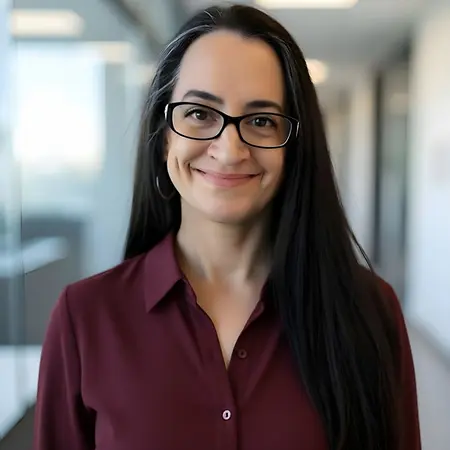
I stopped performing the version of success others expected and started building the one I believed in. That shift didn't just change my career. It changed who I was willing to become.
Mary Cook, MBA · In Her Own Words
Her Story
About Mary
I am the executive you bring in when growth has outpaced the operating model. Over 30 years, I have built and scaled multi-site veterinary platforms and global contact center operations—driving $500M+ in cumulative revenue impact, maintaining 28%+ EBITDA margins, and leading workforces of 1,700+ across footprints spanning 2 to 300+ locations. I do not inherit stable systems. I build them.
My career includes building a BPO contact center from the ground up for CallSocket—people, process, technology, and facility—then scaling emergency veterinary regions from 2 to 10 hospitals in under 12 months, leading a $300M global service delivery portfolio that produced $22M in annual run-rate savings, and consistently delivering measurable margin expansion without sacrificing customer experience or burning out teams. I have operated across veterinary medicine, healthcare, fintech, media, and PE-backed platforms, and I bring AI-enabled operational design into every engagement.
What sets me apart is how I got here. I started in veterinary medicine as a teenager, and my career in contact center service operations began when three remarkable women at Danka Omnifax hired me as a call center manager, choosing people instincts over technical pedigree. That bet paid off, and I have spent every year since proving that operational excellence and genuine care for people are not in tension. They are the same thing.
I am a builder of leaders, not just systems. Every organization I have led has produced people who went on to bigger roles—because I treat talent development as a strategic investment, not an HR initiative. I hold an MBA and a Bachelor’s in Management and Leadership, and I am completing a Master of Science in Law with an HR concentration (2027), adding regulatory and governance depth to an already formidable operating toolkit.
I am direct, accountable, and unapologetically myself. I lead with results and integrity in equal measure—and I am at my best when the stakes are high and the easy answers are gone.
Her Interview
Ten minutes with Mary
01What do you attribute your success to?
I attribute my success to a combination of formal education, hands-on experience, and the guidance of exceptional mentors throughout my career.
My academic foundation—a Bachelor’s in Management and Leadership, an MBA, and my current pursuit of a Master of Science of Law with an HR concentration expected in May 2027—has equipped me with strategic, operational, and people-focused expertise.
Coupled with over 30 years of experience building and leading high-performing teams in retail, BPO, veterinary services, contact centers, and customer experience operations, these experiences have taught me how to translate strategy into measurable outcomes, scale operations sustainably, and foster cultures where people thrive.
Mentorship, both received and given, has also been a cornerstone of my growth, shaping my approach to leadership, team development, and meaningful impact across organizations. Three women gave me my first shot in this industry when I had no technical background—they saw potential and invested in it. I have tried to do the same for every person I’ve led since.
02What’s the best career advice you’ve ever received?
“Stop waiting for permission to lead.”
Early in my career, I had a mentor who watched me prepare endlessly for a presentation to senior leadership. I had every data point, every backup slide, every contingency mapped. She pulled me aside and said, “You already know more about this operation than anyone in that room. Stop preparing to be questioned and start preparing to lead the conversation.”
That reframing changed everything for me. I stopped positioning myself as someone reporting up and started positioning myself as someone who owns the outcome. It shifted how I walked into boardrooms, how I presented to investors, and how I built operating models—not as proposals waiting for approval, but as platforms I was accountable for delivering.
I constantly pass this advice on, especially to women in operations and service leadership: your expertise is not up for debate. Own the room.
03What advice would you give to young women entering your industry?
Be unapologetically yourself. I have watched talented women dim their personality, soften their opinions, or perform a version of leadership they think the room wants to see. It never works—and the people who matter can tell. My authenticity has been one of the most powerful tools in my career. I am uniquely who I am, and I do not hide it. That has opened more doors than any credential ever did.
Invest in technology fluency early. When I started in this industry, deep technical knowledge was not expected of operations leaders. That has changed completely. Whether you are in contact centers, veterinary platforms, healthcare, or any multi-site service business, you need to understand the technology stack your teams depend on. You do not need to be an engineer, but you cannot afford to be the leader in the room who defers every technical question to IT. Get an AI certificate, learn how your CRM and workforce management tools actually work, and understand how data flows through your operation. That knowledge will set you apart.
Build real relationships, not just a network. This industry is smaller than you think. The people who invest in others—not just in transactions—are the ones who build lasting careers. Three women early in my career recognized what I could do before I had the resume to prove it, and they created the opportunity for me to show it. I delivered, and I have been delivering ever since. Every role I have earned has come through relationships built on trust, not just titles. Be the leader who lifts others, and the industry will remember you for it.
And finally: stop waiting for permission. If you know the answer, say it. If you see the problem, own it. If you are the most qualified person in the room, act like it. The best career advice I ever received was to stop preparing to be questioned and start preparing to lead the conversation. I pass that forward to every woman I mentor, and I will pass it to you: your expertise is not up for debate. Own the room.
04What are the biggest challenges or opportunities in your field right now?
The biggest challenge and opportunity are the same: the convergence of AI, workforce transformation, and rising customer expectations in an industry that has historically relied on labor arbitrage and volume.
Contact centers and multi-site service organizations are at an inflection point. AI is eliminating the simplest interactions, which means the contacts that remain are more complex, more emotional, and higher-stakes. That changes everything—how you hire, train, measure performance, and design the operating model.
The organizations that will win are the ones that stop treating AI as a cost-cutting tool and start treating it as a platform redesign opportunity. The question is not “how many agents can we replace?” It’s “how do we redesign the entire service system so that humans handle what humans do best and technology handles what technology does best?”
In veterinary medicine, the challenge is similar but different: consolidation has outpaced operational integration. You have platforms with 50, 100, 200+ hospitals that still run like individual practices. The opportunity is enormous for leaders who can build true operating systems—shared metrics, common workflows, predictable staffing models—without crushing the clinical culture that makes each hospital special.
Both industries need the same thing: platform-minded operators who can scale without breaking people, experience, or margin.
05What values are most important to you in your work and personal life?
The values that guide me in both my professional and personal life are rooted in my Christian faith: integrity, empathy, service, and the belief that how you treat people matters more than any dashboard metric. I strive to lead with transparency and accountability, ensuring that teams have the clarity, support, and trust they need to succeed—because I believe leadership is stewardship, not status.
Family is at the center of everything I do. It grounds me, keeps me honest, and reminds me daily why building sustainable, people-first organizations matters. The discipline, patience, and unconditional commitment that family requires have made me a better leader—more present, more intentional, and more focused on what truly lasts. I am deeply committed to making a positive impact beyond the workplace, including active involvement with nonprofits such as Feeding America and various animal care organizations, as well as my local church community—reflecting my dedication to giving back, serving others, and living out my faith in tangible ways.
Balancing high-performance leadership with compassion, mentorship, faith, and community engagement is central to how I operate and the legacy I aim to leave. I believe the best organizations are built by leaders who care as much about the people doing the work as they do about the results the work produces—and I carry that conviction into every room I walk into.
Join Influential Women and start making an impact. Register now.