Her Story
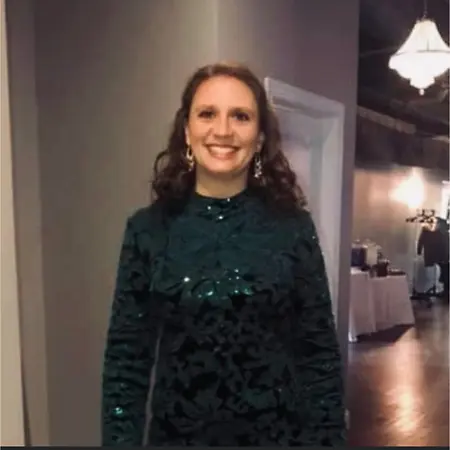
About Mary
Mary Jungels is an operations and event management professional whose career reflects a unique blend of logistics expertise, community engagement, and nonprofit leadership. After spending more than three decades in logistics and manufacturing, she made a purposeful transition into nonprofit operations and advancement, combining her passion for organization with her desire to make a meaningful impact. Her career began at Phillips Lighting, where she coordinated logistics for high-profile projects, including lightbulbs for the iconic Times Square New Year's Eve Ball Drop. She later built extensive experience in the chemical manufacturing industry with Olin Corporation, managing complex logistics operations involving products such as caustic, potassium hydroxide, chlorine, bleach, and hydrochloric acid, before advancing into leadership roles with HÜBNER Manufacturing. Throughout her corporate career, Mary devoted countless hours to volunteering in her children's schools and community organizations, organizing fundraisers, galas, auctions, and special events with the same precision and attention to detail that defined her logistics work. Her ability to successfully plan and execute large-scale events eventually led organizations to encourage her to pursue event management professionally. Today, she serves as Operations Manager for NAMI Chattanooga and a Special Events- Advancement Manager for St. Jude School and Notre Dame High School under the Diocese of Knoxville. In these roles, she oversees every aspect of event development, including budgeting, marketing, sponsorships, volunteer coordination, and execution, leading signature events such as Dancing with the Chattanooga Stars, NAMIWalks Chattanooga, Notre Dame Green and Gold Gala, and St. Jude Jockeys and Juleps. Known for her servant-leader mindset and commitment to community, Mary is passionate about bringing people together to support meaningful causes. She combines the strategic planning skills of a seasoned logistics professional with a deep sense of compassion, integrity, persistence, and connection. Whether raising awareness for mental health, strengthening educational programs, or creating memorable community experiences, she focuses on building relationships that leave a lasting impact. Outside of her professional work, Mary enjoys gardening, supporting animal rescue efforts in regard to parrots, caring for exotic birds, and spending quality time with her children—activities that reflect the same nurturing spirit she brings to her career and community.
Her Interview
Ten minutes with Mary
01What do you attribute your success to?
I would say never give up. When I'm planning events, building community partnerships, or working to reduce the stigma surrounding mental health, I've learned that meaningful change takes time. Progress is rarely a straight line. There will always be challenges, setbacks, and unexpected obstacles, so you have to be willing to pivot, adapt, and keep moving forward. Persistence is what keeps progress alive, and what has created new opportunities for me.
That belief extends beyond my professional life. I've learned to never give up on love, never give up on yourself, and never give up on your dreams.
My son, who is graduating from college next year, recently asked me what I had sacrificed to get where I am today. I told him I don't really see it as sacrifice—I see it as accepting responsibility for the choices you make. Every decision brings new responsibilities. If you choose to raise a family, you learn how to adapt and make it all work. If you decide to change careers as I did, you create a plan and take the steps necessary to get there.
None of it happens overnight. Success requires patience, persistence, and never giving up.
02What’s the best career advice you’ve ever received?
I've received two pieces of advice that have stayed with me throughout my career.
The first is, "Do the work." It sounds simple, but it's probably the best career advice I've ever received. If you're passionate about what you're doing, believe in the mission, and stay committed, good things will follow. There will always be shortcuts, but I've learned that shortcuts don't build trust or lasting success. Showing up every day, putting in the effort, and doing the work with integrity is what creates opportunities over time.
The second piece of advice came more recently from our Executive Director at NAMI Chattanooga: "You are enough." Those three words really resonated with me because I don't think we hear them often enough. It's so easy to compare ourselves to other people and think we have to accomplish more or be more in order to have value. I've realized that's simply not true.
03What advice would you give to young women entering your industry?
Advice I would give young women entering this industry is to stay true to yourself and your values. It's easy to get caught up in what everyone else is doing or to feel like you're falling behind, especially when you're just starting out. I've been there, too. But I've learned that the most important investment you can make is in yourself.
Keep learning. Keep growing. Be willing to say yes to new opportunities, even if they push you outside your comfort zone. Looking back, I realize that every experience—even the challenging ones—helped prepare me for where I am today. There wasn't one defining moment when everything suddenly changed. It happened little by little, and eventually the pieces started to come together. That's when I realized the potential I was looking for had been within me all along.
One piece of advice came more recently from Craig Robinson in his Princeton graduation address. He said " the world will constantly tempt you to compare yourself to other people's highlight reels and social media posts. Resist that urge. Comparison steals joy, perspective, and confidence." Everyone's journey is different, and your timeline doesn't have to look like anyone else's.
So, my advice, especially to young women entering my industry or any profession, is to focus on becoming the best version of yourself instead of trying to become someone else. Invest in your growth, stay authentic, and trust the process. When you do that, the right opportunities have a way of finding you. They may not happen on your timeline, but they'll be uniquely yours—and they'll be built on a foundation that's real and lasting.
04What are the biggest challenges or opportunities in your field right now?
One of the biggest challenges in the mental health field is that stigma still exists. Even though we've made progress, too many people are still afraid to talk about their mental health or ask for help because they're worried about being judged.
I recently I read an article from another influential woman and she said, "Mental health is still taboo, and the silence is costing people more than productivity. It's costing them their health, their relationships, and even their lives." That resonates deeply with me because it's exactly why we do the work we do at NAMI Chattanooga. Our mission is to end the stigma surrounding mental health by changing the way people see it, talk about it, and respond to it.
At the same time, I believe that's also our greatest opportunity.
Every conversation about mental health helps break down barriers. When people share their stories, they create understanding, compassion, and connection. They remind others that mental health affects all of us. It doesn't discriminate based on age, profession, background, or circumstance.
I've seen that firsthand through NAMIWalks Chattanooga. Sometimes people hesitate to attend because they picture a mental health event as something intimidating, scary or depressing. But when they arrive, they see families, children, music, food trucks, local businesses, and neighbors coming together to support one another. That's often an aha moment, everything changes. They realize these aren't "other people." They're friends, coworkers, family members, and neighbors. They're people just like us.
Those moments are incredibly powerful because they replace fear with understanding. They remind people that they're not alone and that it's okay to ask for help.
For me, that's both the challenge and the opportunity. The challenge is continuing to break down the stigma. The opportunity is that every conversation, every event, and every person who shares their story helps move us one step closer to a community where mental health is treated with the same compassion and openness as physical health.
05What values are most important to you in your work and personal life?
The values that guide my life are compassion, integrity, persistence, and connection.
Compassion is at the heart of everything I do. Whether I'm raising awareness about mental health or planning events that benefit the children of Catholic schools and the broader community, I believe every person wants to feel heard, understood, and valued. Leading with compassion allows me to build meaningful relationships and create positive change.
Integrity is equally important to me. I strive to be honest, trustworthy, and accountable in both my actions and decisions. I believe authenticity is essential because strong relationships and effective leadership are built on trust.
Persistence has shaped who I am. I've learned that meaningful change doesn't happen overnight. I've found that lasting impact comes from staying committed through challenges and continuing to move forward with purpose.
Finally, I value connection. Relationships are one of the most powerful drivers of our life, and I've seen firsthand how genuine conversations and shared experiences can strengthen a person and communities. At the end of the day, people want to know they're not alone—they want to know someone is in their corner. Creating that sense of belonging and support is something I strive to do in every aspect of my life.
Join Influential Women and start making an impact. Register now.