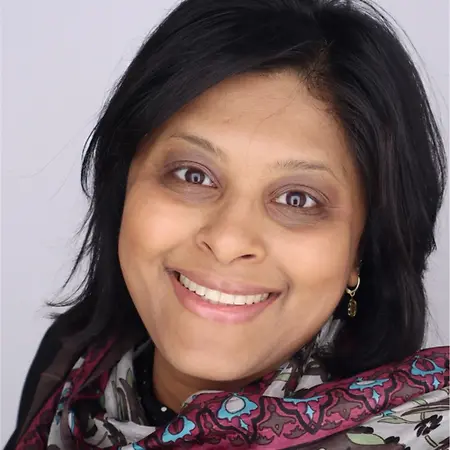
Her Story
About Mary
Mary A. Khetani, ScD, OTR/L, FAOTA, is a distinguished occupational therapist, rehabilitation scientist, and academic leader based in Chicago, Illinois. She currently serves as Professor in the Department of Occupational Therapy and Director of Graduate Studies in the PhD Program in Rehabilitation Sciences, both at the University of Illinois Chicago. With a strong commitment to inclusive excellence, Dr. Khetani’s work focuses on transforming how young children with disabilities and their families participate in meaningful daily activities to achieve health and well-being. Her leadership reflects a principled dedication to mentoring across differences, advancing equitable academic environments, and building strategic partnerships that amplify the impact of research and education. Dr. Khetani’s career began in clinical practice after earning her Master’s degree in Occupational Therapy from the University of Southern California, where she worked extensively with infants and toddlers with disabilities and their families in both home- and center-based settings. Motivated by gaps in how clinical information was gathered and used in this pediatric practice setting, she pursued advanced training through a child advocacy fellowship at University of California Los Angeles prior to pursuing her Doctor of Science in Rehabilitation Sciences and postdoctoral training with Slone Epidemiology Center at Boston University. Her lived experience as a parent of a late preterm child, combined with her clinical and research expertise, has shaped her interdisciplinary approach to advancing evidence-based practice. Since entering academia in 2011, Dr. Khetani has built and sustained a robust research and scholarly portfolio with demonstrated impact in developing future leaders in occupational therapy and rehabilitation sciences. Known for her strategic thinking and commitment to access and excellence in equal measure, she continues to be a force in her field through innovative research and the cultivation of inclusive scholarly communities that advance opportunities for children, families, and practitioners alike.
Her Interview
Ten minutes with Mary
01What do you attribute your success to?
I attribute my success to a combination of purpose, perseverance, and community. As a leader working at the margins, I have been committed to advancing access and inclusive excellence in spaces where I was not traditionally expected to belong, shaped by my upbringing in an immigrant household marked by economic and personal challenges. Education became my pathway forward, and I take pride in building a sustained research enterprise and mentoring the next generation of leaders with the talent and character to advance our field. Equally important is the foundation of my family—growing alongside my husband as first-generation STEM academics and guiding our daughter, now an incoming collegiate student-athlete pursuing a STEM major of her own design, has deeply influenced both my professional perspective and personal fulfillment.
02What’s the best career advice you’ve ever received?
The best career advice I’ve received has come through the example and mentorship of Malathi Iyengar, my dance guru and founder of the Rangoli Dance Company in Los Angeles. Like her, I returned to my passion for South Asian classical dance as an adult with less conventional circumstances. She chose to see me and create important opportunities to nurture my artistic and personal growth. Under her mentorship, I strengthened some essential habits for pursuing excellence - discipline, attention to detail, and authenticity. She advised me that success is a byproduct of relentlessly seeing 'the obstacle as the way' to pursuing excellence with integrity, and that advice has been very useful as I navigate my own professional journey.
03What advice would you give to young women entering your industry?
My advice to young women entering this field is to value not only independence, but also interdependence. Early in your career, there is often a strong emphasis on distinguishing yourself, but it is equally important to stay grounded in your purpose—your “why”—and to seek opportunities where collaboration and shared impact are prioritized to advancing that why. Some of the most meaningful and rewarding work comes from being fully engaged in collective efforts that are larger than any one individual. Adopting a “we over me” mindset does not diminish your unique contributions; rather, it amplifies them. I’ve seen, both in my professional work and through my daughter’s trajectory as a student athlete, that longer-term success is often less about individual talent and more about character, collaboration, and the ability to contribute meaningfully within a team.
04What values are most important to you in your work and personal life?
The values most important to me in both my work and personal life center on creativity, mentorship, community, and continuous growth. Rediscovering my passion for South Asian classical dance as a young adult shaped a deep appreciation for artistic expression, discipline, and excellence—values that continue to influence how I mentor and lead in my academic career. I am deeply committed to uplifting others, inspired by mentors who saw potential in me before I could fully see it in myself, and I strive to do the same for those I get to guide while leading from the margins in academia. Beyond my professional life, I value connection and continued growth — whether through supporting the arts, being present as a loud and proud sports mom, and entering a new life stage with my husband and best friend through new personal hobbies like pickleball, home projects, and travel.
Join Influential Women and start making an impact. Register now.