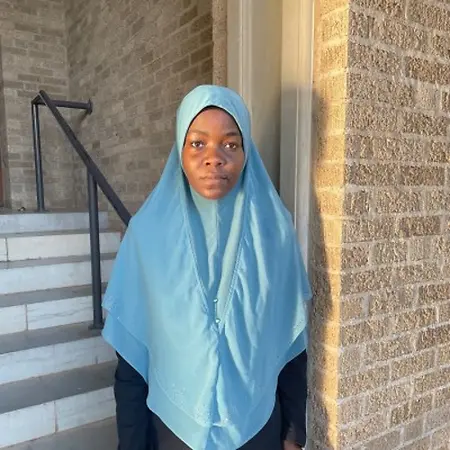
Her Story
About Maryam
I'm currently a PhD candidate at Texas Tech University, where I've been in the field for around 5 to 6 years, starting when I did my master's and now working toward my PhD graduation next year. My research focuses on lung cancer, one of the major causes of mortality in the U.S. and globally. Specifically, I'm studying a particular receptor called EGFR that is frequently expressed in lung cancer and has been very difficult to treat because of resistance and mutations that develop over time. My research investigates why these mutations develop resistance and explores better strategies for the pharmaceutical industry. I work under the guidance of Dr. Adam Smith with a very helpful and supportive team, alongside colleagues working on related receptors in different types of cancers. We deal with cell culture research and fluorescence, which takes time to get real data that we can translate into clinic. The major challenges we face include funding issues and the time-intensive nature of in vitro studies before we can transfer to in vivo and clinical trials. I presented my work at the Biophysical Society Annual Meeting in February this year and currently have a manuscript under review on my EGFR research. Outside of research, I'm passionate about teaching and mentoring. I created a YouTube channel where I make tutorial videos teaching people how to use Python programming language for data science and data analysis, which has over 2,000 views. My focus is more on women, because I originally come from Nigeria, where women's education is still far behind and we need more awareness and representation. My long-term goal is to return to Nigeria at the end of my PhD to secure a faculty position where I can lead STEM research and collaborate with my mentors here in the U.S. to help advance STEM research in Nigeria, particularly for bright young women.
Her Interview
Ten minutes with Maryam
01What are the biggest challenges or opportunities in your field right now?
The major challenges we're facing in general is funding issues, which translates to getting stuff for our research. In terms of research, we deal with cell culture research and fluorescence, and anyone that knows cell culture research knows that it takes time. There are many issues that we deal with, like contamination and reproducibility. It takes time to get real data that we can translate into clinic. Also, because we're doing in vitro studies, it takes time to transfer that to in vivo and then clinical trials.
Join Influential Women and start making an impact. Register now.