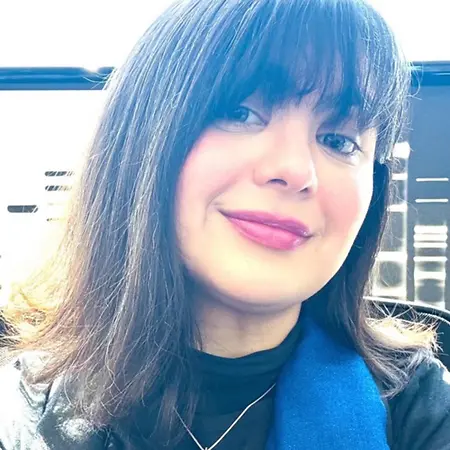
Influential Woman · Biotechnology and Life Sciences
Massa Shoura
Co-Founder, CEO, and CSO, Phinomics
San Carlos, CA 94070
Her Story
About Massa
Massa Shoura is a biotechnology scientist, entrepreneur, and executive leader serving as Co-Founder, Chief Executive Officer, and Chief Scientific Officer of Phinomics, a company expanding the universe of measurable biology to accelerate drug discovery and therapeutic innovation. Since beginning her scientific career in 2008, she has dedicated herself to uncovering hidden biological signals and building technologies that can transform how diseases are studied and treated, combining molecular biology, systems biology, biotechnology, and artificial intelligence to advance new approaches in human health. Before founding Phinomics, Massa built an extensive research career through advanced scientific training and leadership roles. She earned two PhDs: one in biophysics and one in biomedical engineering, and completed her postdoctoral research at Stanford University School of Medicine in the Departments of Genetics and Pathology. As an Arnold O. Beckman Fellow working in Nobel Laureate Andrew Fire's laboratory, she developed deep expertise in gene regulation, circular DNA biology, and translational science, and secured two granted patents. As a Forbeck Scholar, she advanced cancer genomics by uncovering the role of oncogenic circular DNA amplification, deepening understanding of how biological mechanisms drive disease progression. She also led the sequencing and publication of the Pfizer and Moderna COVID-19 vaccine mRNAs, reflecting a commitment to global health.
At Phinomics, Massa leads the company's scientific vision and strategic direction, focusing on technologies that reveal previously unmeasured layers of biology and improve the discovery of new disease targets and therapies. Her research leverages multi-omics and explainable AI to better understand cancer biology, including the role of extrachromosomal circular DNA in tumor evolution and treatment resistance. Driven by scientific curiosity, perseverance, and a commitment to improving patient outcomes, she continues to bridge groundbreaking research and real-world medical impact while inspiring future generations of scientists and innovators.
Her Interview
Ten minutes with Massa
01What do you attribute your success to?
I attribute my success to perseverance, curiosity, and the mentorship I was fortunate to receive. In Stephen Levene's laboratory, and later in Andrew Fire's at Stanford, I found environments that did far more than train me technically. Both encouraged me to think independently, to question established assumptions, and to lead my own projects long before anyone required it of me. That freedom taught me to trust my own scientific judgment. I have relied on that ever since, because much of my work has been in a space the field had largely set aside. Circular DNA was described in the 1960s and then left almost untouched for decades, so pursuing it meant working without an established path or much company. It also taught me that when data does not fit the accepted picture, the right response is to test it more rigorously as opposed to explaining it away. Several of our most important findings met disbelief at first, including my own, and they have held up. Alongside that, I believe resilience, collaboration, and the courage to pursue new ideas are essential to overcoming challenges and achieving meaningful breakthroughs.
02What’s the best career advice you’ve ever received?
The best career advice I received came from the Beckman Foundation, which funded my postdoctoral work. Arnold O. Beckman left behind seven rules for success, and two of them have particularly resonated with me. The first is "hire the best people, then get out of their way." For a scientist becoming a CEO, that has been the hardest and most useful lesson. What actually builds a company is recruiting people who are curious, mission-driven, and hold the same standards of scientific rigor, yet come from different disciplines and backgrounds. You want enough overlap that everyone speaks a common language, and enough difference that each person leaves their own thumbprint and brings a distinct way of solving problems. When disciplines mix, a team reaches solutions no single field would have found on its own. Then you give them real ownership and step out of the way.
The second is "acquire new knowledge and always ask why." Curiosity that keeps asking why tends to lead somewhere the field has not already been. I would encourage anyone to look up all seven. They have aged remarkably well!
03What advice would you give to young women entering your industry?
My advice is to trust your own judgment and not wait for permission to lead. In both laboratories where I trained, I was given ownership of my own projects before I felt ready, and that is where scientific confidence actually comes from. If no one hands you that, take it anyway.
Your ideas may sometimes be ahead of their time. Persistence matters and so does rigor. Hold onto the observation that does not fit, then subject it to harsher scrutiny than anyone else would.
Being a woman can add another layer of complexity, and rejection will come from reviewers, funders and investors alike. Very little of it is personal and most of it is information. Learn what it is telling you, keep opening doors, and keep going.
04What are the biggest challenges or opportunities in your field right now?
The biggest challenge is that we keep building on an incomplete picture of biology. Ninety percent of cancer drugs fail in the clinic, and most fail at the very first decision, which target to pursue. Treatment resistance is the clearest example. Tumors adapt through mechanisms that conventional tools cannot always see, so we are often aiming at a moving target we have no way to measure. That problem grows more urgent as early-onset cancers rise among younger patients, who have the most years at stake.
The opportunity sits in exactly the same place. There is enormous excitement about AI in biology, and the models are extraordinary, but more compute applied to fragmented, single-layer data amplifies noise instead of producing understanding. The bottleneck has moved from the algorithms to the biology itself. Expanding what we can actually measure, and integrating it properly, is what will let these models deliver on their promise- and that is what Phinomics is spearheading.
05What values are most important to you in your work and personal life?
Scientific integrity comes first. In a field where one overstated claim can send other researchers and tech developers down the wrong path for years, being honest about what the data does and does not show is the foundation everything else rests on.
Curiosity is close behind, and it does not switch off outside the laboratory. The same instinct that makes me ask why a result does not fit is what draws me to travel, to the opera, and to conversations with people whose backgrounds are nothing like my own. Exposure to different ways of seeing the world keeps the thinking fresh, and it is the reason I build teams from several disciplines rather than one.
I also value perseverance and service. Perseverance because meaningful science takes far longer than anyone plans for. Service because the entire point is to reach patients, which is why I co-founded Phinomics.
Join Influential Women and start making an impact. Register now.