
This article explores how higher education can move beyond surface-level diversity efforts to embrace disability justice, intersectionality, and systemic transformation. It examines frameworks like DisCrit and critical feminism to argue that true inclusion requires redesigning institutional structures rather than simply accommodating individuals.
“
Letting go was painful, but rebuilding a life true to my spirit became real peace. Wisdom is not in becoming more for the world, but more honest with yourself.
May Alghamdi · In Her Own Words
Her Story
About May
May Alghamdi is a physiotherapist, educator, and researcher whose work centers on advancing inclusive, accessible, and evidence-informed education. For the past three years, she has served as a Research Assistant and Assistant Educator at Saint Louis University School of Education, contributing to disability inclusion research and gerontology with a particular focus on dementia and Alzheimer’s disease. She holds a Bachelor of Science in Physical Therapy and a Master of Science in Rehabilitation Science, and is currently pursuing a PhD in Higher Education Administration with an emphasis on disability inclusion in higher education, alongside a minor in Research Methodology. Her professional preparation also includes certifications in higher education administration for individuals with disabilities, gerontology, Burn, Ostomy, and Wound Management, and Foundations of University Teaching Skills. May’s work bridges academia, clinical rehabilitation, and community engagement. In her educational roles, she supports teaching and student development in areas such as academic writing, educational theory, and inclusive learning practices, while contributing to academic programming that supports educators and adult learners transitioning into contemporary teaching environments. Her research explores accessibility, equity, neurodiversity, and the experiences of students with disabilities in higher education. Clinically, her background includes rehabilitation sciences, burn rehabilitation, wound care, injury recovery, and Cognitive Stimulation Therapy (CST) for individuals living with dementia and Alzheimer’s disease. Across all areas of her work, May remains committed to fostering environments where individuals with disabilities and diverse learning needs are empowered, supported, and meaningfully included.
Her Interview
Ten minutes with May
01What do you attribute your success to?
I attribute much of my success to resilience, adaptability, and a forward-thinking mindset. Rather than viewing challenges as barriers, I approach them as part of the learning and growth process, which allows me to remain optimistic and solution-oriented even in demanding situations. I believe strongly in strategic planning and organization, and I often prepare multiple pathways toward a goal—developing alternative plans that allow me to adapt effectively when circumstances change. This flexibility has strengthened both my academic and professional growth.
Equally important is the value I place on respect, collaboration, and community engagement. I strive to build meaningful relationships with people from diverse backgrounds and create environments where others feel welcomed, supported, and valued. As an international scholar and educator, I see cultural diversity as a strength and approach every interaction with openness, empathy, and professionalism. My commitment to helping others, combined with strong interpersonal and communication skills, has allowed me to connect with communities, foster trust, and contribute positively across academic, clinical, and professional settings.
02What’s the best career advice you’ve ever received?
One of the most valuable pieces of advice I have received is to treat others with the same respect and dignity that I hope to receive in return. This principle has shaped the way I build professional relationships, collaborate with others, and engage with diverse communities. Another lesson that has deeply influenced me is the importance of never “breaking bridges.” Relationships and connections should be maintained with professionalism, integrity, and mutual respect, even when differences exist or a strong personal connection is not present. Over time, I have learned that every interaction holds value, and preserving positive relationships creates opportunities for growth, collaboration, and understanding in both personal and professional settings.
03What advice would you give to young women entering your industry?
My advice to others is to keep moving forward with courage and confidence. Challenges are a natural part of every journey, and it is important not to let difficulties define your path or limit your potential. Life rarely unfolds exactly as planned, and unexpected obstacles may arise along the way, but resilience and adaptability are what allow individuals to grow and succeed. I encourage people to embrace new environments, communities, and experiences with openness and self-belief, while learning how to create a sense of comfort and belonging wherever they are.
For women especially, confidence and courage are powerful qualities. Believing in your abilities, trusting your voice, and continuing forward despite uncertainty can create meaningful opportunities for both personal and professional growth.
04What are the biggest challenges or opportunities in your field right now?
One of the greatest challenges in physical therapy education and clinical practice is the continued reliance on traditional medical models that primarily emphasize physical function and performance outcomes. While these models are valuable in many contexts, they often overlook the diverse experiences and needs of students and practitioners with invisible disabilities, including ADHD, autism, and other forms of neurodiversity. This can create barriers to belonging, confidence, and meaningful participation within academic and clinical environments. As a result, many individuals may struggle to feel fully supported or represented within the profession. Another significant challenge is the shortage of specialized professionals in areas such as burn and wound care rehabilitation, gerontology, and cardiopulmonary rehabilitation. Although these subjects are introduced within physical therapy curricula, they are often not explored in sufficient depth to prepare practitioners for specialized clinical practice. At the same time, these gaps present important opportunities for innovation, growth, and service. I believe that recognizing what is missing within healthcare education and rehabilitation systems creates opportunities to better support underserved populations. For example, when I identified a need for greater expertise in burn and wound care rehabilitation, I pursued advanced training through nursing education in barrier and wound management to strengthen my ability to serve patients within rehabilitation settings. Identifying unmet needs and responding through interdisciplinary learning and collaboration is, in my view, one of the most meaningful ways to contribute to communities and advance the field of physical therapy.
05What values are most important to you in your work and personal life?
In my personal life, I deeply value family, friendship, authenticity, and meaningful human connection. One of my core beliefs is the importance of remaining true to oneself rather than changing to meet social expectations or trends for acceptance. I believe authenticity creates stronger relationships, greater self-confidence, and a more meaningful sense of belonging.
Within the broader community, I value empathy, respect, and open-mindedness. I believe it is important not to judge individuals based on appearance, skin color, communication style, behavior, or cultural differences. People often carry experiences, struggles, and stories that are not immediately visible to others. Approaching individuals with kindness, respect, and understanding creates more inclusive and compassionate communities where people feel valued and supported regardless of their background or circumstances.
Her Content Hub
Articles by May
People Do Not Live One Identity at a Time: What Disability Justice, Critical Feminism, and DisCrit Teach Us About the Future of Higher Education
Beyond Accommodation: How Disability Justice Can Transform Higher Education's Approach to Inclusion
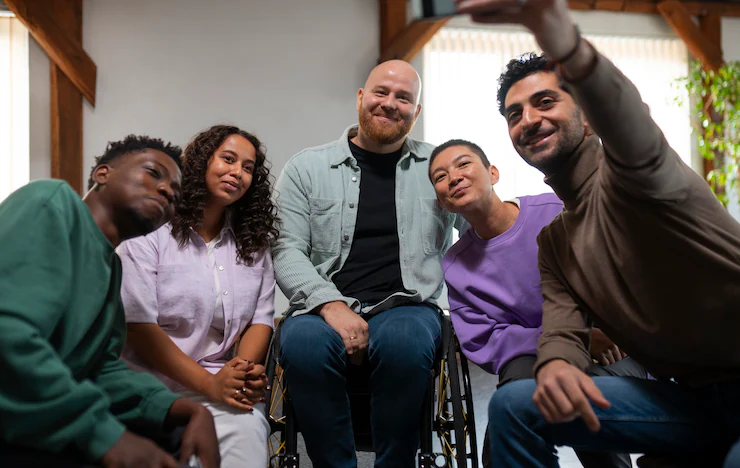
"There is no such thing as a single-issue struggle because we do not live single-issue lives." - Audre Lorde (1984)
Higher education has become increasingly fluent in the language of diversity. We speak confidently about equity. We establish offices for inclusion. We develop accessibility policies. We celebrate diversity through institutional mission statements.
Yet despite these important efforts, many universities continue to approach diversity as though people's identities exist in separate categories. Race belongs to one conversation. Gender belongs to another. Disability is often assigned to accessibility services.
The reality is far more complex. People do not experience their identities one at a time. A disabled woman does not stop being a woman when discussing disability. A Black autistic student does not experience racism separately from ableism. A first-generation student with a learning disability does not navigate higher education through isolated challenges, but through intersecting systems that simultaneously shape opportunity, belonging, and success.
Perhaps this is one of higher education's greatest blind spots. We have become increasingly skilled at organizing diversity. We are still learning how to understand it.
The Limits of the Deficit Model
As a physical therapist, my professional education taught me to identify impairments, improve function, and reduce barriers to participation. Those goals remain essential. However, pursuing graduate studies in Higher Education transformed my understanding of disability. I began to realize that many of the greatest barriers disabled individuals encounter are not created by their diagnoses but by educational systems designed around narrow assumptions of what learning, productivity, intelligence, and success should look like.
This shift mirrors a broader movement within disability scholarship. Rather than asking, "How do we help people fit our systems?" scholars are increasingly asking, "Why were our systems designed this way in the first place?" This question fundamentally changes the conversation.
Disability Justice Is More Than Disability Rights
Many people are familiar with disability rights legislation and accommodations. Far fewer understand disability justice.
Emerging from the work of disabled activists-particularly disabled people of color-disability justice expands beyond legal rights to address the deeper systems of oppression that shape disabled people's lives. Ramirez et al. (2025) describe this movement as a second wave of disability activism grounded in principles such as intersectionality, collective liberation, leadership by those most impacted, love, accountability, and interdependence. Rather than focusing solely on access, disability justice asks how institutions themselves must change to ensure that all people truly belong.
This distinction matters.
Accommodation often responds after barriers exist. Disability justice asks why those barriers were created in the first place.
Why Critical Feminism Belongs in This Conversation
One of the most surprising ideas I encountered was the relationship between disability justice and critical feminism. Traditionally, feminism has challenged systems that privilege certain voices while marginalizing others. Disability justice pursues a remarkably similar goal.
Goulden et al. (2023) argue that both frameworks center the experiences of people historically excluded from dominant systems of knowledge and power. More importantly, both reject the assumption that independence is the ultimate measure of human worth. Instead, they emphasize interdependence, collective care, and mutual aid as essential practices for creating more just communities.
This perspective challenges one of higher education's deepest cultural assumptions. Universities frequently celebrate independence, competition, and individual achievement. Yet education itself has always been relational. Learning happens through communities. Research advances through collaboration. Leadership grows through relationships.
Perhaps interdependence is not the opposite of excellence. Perhaps it is one of its foundations.
DisCrit: Understanding Race and Disability Together
Another framework that profoundly reshaped my thinking is DisCrit, or Disability Critical Race Theory. Developed by Annamma et al. (2013), DisCrit argues that race and disability have historically been constructed together rather than separately. Educational systems have long used assumptions about intelligence, behavior, and ability to justify inequities affecting racialized communities. The framework demonstrates that racism and ableism are not parallel systems operating independently; they frequently reinforce one another through policies, institutional practices, and cultural narratives.
This perspective has important implications for higher education. Students do not arrive on campus carrying separate identities. They bring their whole selves.
Yet universities often organize support through separate offices, separate initiatives, and separate conversations. Mueller and Rajendran (2025) found that students readily recognized racism as a system of oppression but struggled to identify ableism in similar structural terms. Many continued to understand race and disability as separate identity categories rather than interconnected systems shaping educational experiences.
If we teach these issues separately, we risk preparing future educators and leaders to solve only part of the problem.
Beyond Contact: Transforming Systems
Research consistently demonstrates that meaningful engagement with disabled individuals can reduce prejudice. Dole et al. (2025) found that indirect contact-including storytelling, media, education, and authentic narratives-helps challenge stereotypes and foster more positive attitudes toward disability. Likewise, Martiny et al. (2022) argue that engagement should move beyond simple exposure toward experiences that encourage reflection and nuanced understanding.
These interventions are valuable. But disability justice asks us to think further. Prejudice does not disappear simply because people become more familiar with disability. It diminishes when institutions begin redesigning the environments that continue to produce exclusion.
This means examining:
- Curriculum
- Leadership
- Faculty development
- Assessment practices
- Hiring
- Promotion
- Research agendas
- Campus design
Belonging cannot depend solely on changing individual attitudes. It requires transforming institutional cultures.
A Different Vision for Higher Education
Perhaps the greatest lesson disability justice offers higher education is that diversity is not about adding more voices to existing structures. It is about questioning the structures themselves.
It asks difficult questions. Who defines excellence? Whose knowledge is considered legitimate? Who designs our classrooms? Whose ways of learning are rewarded? Whose voices shape institutional decision-making?
These are not disability questions alone. They are leadership questions. Educational questions. Human questions.
As someone whose professional journey bridges healthcare and higher education, I increasingly believe that our responsibility extends beyond helping individuals adapt to existing systems. Our responsibility is also to help redesign those systems. Not because disability is a problem to solve. But because disability reveals possibilities for creating educational environments that are more flexible, equitable, and humane for everyone.
The future of higher education will not be determined by how many accommodations we provide. It will be determined by whether we have the courage to rethink the assumptions upon which our institutions were built.
Because perhaps inclusion is not the destination. Perhaps justice is.
"Disability justice is collective liberation over individual accommodation." - Ramirez et al. (2025)
Explore the psychology behind academic failure in higher education, examining how institutions can shift from stigmatized to generative failure, support marginalized learners, and create systems that foster growth rather than shame.
The Silent Weight of Failure in Higher Education
How institutional systems and psychological factors shape whether failure becomes a source of growth or shame in higher education.
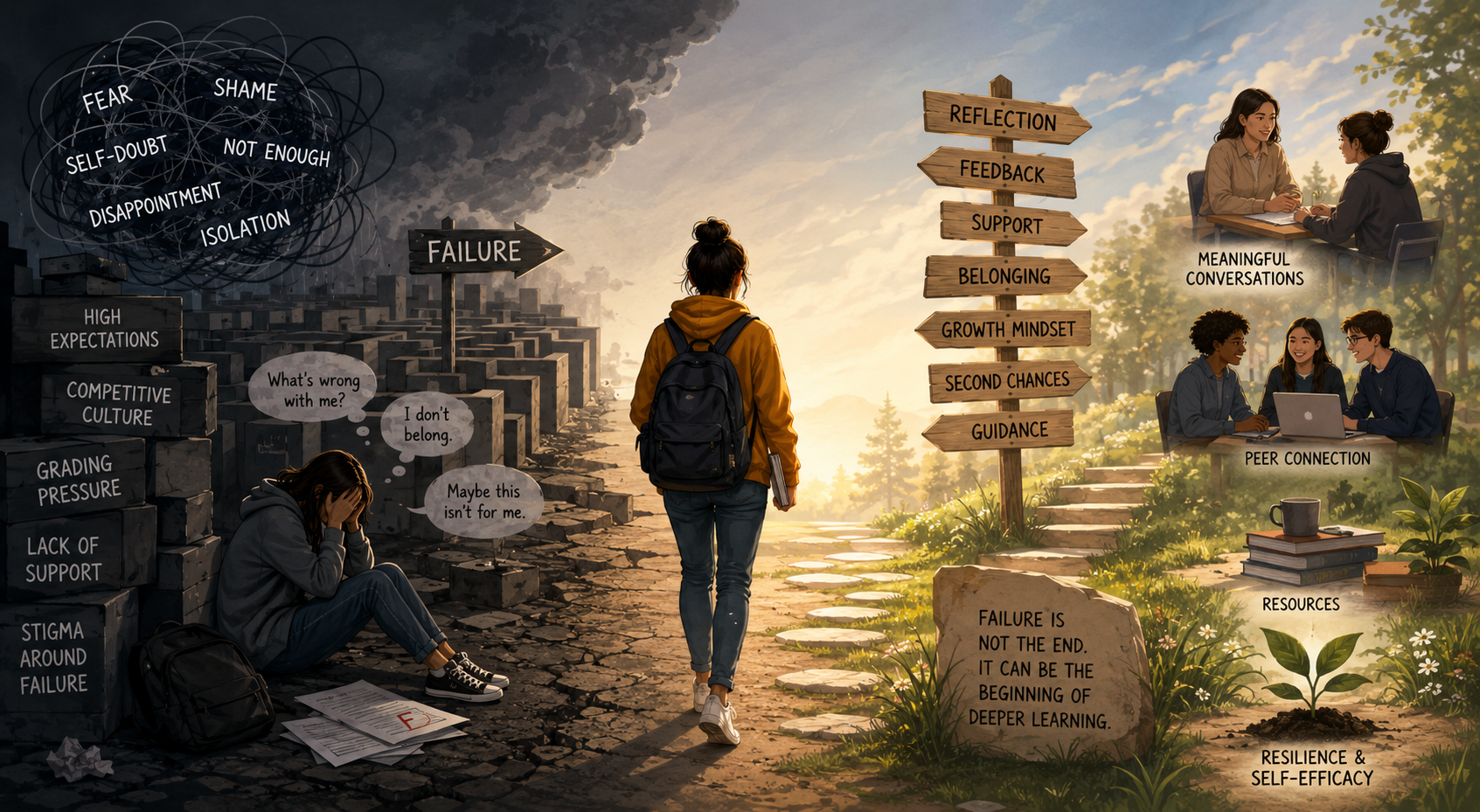
Failure in Higher Education: Understanding the Psychology Behind Academic Setbacks
Failure in higher education is often treated as a final outcome: A low grade, a failed course, a delayed graduation, or an academic warning.
But psychologically, failure is rarely just about performance.
It is often connected to fear, identity, belonging, expectations, confidence, and the silent pressure students carry when they believe they must succeed without struggle. In many higher education spaces, students are taught how to pass, but they are not always taught how to understand failure. They are expected to be resilient, but they are not always provided with the emotional, academic, and institutional support needed to rebuild after disappointment.
This is where the conversation around failure in higher education needs to shift.
Failure should not be understood only as a student's weakness. Sometimes, failure reveals a gap in preparation. Sometimes, it reveals a lack of support. Sometimes, it reveals misalignment between teaching methods, student needs, and institutional expectations.
In this sense, failure becomes not only a student experience but also an institutional mirror. Paul Feigenbaum (2021) captures this contradiction clearly in his article, Telling Students It's O.K. to Fail, but Showing Them It Isn't. He explains that higher education often promotes positive language around failure, while its structures continue to make failure feel dangerous. As he writes, institutions may speak about generative failure, but they often operate through stigmatized failure.
Generative failure is "learner-centered and process-driven," while stigmatized failure is "institution-centered and grades-driven". This distinction matters deeply. When failure is generative, it becomes part of learning. It provides students with feedback, encourages reflection, and creates opportunities to try again. Feigenbaum describes generative failure as a process where mistakes and setbacks are "temporary, healthy, and integral components of any learning process" (Feigenbaum, 2021).
But when failure is stigmatized, it becomes a judgment. It tells students that they are behind, unprepared, incapable, or not good enough. It can cause students to question their intelligence, their place in the classroom, and even their future.
This is why failure in higher education is never only academic.
It is emotional. It is social. It is psychological.
Rawle, Laliberté, and Guadagnolo (2026) explain that failure is central to learning, yet it is often surrounded by stigma and anxiety. Their interdisciplinary review reminds us that failure "permeates higher education," but it is not always discussed as a formative part of teaching and learning. They also emphasize that failure is not experienced equally by all students. Access, opportunity, power, privilege, time, and support determine whether a student can learn from failure or be harmed by it.
This point is especially important because higher education often celebrates resilience without asking who is given the conditions necessary to be resilient.
Some students have financial stability, family support, academic confidence, flexible schedules, and familiarity with university systems. Others are navigating employment, caregiving responsibilities, health concerns, disabilities, language barriers, immigration challenges, or first-generation responsibilities. For these students, failure may not feel like a temporary academic moment. It may feel like confirmation that they do not belong.
Rawle and colleagues argue that failure is connected to power and privilege because marginalized learners may have fewer resources or less time to recover from academic setbacks. They state clearly that failure is "intractable from power and ought to be studied as such" (Rawle et al., 2026). This challenges the common idea that students simply need more grit.
Sometimes, the issue is not a lack of grit. Sometimes, the issue is a lack of safety nets. Sometimes, the issue is a system that asks students to recover without giving them the space, guidance, or dignity to do so.
Ajjawiet et al., (2020) add another important layer by focusing on students who failed but continued their studies. Their findings show that academic failure is not caused by one simple factor. Instead, students explained failure through a combination of dispositional, situational, and institutional factors. The authors argue that this perspective "shifts the blame away from individuals who are framed as part of a deficit model"
This is powerful because higher education often speaks about persistence as if it is only an individual trait. However, persistence is not only about personal motivation. It is also shaped by advising, belonging, curriculum design, feedback, faculty response, institutional policies, and whether students feel safe enough to ask for help.
Ajjawi and colleagues also found that students who fail often carry a significant emotional burden. Students described feelings of shame, embarrassment, disappointment, anger toward themselves, and feeling "stupid." These emotions can damage confidence and self-efficacy and may prevent students from seeking support when they need it most.
This brings us back to the deeper question. The question is not only: Why did this student fail? The deeper question is: What kind of system allows failure to become a source of silence, isolation, and self-doubt instead of growth, guidance, and transformation?
Fear of failure also shapes how students engage in learning. Nakhla's study on fear of failure, academic motivation, and student engagement found that fear of failure is associated with motivation and engagement in complex ways. Students with high fear of failure and low motivation demonstrated overall disengagement, while students with low fear of failure and high motivation demonstrated stronger engagement across skills, emotions, participation, and performance (Nakhla, 2019).
This reminds us that fear is not a small emotion in education. It can shape whether students participate, take risks, ask questions, seek feedback, or quietly withdraw from the learning process.
When we understand the psychology of failure, We begin to see students more fully. Not as numbers. Not as outcomes. Not as problems to be corrected. But as human beings learning how to navigate pressure, Uncertainty, disappointment, and the difficult process of becoming.
Failure should not be romanticized. It should not be used as a motivational slogan without structural support. It should not be presented as beautiful while students are left alone in shame. Failure should be understood, guided, and supported.
A more humane higher education system would treat failure as information, not identity.
It would help students understand what happened, what support is available, what can be changed, and how they can continue. It would create learning environments where feedback comes before final judgment, where struggle is discussed openly, and where recovery is part of the curriculum rather than an individual burden. Because sometimes the most important learning does not begin with success. It begins with the moment a student is given the chance to rise again with support, dignity, and a deeper understanding of themselves.
This article challenges the deficit-based approach to disability in higher education, advocating for disability justice as a transformative institutional framework. It explores how environmental barriers—not diagnoses—create exclusion and calls healthcare professionals to help redesign systems that genuinely embrace human diversity.
The Question That Changed My Career: What If the Problem Was Never Disability?
From Deficit to Dignity: Reimagining Disability Justice in Higher Education and Healthcare
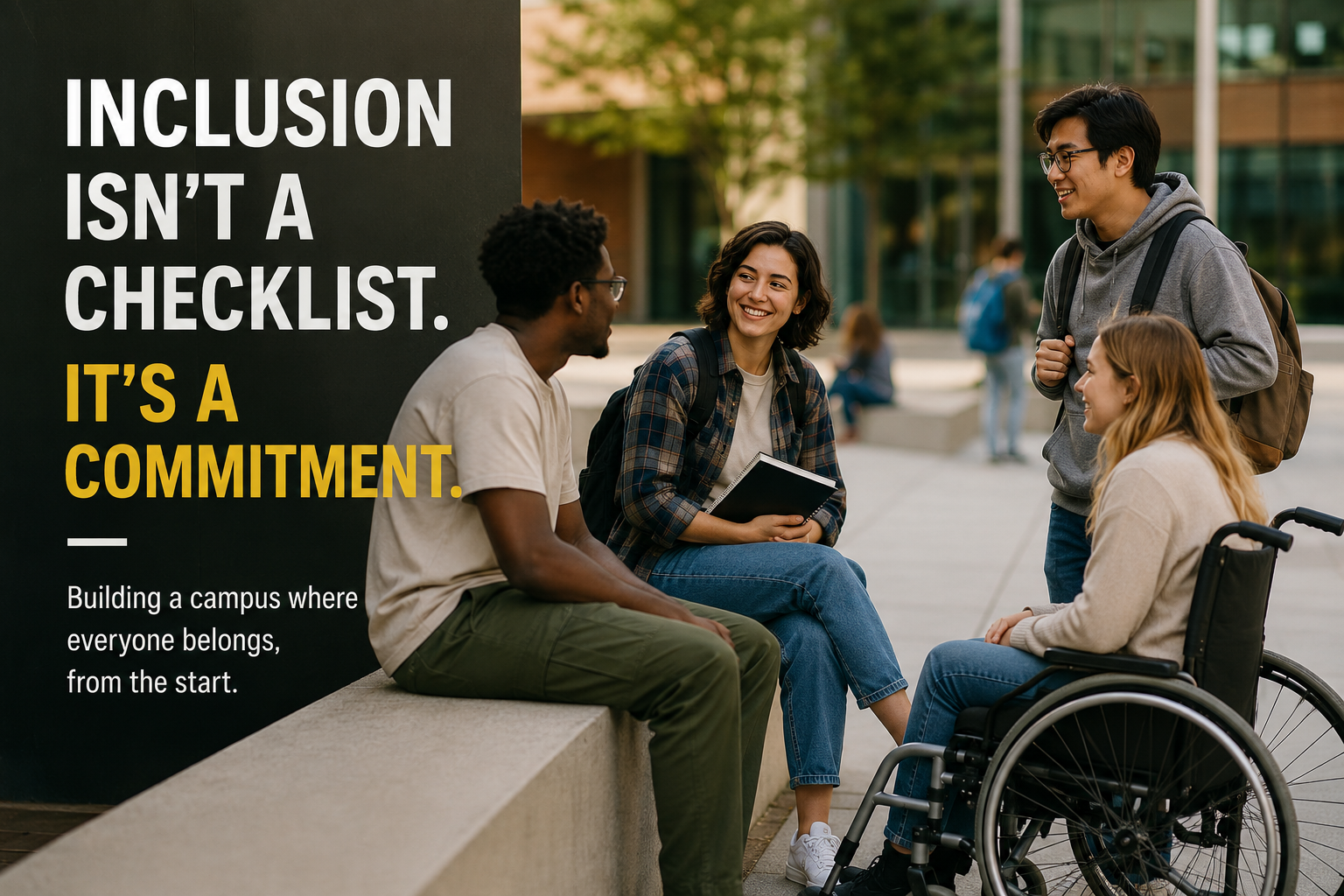
"No one builds their lives on remediated weaknesses. No one." — Kristie K. Patten (2022)
For decades, disability has been viewed through a deficit-based lens. Whether in healthcare, education, or the workplace, the first question has often been: What needs to be fixed?
This question has shaped professional practice, educational policy, and institutional culture for generations. Although often asked with good intentions, it reflects a deeper assumption—that disability is primarily an individual problem rather than a reflection of systems designed around narrow definitions of normalcy.
As healthcare professionals, many of us were trained to identify impairments, limitations, and functional deficits. Our role was to restore function, improve independence, and reduce disability-related challenges. These goals remain important. However, they are no longer sufficient. The growing scholarship on disability justice and neurodiversity invites us to ask a different question:
What if the greatest barriers people experience are not their diagnoses, but the environments designed without them in mind?
The Deficit Model Is No Longer Enough!
Traditional healthcare has achieved remarkable advances in rehabilitation and clinical care. Yet disability is more than a medical experience.
It is also an educational experience.
A social experience.
A cultural experience.
A political experience.
When disability is viewed only through the lens of impairments, institutions often overlook the environments that create exclusion. Students struggle not because they are incapable, but because educational systems frequently reward one way of learning, one pace of working, and one definition of success.
Quigley et al. (2024) argue that, despite growing commitments to equity and inclusion, there remains "a gap between rhetoric and reality concerning neurodiversity." Universities increasingly embrace the language of strengths and diversity, yet many continue operating according to neurotypical assumptions that unintentionally disadvantage neurodivergent students (Quigley et al., 2024).
Changing the language without changing the system is not transformation. It is rebranding.
The Invisible Cost of Ableism
Perhaps the greatest consequence of ableism is not only exclusion—it is internalization. When students repeatedly encounter environments that question their competence, require them to justify accommodations, or measure success using rigid definitions of productivity, those messages gradually become personal beliefs.
Over time, external stereotypes become internal narratives.
Many students begin asking themselves:
"Maybe I don't belong here."
Disability justice reminds us that this question should never belong to the student.
It belongs to the institution.
Accommodation Is Not the Finish Line
For many universities, disability inclusion is measured by accommodation processes. But accommodation is only one step. Accommodation asks, How can we help this student succeed within our existing system? Disability justice asks a far more transformative question: Why was the system designed to exclude people in the first place?
Otis (2025) challenges higher education to move toward collective access, where accessibility is embedded into educational design from the beginning rather than added after barriers appear. Similarly, disability justice shifts our attention from compliance toward belonging—from individual adjustments to institutional transformation.
Belonging should never depend on disclosure. It should never depend on documentation. And it should never depend on how closely someone approximates society's definition of "normal."
Disability Justice Is a Leadership Framework
One of the most powerful lessons emerging from disability scholarship is that disability justice extends far beyond disability itself. Ramirez-Stapleton, Porter, and Kennedy (2025) describe disability justice as "a way of life," emphasizing that justice cannot be separated from race, culture, identity, or community. They also remind us that "both communities have fought to be seen as human in this world," highlighting the deep connections between disability justice and broader struggles for equity. This perspective fundamentally changes how institutions should think about inclusion. Rather than asking disabled students to adapt to higher education, disability justice asks higher education to become more responsive to human diversity.
What This Means for Healthcare Professionals
This conversation is especially important for those of us working in rehabilitation, physical therapy, occupational therapy, speech-language pathology, psychology, and medicine. Clinical expertise will always matter. But perhaps our future contribution extends beyond helping people function within existing systems.
Perhaps our responsibility is also to help redesign those systems.
Healthcare professionals understand adaptation.
Higher education needs that same mindset.
Instead of asking, "How can students adapt?" perhaps we should begin asking, "How can institutions evolve?"
"Difference is a natural and indeed important aspect of life." (Quigley et al., 2024)
That sentence represents far more than a philosophical statement.
It represents a new educational paradigm.
One where diversity is expected rather than accommodated.
One where disability is recognized as expertise rather than deficiency.
One where belonging is designed into institutions rather than earned by individuals.
Perhaps the future of higher education is not about helping students become more "normal." Perhaps it is about building institutions that recognize human diversity as the foundation of learning rather than the exception.
Because when we stop asking people to fit our systems, we finally begin creating systems worthy of the people they are meant to serve.
Join Influential Women and start making an impact. Register now.