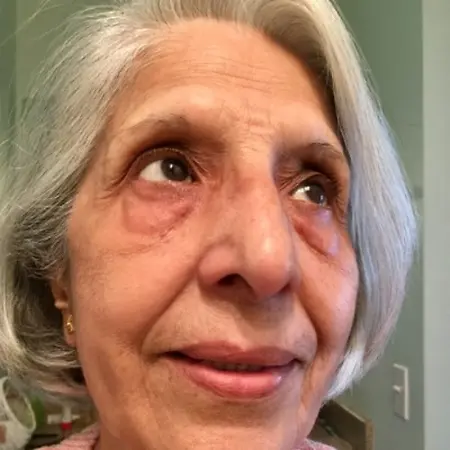
Her Story
About Meera
I have dedicated over three decades to teaching and research in the field of pharmacology and addiction science. After earning my PhD in chemistry with distinction from Delhi University, where I had the privilege of working under one of India's topmost chemistry professors on natural products, I began my career at Ranbaxy pharmaceutical company. However, after six months, I realized that industry research wasn't for me because they wanted me to do research on the products they want to promote, not what I wanted to do as a researcher. I was interested in drug abuse research, so I pursued a postdoctoral fellowship in the Department of Pharmacology at All India Institute of Medical Sciences, which is like the Johns Hopkins of India. Within a year, I was hired as a lecturer in the Department of Clinical Pharmacology, and later joined the Department of Psychiatry as an assistant professor. This was during a critical time when India experienced a sudden surge in heroin addiction, and the Prime Minister contacted our institute to establish an addiction center. We became the National De-Addiction Center, and for 15 years, I was involved in training doctors, pharmacologists, psychiatrists, and nurses across India on how to handle addiction cases. I started the biological testing laboratory, beginning with urine testing so clinicians could verify what substances patients were actually using, then expanded to blood testing and eventually genomic research. I'm the first person in India to study genomic pathways in substance abuse in the Indian population, focusing on how individual genetic backgrounds require personalized treatment approaches. I've published several hundred papers, received multiple NIH awards, and held a United Nations Fellowship in 1990 at the University of Glasgow working on substance and alcohol abuse. I've also worked with universities including University of Pennsylvania, New Orleans, San Antonio, and Minneapolis. I'm a Fellow of the Royal Society of London and the National Academy of Medical Sciences in India. After retiring at age 60 in India, I applied for a U.S. green card, which was approved in three months under the EB1 category based on my achievements. Even in retirement, I continue to receive five to six invitations annually for national and international plenary talks and distinguished speaker engagements, and I write book chapters on addiction and genomic pathways.
Her Interview
Ten minutes with Meera
01What do you attribute your success to?
I attribute my success to my unwavering commitment to doing research in the field that I'm passionate about, rather than what others wanted me to do. When I worked at the pharmaceutical company, they wanted me to do research on the products they wanted to promote, but I left because I wanted to do research in my field, in drug abuse. Even when my immediate boss at Ranbaxy tried to convince me to stay, telling me I had done fantastic work and would get promotions, I chose to leave because my parents needed my help and I didn't have new projects in my pipeline that aligned with my interests. What mattered to me was my quality of work and having the freedom to do what I wanted to do. I was fortunate to work under topmost mentors - one of the topmost chemistry professors in India during my PhD, and then one of the topmost pharmacologists of India during my postdoc. I told my postdoc mentor that what mattered to me was my quality of work and having his mentorship, even though I was leaving a permanent job for a temporary fellowship. Throughout my career, I maintained this focus on meaningful research over financial incentives or job security, and I believe that dedication to quality and passion for my field is what led to my achievements.
02What’s the best career advice you’ve ever received?
Always Keep your focus on your goals no matter what
Try to develop inner strength and Maintain Balance in times of Adversity
Always remember in life that every day would be different and after darkness, there would be light just like Sunshine follows darkness
03What advice would you give to young women entering your industry?
I would tell young women entering toxicology or pharmacology that it can be very difficult to work in industry because industry wants to make profit. When I finished my PhD, I could have easily gone to any pharmaceutical company, and I did work for six months at Ranbaxy Lille. But after six months, it was difficult for me to work there because they wanted me to do research on the products they want to promote, and not what I want to do as a researcher. I was interested in drug abuse, and if you want to do research in drug abuse in any industry, it is only those companies which are making drugs for substance abuse. The challenge is that pharmaceutical companies make drugs based on studies that may say addiction happens because of down-regulation of a neurotransmitter, so they'll make drugs to upgrade it. Then other studies will say it's because of upgradation, so they'll make drugs to down-regulate it. But the real answer lies in genomic pathways and individualized treatment. Depending upon your genomic background, the treatment has to be individualized. Not everybody responds in the same way. So my advice is to pursue academic research if you want the freedom to investigate what truly matters, rather than what a company wants to promote for profit.
04What are the biggest challenges or opportunities in your field right now?
Every field has challenges, in fact Life it’s a Challenge
05What values are most important to you in your work and personal life?
The most important values to me are the quality of my work and the freedom to pursue research that I'm passionate about, but also recognizing that family comes first when they need me. When my mother was sick and my father was undergoing eye surgery, I needed one week to be with them, and my company created a fuss about it. My immediate boss tried to convince me to stay, saying I had done fantastic work and would get promotions, but I told him that work is important, but if my parents need my help, that takes priority. I said to him that my mother is sick, my father's undergoing eye surgery, I need to be with them. I have one sister only, and my sister was also taking off from her job, so I couldn't expect her to do everything. For me, what matters is my quality of work and having the freedom to do what I want to do, but not at the expense of my family responsibilities. I've always believed that my achievements should be earned through my hard work and intelligence. As I told the interviewer, my CV talks about me - it's based on whatever my achievements are, earned through dedication to meaningful work.
Join Influential Women and start making an impact. Register now.