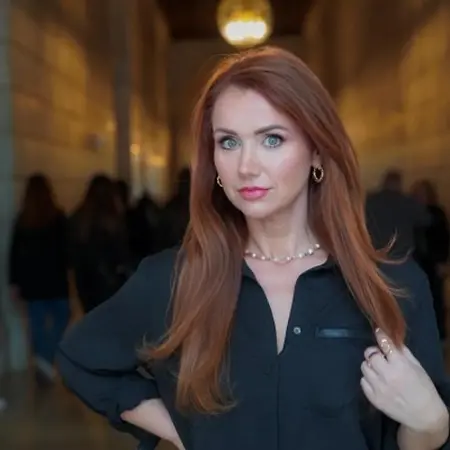
Her Story
About Meg
I founded Every Queer in 2012 after recognizing that the travel experience was fundamentally different for LGBTQ women, and the information we needed simply didn't exist online. With my background in LGBTQ advocacy and youth legislation work at both federal and state levels, I was uniquely qualified to have conversations around the difference between social acceptance and legal acceptance. We built Every Queer into a comprehensive platform that now serves just shy of a million annual readers and 200,000 social media followers, providing not just travel media content but also consulting on marketing to the LGBT community, content agency services including photography and videography, and group tours to destinations around the world. As chairman of the board for the International LGBT Travel Association, I work on higher-level partnerships with organizations like the UNWTO and the European Travel Commission to conduct global research on LGBT travel. One of our key findings is that if the LGBT community was a country, we'd have the third largest GDP in the world, and we take 7 times as many vacations as straight people because we're largely dual income with no kids. My days involve a lot of conferences, public speaking, media relations, writing articles, and work related to my personal brand as an entrepreneur. I'm passionate about maintaining rigorous editorial standards and providing accurate information for our community, especially as traditional LGBT media publications have been closing - the last magazine in North America, Curve magazine, closed 3 years ago.
Her Interview
Ten minutes with Meg
01What do you attribute your success to?
I attribute my success to all the women that came before me. I stand on the shoulders of mountains and legends in this industry, as well as in queer entrepreneurship in general. I wouldn't be here if it wasn't for the women who fought for equality and fought for our rights in a time where they were getting spit on - in the 1920s advocating for suffrage, and the 1960s advocating for the ERA, all of those kind of things. There have been so many incredible queer women, as well as straight women, who have really offered me a hand, guided me and mentored me along the way. I absolutely would not be able to be a female entrepreneur, let alone a queer female entrepreneur, in such a public, global way without the women who did the hard work and made it easy for me to do that.
02What advice would you give to young women entering your industry?
At this point, the world changes every 5 years, and what is possible right now, and what is encouraged right now, may not be what is possible and encouraged in 5 years, or 10 years, or 20 years, so dream big and create the opportunity that you want to see.
03What are the biggest challenges or opportunities in your field right now?
We're losing micro-niche media as traditional media faces its downfall. The last magazine in North America, the amazing Curve magazine, closed its doors 3 years ago, and now it's limited to digital media - there's only two platforms left in North America, us and Autostraddle, and only one traditional magazine left, which is Diva Magazine in the UK. We're losing information and those rigorous editorial standards of ensuring that information is accurate. Understanding the scope of this phenomenon is incredibly important, especially when you're a marginalized community and the conversations are built around things like safety and legality and policy and social acceptance. Those conversations have to come from our community, for our community. When there's a lack of funding and a lack of opportunities but there's a demand from the audience, it's creating a really unique context where our community is screaming for these things, but funders aren't meeting the community where they're at. There's also a large hole in the lesbian travel industry that stems from issues with women entrepreneurship in general - women couldn't even get a business loan without a male co-signer until recently. The root of homophobia is misogyny, and that vacuum has been created despite there being a need for it, because funding often comes from older, straight, white men who can't possibly picture what the needs of a dual-woman household would be.
Join Influential Women and start making an impact. Register now.