Her Story
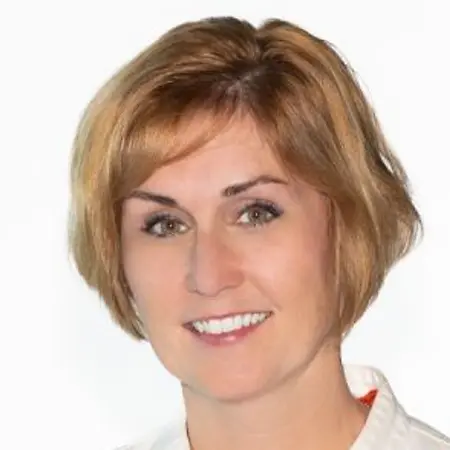
About Megan
Megan M. Hanik is a seasoned human capital executive and Chief People and Operations Officer based in the Washington, DC–Baltimore area. She leads people strategy, organizational operations, and culture at Groundswell, where she focuses on building a human-centered, high-performance workplace aligned with mission-driven outcomes. With more than two decades of experience in HR and organizational leadership, she is recognized for integrating strategic talent practices with operational execution to support both business growth and employee engagement.
Her career spans senior leadership roles across major consulting and government contracting organizations, including Booz Allen Hamilton, PwC, General Dynamics, and CSRA. Throughout this journey, she has specialized in organizational development, change management, talent management, and large-scale transformation initiatives, including mergers and acquisitions and workforce integration. She has also led executive development, HR analytics, and leadership pipeline programs for large, complex workforces, often focusing on aligning talent strategy with evolving business and technology needs.
Megan holds a Master’s degree in Organizational Development from Marymount University and an Executive Coaching certification from George Mason University. She is known for her consultant-informed, innovation-driven approach to HR, emphasizing the use of leadership assessments, coaching, and emerging HR technologies to strengthen organizational effectiveness. Her professional philosophy centers on making HR a strategic business partner while fostering ethical leadership, adaptability, and continuous development across organizations.
Her Interview
Ten minutes with Megan
01What do you attribute your success to?
I think my success has been a combination of resiliency. I think it has been taking calculated risks and saying yes. I'm a lifelong learner, and being curious has been key. I started as a training consultant and facilitator, helping other people learn, and it just morphed over the years to more critical topics like mental health and exposed me to different leader groups. It evolved from training to owning onboarding, then talent management. I had imposter syndrome when I got into true HR like owning benefits and comp, wondering if I belonged there coming from a training consultant background. But because I'm curious, because I'm authentic, and because I believe in strengths and individualism, I might not be the smartest person when it comes to comp and benefit structure, but I surround myself with people that are. I can bring that out of them, and together we can be a powerhouse HR team. I don't have to know everything, and I don't have to hide the fact that I came from a learning background. Learning and being curious made me who I am. No imposter syndrome - I own it. By continuing to learn from others, embrace them, and bring them on, that is why my team got recognized for the award they got, and frankly why I got individual recognition as well.
02What’s the best career advice you’ve ever received?
The best advice I ever received is if you are scared to approach someone with an ask, and when you look at it, if the worst case scenario is that the answer is no, really think about that. If you prepare yourself and the worst case is no, but not asking means you never know where you stand. So whether that's 'I deserve a raise,' or 'I think I want to try a different career path,' or 'I have an idea that I'd like to pitch to you,' if the worst case scenario is no, is there really a downside or a risk in not putting it out there? I think women a lot of times don't do that because they're so scared of hearing no.
03What advice would you give to young women entering your industry?
There are a lot of things that will be thrown at you, and everybody has different experiences. But the most important resume that you will have in life is your personal resume. And if you choose to have a family, it will be your mom resume. So always think through - that's great that you have your professional resume, that's great that you have your accomplishments, but if something were to happen tomorrow, if you value travel, if you value family, what will that resume say? Because that's your legacy. That's what's going to stick, not the professional one. So make sure that you have balance and make sure you don't lose yourself. You can really lose yourself trying to go up the ladder. You can be told no a lot, you can get down on yourself. So figure out those value pieces and create that personal resume. You'll have the professional one, but make sure that personal one is there. And honestly, the question about community and giving back - have that always in place. Don't ever deprioritize that, because you'll lose yourself. You'll lose that personal resume.
04What are the biggest challenges or opportunities in your field right now?
Right now in my field, I think the biggest challenges are twofold. First is HR as a partner, not as administrative. A lot of that administrative work can be done with technology, can be done with AI, but the sticky, really hard stuff can't. Right now, HR has to deal with a lot of individuals who have mental health challenges, whether it be college kids that actually went to college during COVID - we have our COVID kids coming into the workforce. We also have our highest population of individuals that are retiring right now, so there are gaps in knowledge and we need to create succession plans. It's the human side of human resources. If people in industry can separate human and resources and tackle the resource piece with technology, innovation, and process improvement programs, and find the right team that can support the human aspect, I think that will make a huge difference at any company.
05What values are most important to you in your work and personal life?
Authenticity is most important to me. I value individualism - realizing each person has baggage, has story, has value. And if you really get to know them, you can bring that out. Each person has a place. I also value business ethics, and that comes in all forms - following through, saying something and doing what you say you're going to do. I truly try to lead so that if somebody from my personal life meets me, it is the same Megan that somebody in a professional setting would experience. Not 'oh my god, she's a totally different person.'
Join Influential Women and start making an impact. Register now.