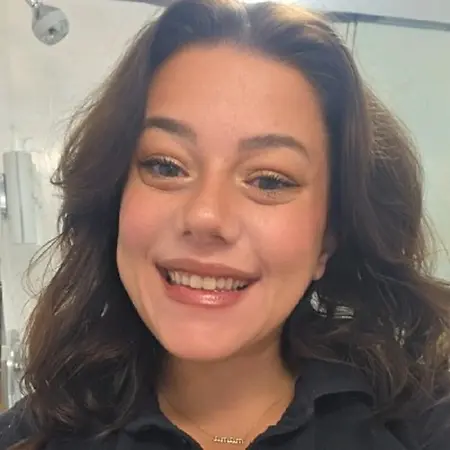
Her Story
About Megan
My journey in publishing began as an author, and over 9 years I published 56 titles under my pen name Cora Lee June. My biggest achievement was hitting the USA Today bestseller list with a title that reached number 36 on the store. That success came from what I honestly attribute to luck - publishing the right book with the right market at the right time. My first book became a bestseller after it got picked up by someone who shared it on a blog that went viral. As the publishing landscape shifted with AI, I saw it becoming harder to get visibility, and while I loved the industry, I didn't have it in me to fight that battle as an author anymore. The constant pressure from publishers wanting more, more, more led to burnout, and what started as an art form I loved became something I had to churn out for contractual obligations. I kind of lost that love for creating because it became a full-blown business I never really signed up for. So I transitioned to where I could support authors who are fighting the good fight. For the past 2 years, I've been with Baventi as Head of Partnerships, engaging with bookstores, publishers, and authors, connecting them on our platform and setting them up for signings. I also do PR and press work for Ink Games Publishing, which creates special edition puzzles of popular books - the companies joke that they have shared custody of me. Through luck again, I met the right people at the right time, including a developer at a signing in Australia who was starting Baventi, and now I'm working for this huge startup that has already done $14 million in revenue in only 18 months. What drives me now is helping authors diversify their income streams through intellectual property licensing and connecting indie authors with bookstores and readers through in-person events, because that community is so important in this digital landscape we're navigating with AI.
Her Interview
Ten minutes with Megan
01What do you attribute your success to?
I attribute my success to luck, honestly. In publishing, it was just publishing the right book with the right market at the right time. My first book became a bestseller after it got picked up by someone who shared it on a blog that went viral. I know good writing comes into play, but sometimes in business, especially when it's hitting the right market at the right time, luck really did hit me, and luck has continued to hit me. I made really good friends, and one of them was a developer, and he was talking to me about starting this new company. I just so happened to meet them at a signing in Australia, and now I'm working for this huge startup that has already done $14 million in revenue and has only been around for 18 months. It's just kind of been meeting the right people at the right time, publishing the right book at the right time. I just have had a lot of luck. I know that's probably not the answer you want to hear, but it's reality sometimes. Sometimes a book just hits right at the perfect time, like vampire books were really big during Twilight, so people who published those then saw a big boom. Sometimes that's just what happens.
02What’s the best career advice you’ve ever received?
The best piece of advice I've received is to maintain a work-life balance. In the beginning of my career, I had a lot of success, and I think sometimes success and, for lack of a better term, fame - not that I was ever top of the line - but it's addictive, and you almost get a dopamine rush when you publish a new book and everyone's rushing for it, or when we launched Baventi and Ink Games. I'm a very ambitious person, and I would get lost in that. When I finally took time to have boundaries in my work, to create a better work-life balance, it changed everything. Most of my stuff is remote aside from when I travel for events, and sometimes you gotta close the computer screen and separate your life from work, even though you live in the same area where you work. Creating those boundaries is probably one of the best things I've ever done because it's improved my mental health, it's improved my relationship with my family, and it allows me to have time to puzzle, even though puzzling is a job for me as well. It allows me to take the kids to that t-ball game. Close the computer. Don't answer emails on your phone when you're at your kid's cheer competition. Allow there to be some separation. Burnout is a real thing, and it's part of the reason I don't publish anymore. My publishers were just wanting more, more, more, more, more, and I couldn't do it anymore. Something I loved that was an art form became something I had to churn out for contractual obligations, and I hit a wall. I kind of lost that love for creating because it became a full-blown business that I never really signed up for.
03What advice would you give to young women entering your industry?
I would tell them to build community and to lead with community and professionalism. A lot of people in publishing forget the community that got them where they were. I think artists in general forget the corporate side of things, but I think it's important to remember that you are running a business, and you have to be strategic in that business. We all join an industry for the love of the art, right? For the love of crafting a story. And then we unfortunately become business owners as a side part to that. Starting out knowing that you love that art, but understanding that you're starting a business and you have to operate like a business to be successful - you can't just lean on that art. That's very important. I see so many people fail because they don't operate like a business in this industry. We all just wanted to write books, and we didn't realize that we'd be filing for S-Corp and doing press releases and all of that. We just wanted to write a book, and so many people - I think it's hard to get into the industry just with a love for books, because then you learn, oh, this is a full-time job, no matter what sector of the industry you're in.
04What are the biggest challenges or opportunities in your field right now?
The biggest challenge right now has been the shift in the publishing market. AI and publishing has really changed the landscape, and I saw on the horizon that it's going to be a lot harder to get visibility in publishing. That's why I'm so passionate about what I do - with Ink Games, we do intellectual property licensing to give authors some diversity in their income streams, because I know how hard it is in the AI landscape. And with Baventi, we connect bookstores with indie authors and connect readers with events, so there are these in-person things that add community, which is so important because it's just changing so much in this digital hellscape that we're in with AI. The biggest opportunity in our industry right now is diversifying your revenue streams. A lot of authors in the last year are starting to do special editions, or they're offering multiple formats of the same book. They're going into audiobook space, which is a lot easier to access now with more audiobook publishers. So they're taking one product and truly offering multiple formats of it to get the most return on their creation. I definitely think right now, with your tried and true books, it's important to offer multiple formats of that same book, whether it be a game, or one of my author friends recently is translating her book into comics for a webtoon. Taking the stories that work and finding different avenues to do that is really big, especially for people who published before AI. That element of engaging those fan bases and offering them more ways to revisit stories that are important to them is really special.
05What values are most important to you in your work and personal life?
Communication is a strong value, and I know that's a weird answer, but I think - obviously, I love words. I'm a wordsmith at heart, and I think I value being able to communicate needs, communicate with my kids. Communication branches off of everything, like honesty and integrity. If you can communicate what you're feeling, that's honesty. If you can communicate your needs, that's being authentic, and every value - the basis of every value has to have good communication, in my opinion.
Join Influential Women and start making an impact. Register now.