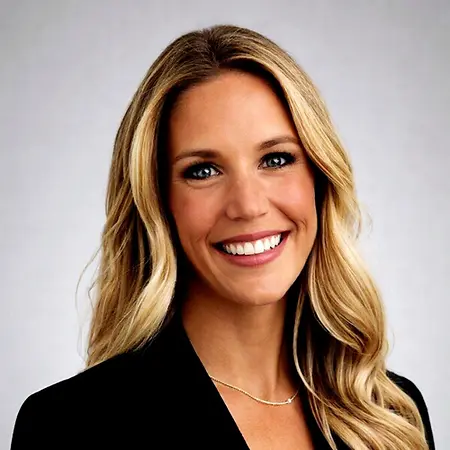
Her Story
About Megan
Megan Manotti, BSN, RN, OCN, is an accomplished oncology nurse with nearly 20 years of clinical experience, including a decade dedicated to pediatric oncology. She has worked at leading institutions across the United States, serving as a clinical research nurse and developing deep expertise in complex pediatric and central nervous system malignancies. For the past 10 years, Megan has specialized in radiation oncology, where she is known for patient advocacy, clear education, and steady guidance for families navigating life-changing diagnoses. She has also led and supported quality and access initiatives—contributing to departmental process improvements, creating patient-facing education materials, and helping expand telemedicine services.
In September 2025, Megan’s youngest son, Logan, was diagnosed with Primrose Syndrome, an ultra-rare genetic neurodevelopmental disorder. Confronted with limited research and no clear roadmap, she connected with families worldwide and launched the Beyond Primrose ZBTB20 Foundation—the first advocacy organization dedicated to Primrose Syndrome. As Founder and CEO, Megan combines clinical rigor with compassionate leadership to ensure families remain central to research and care decisions. She has convened a multidisciplinary Scientific Advisory Board, built research partnerships focused on accelerating therapeutic progress, and is initiating the first IRB-approved Primrose Syndrome registry and bioregistry to advance natural history understanding and trial readiness.
Megan’s work reflects a rare blend of clinical excellence and relentless advocacy. Through Beyond Primrose, she is transforming a personal diagnosis into a global mission—raising awareness, strengthening community support, and building the infrastructure needed to move research forward so families everywhere feel seen, supported, and hopeful.
Her Interview
Ten minutes with Megan
01What do you attribute your success to?
I attribute my success to a combination of clinical training, lived experience, and the people who have chosen to build this mission with me.
First, my background in oncology nursing shaped how I lead. It is an enviornment in which you learn quickly that patients and families need more than medical care—they need advocacy, clear education, and someone who can stay calm and steady when situations are high-stress and emotionally heavy. That ability to listen closely, translate complex information into understandable steps, and guide families through uncertainty has carried directly into rare disease work, where the stakes feel urgent and the path forward is often unclear. My career has also allowed me to see firsthand how powerful patient advocacy groups can be in accelerating research and development.
I also credit my success to collaboration. I’ve been fortunate to work alongside dedicated families, clinicians, and researchers who share a sense of urgency and integrity. Building the Beyond Primrose ZBTB20 Foundation has never been a solo effort—it’s been the result of close partnership, clear communication, and a shared commitment to turning hope into action.
Finally, my son’s diagnosis gave me a clarity of purpose I can’t ignore. When you’re told there are no answers, you either accept it—or you start building them. I’ve learned to channel grief into organization, urgency into strategy, and compassion into systems that can outlast any one person. That’s what continues to drive me: keeping families at the center, and creating real momentum toward understanding and treatments for all people impacted by Primrose Syndrome.
02What’s the best career advice you’ve ever received?
The best career advice I’ve ever received is: You don’t have to have every answer—but you need to know what to ask and be the person who follows through.
In oncology nursing, especially in high-stress moments, no one benefits from perfection or panic. What families and teams need is someone who will stay calm, communicate clearly, and take ownership of the next step—then actually do it. That advice taught me that credibility isn’t built by knowing everything; it’s built by being dependable, asking the right questions, and consistently showing up.
It’s also shaped how I lead as a founder. In rare disease, you’re often navigating uncertainty, limited data, and systems that move slowly. Following through—on relationships, commitments, and the unglamorous details—has been one of the biggest drivers of progress, trust, and impact.
03What advice would you give to young women entering your industry?
Don’t take “no” for an answer—and listen to your intuition. If I had listened to the first doctor who told me there was nothing we could do, I not only wouldn’t have been able to create this impact for my son, but it never would have led to the broader impact we’re now building for the entire Primrose community. That mindset applies just as much to newly diagnosed families: keep asking questions, keep advocating, and don’t let one opinion define what’s possible.
I’d also tell young women entering healthcare and advocacy work that no one should have to do this alone. During our diagnostic journey, the diagnosis itself was hard—but the isolation was what made it feel impossible to get through. So whether you’re a clinician or a newly diagnosed parent, remember: you are not alone. Today, we have an active foundation, engaged researchers, and physicians who truly want to support families and move the science forward.
Lead with your values. Put family first, and meet people where they are with compassion—especially in moments of fear, grief, and uncertainty. At the same time, build with collaboration and community: bring families, clinicians, and researchers together, keep everyone aligned, and create momentum through shared goals.
Finally, protect trust by doing the work ethically and with integrity. Be transparent about what you know, what you don’t, and what the next steps are. When you combine persistence with compassion, and urgency with integrity, you don’t just build a career—you build change that lasts.
04What are the biggest challenges or opportunities in your field right now?
One of the biggest challenges in the ultra-rare disease space is building something credible, sustainable, and fundable without losing the urgency families live with every day. In the Primrose community, it often feels like a race against time as symptoms can progress—so we’re constantly balancing move fast with build it right.
Another challenge is fragmented information and infrastructure. Families are globally scattered and often disconnected; research is limited, guidelines are inconsistent, and we don’t even always know how many people are affected—making coordination and momentum difficult. Funding is also a major hurdle: advancing research toward treatments requires substantial resources, and too often it’s parents and communities who must raise the money, build partnerships, and create the infrastructure from the ground up.
On a personal level, many of the people driving this work are also caregivers. I’m building the foundation while working as a nurse, and my husband and I are raising three children—one of whom has a complex medical schedule with many specialists and ongoing therapies. It can be exhausting, but it also fuels the mission.
Still, the opportunity is powerful: turning loneliness into connection and uncertainty into a shared plan. Even before treatments, we can change lives by providing support, trusted information, and a community that says, “You are not alone.” And step by step, we can build the research momentum needed to bring real options—and real hope—to these kids.
05What values are most important to you in your work and personal life?
The values most important to me—both in my work and personal life—start with family first and compassion. I believe in protecting and supporting children and families, meeting people where they are, and ensuring they feel truly seen, heard, and cared for—especially in the hardest seasons of life.
I also deeply value collaboration and community building. The most meaningful progress happens when families, clinicians, and researchers are brought together and kept aligned around shared goals. Connection reduces isolation, and teamwork turns hope into forward motion.
Equally important is leading with ethics, integrity, and transparency. Trust is everything—so I’m committed to doing the work the right way, being honest about where we are, and setting clear expectations for everyone involved.
Finally, I try to lead with gratitude. I’m incredibly thankful for every person who has supported this mission—through donations, time, expertise, encouragement, and late-night calls filled with tears and laughter. I’m endlessly grateful, so proud of our progress, and truly excited to build a future where every child has the opportunity to soar beyond Primrose.
Join Influential Women and start making an impact. Register now.