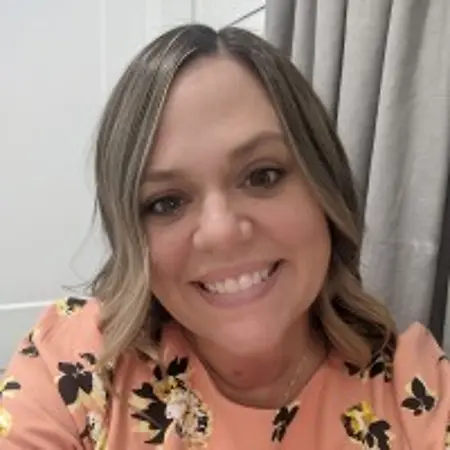
Her Story
About Megan
Megan Shilling is a seasoned healthcare sales leader with extensive expertise in post-acute care, team development, and operational growth. After earning her Bachelor of Applied Science in Psychology from Virginia Commonwealth University in 2008, Megan began her career as a social worker in a skilled nursing facility, quickly discovering her talent for leadership and patient-centered admissions. Her early experience laid the foundation for a career focused on improving patient outcomes, streamlining operations, and bridging gaps between hospitals and post-acute care facilities.
Over the past 15 years, Megan has held progressively senior roles in admissions, marketing, and business development across multiple healthcare organizations. She spent nearly a decade leading admissions and marketing initiatives, then advanced into regional director roles overseeing market development for multiple skilled nursing, assisted living, and independent living centers. In 2022, Megan joined Marquis Health Consulting Services as Regional Director of Market Development, where she now manages a regional team of approximately 30, oversees 18 centers in Virginia, and drives the development of specialty clinical programs that bring providers directly to patients within the facilities.
Megan’s professional philosophy emphasizes leadership, collaboration, and fostering team growth. She prioritizes operational excellence, patient-centered care, and strong partnerships with hospitals and community providers to ensure seamless care transitions. Passionate about improving healthcare perceptions and outcomes, Megan is committed to helping patients recover, thrive, and return home safely, while also mentoring and developing her team to succeed in a rapidly evolving healthcare landscape.
Her Interview
Ten minutes with Megan
01What do you attribute your success to?
I've always been a lifelong learner. I feel like it's my opportunity and my job to learn new things every day and be open-minded about thinking differently or looking at something differently. I don't just wear a sales hat - I wear many hats. I need to understand operations work, our clinical team, what our regulations are and what we have to follow, as well as census development and business development. Without the patient, there's no patients for us to take care of. We carry around on our shoulders the responsibility to ensure that there's patients to take care of so that people have jobs and get paid. That is a responsibility that us as census development leaders carry, and it is our job to exceed our budgets and exceed what our census is supposed to be so that we're good stewards of the fact that it is a business as well. We're here to take care of people, but we also need to take care of the employees that are taking care of those folks in our building. I also attribute my success to the values my mom instilled in me - she was a medical professional who really taught me work ethic. You show up every day, you give 110% in everything that you do. I've carried a lot of those values into my work every day, and they've really helped me be successful. Being a mom of four daughters, graduating college five months pregnant at 22, really set the tone for me. It's not just about being successful for me - I have to be successful for me and my family. I'm a mom first, wife second, Regional Vice President third.
02What’s the best career advice you’ve ever received?
The best advice I've received from mentors is that when you're looking at a problem that's coming to you, it's important to understand all sides before you react. You don't want to react initially first - you want to explore the problem by calling the administrator, the director of nursing, or working with the hospital to really try to figure out all sides of the problem before you move to react. You can waste a lot of time reacting initially first without just taking the time to understand and explore all the pieces and parts of that problem. It doesn't take long - you could waste more time doing it the other way. That was great advice given to me that I oftentimes share with others.
03What advice would you give to young women entering your industry?
First, when you're looking at a problem, understand all sides before you react. Don't waste time reacting initially - take the time to explore all the pieces and parts of that problem first. Second, continue to be open-minded - open-minded to learn and open-minded to understand. It's important as a leader to understand the people you're leading, but it's also important to understand when you walk into a room, what's the tone, what's the feeling you get, because you can make or break a meeting by walking in the wrong way. You need to quickly establish a connection with who you're meeting with - sometimes finding something we have in common or a problem we can help them solve. Making those connections very quickly and initially really helps form relationships. Third, be okay with being professionally persistent. Sometimes we're chasing people or things for years, so staying on top of it, being professionally persistent, keeping information front and center - not being annoying, but continuing to move what your goals are or what your intentions are to that endpoint. It doesn't always happen today or tomorrow, sometimes it'll happen a year from now, so you need to keep your information and yourself in that place. Finally, be mindful that you don't burn bridges, because you never know who knows who. Healthcare is broad, but it's a very small place. There are people I've worked with or worked for that know people in many other states that I've never even operated in. Everybody knows somebody, so you never want to burn bridges. You always want to build relationships in a positive way, because you never know who might call that person to say, hey, do you know this person, what do you think about them? You don't want to ever close doors before you even have the opportunity to open them. Understanding we're all connected to each other in some way, somehow.
04What are the biggest challenges or opportunities in your field right now?
In a lot of ways, the healthcare system is outdated and operating in a manner that would be from the late 90s to early 2000s. A lot of clients have that mindset, but I'm always looking for ways to keep them well informed and to keep our facilities ahead of the curve. My role is deeply focused on innovation, particularly in how we improve healthcare transitions for patients. One of the areas I'm most passionate about is developing specialty programs that bring medical specialists directly into skilled nursing facilities. Instead of requiring patients to travel to outside appointments for cardiologists or nephrologists, we work to bring those services into the facilities themselves. That approach improves continuity of care, reduces unnecessary hospital readmissions, and ultimately creates better outcomes for patients. There's also a major challenge around the perception of skilled nursing facilities. We're really not operating at 2026 - we're operating in the early 2000s or even in the 90s. I work to change that perception that nursing homes are where people come to die. We're very focused on getting people better, improving their lives, helping them recover from that fall or hospitalization, and getting them back home and back in the community as successful as possible. People come to us to get better - we discharge people home, and that's really exciting for us. My role is about advocating for the value of post-acute care and educating partners about the critical role skilled nursing facilities play in the healthcare continuum.
05What values are most important to you in your work and personal life?
I'm a mom of four girls, and I graduated college five months pregnant at 22, which really set the tone for me. It's not just about being successful - I have to be successful for me and my family. I'm a mom first, wife second, Regional Vice President third. I'm very family-oriented. My mom was also a medical professional and really instilled in me work ethic - you show up every day, you give 110% in everything that you do. I've carried a lot of those values that I was raised on into my work every day, and they've really helped me be successful. We also experienced a pretty major house fire in 2018. I was traveling at the time, and I was very lucky that my husband and three daughters at that time were able to get out safely in the middle of the night. As we went through that process of rebuilding, there was a lot of trauma that happened for everybody involved. That experience really helped me understand that how you treat people is the most important thing. Your brand is how you make people feel. It's important for me to understand and be respectful that everybody's going through their own things. People are going through hard seasons and in-between seasons, and we all need to respect that. I try to move through the world with that lens - being respectful and understanding that everybody has their own challenges. I think that's not only helped me be a better leader, it's helped me be a better person. It's helped me understand that people are going through stuff, and we need to be kind and respectful.
Join Influential Women and start making an impact. Register now.