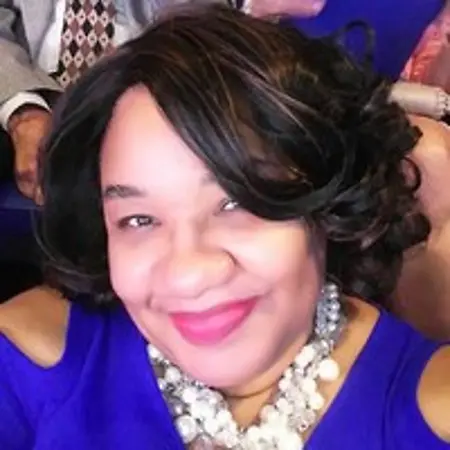
Her Story
About Melanie
Melanie Marshall, M.Ed., Ph.D., CRC, BC-TMH, is a highly experienced Certified Rehabilitation Counselor, counselor educator, and career counselor based in Winston-Salem, North Carolina. She has dedicated over 35 years to counseling, with a focus on supporting veterans, individuals with traumatic backgrounds, and those affected by substance use. Melanie’s approach emphasizes trauma-informed, whole-person care, integrating career counseling, psychoeducation, and mentorship to empower clients to navigate challenges and build meaningful, self-directed lives. She also holds a doctorate in Counseling and Counseling Education from North Carolina Agricultural and Technical State University and a Master’s in Rehabilitation Counseling from Auburn University.
Throughout her career, Melanie has served in multiple roles, including Vocational Rehabilitation Counselor at the U.S. Department of Veterans Affairs and Vocational Rehabilitation Specialist at American Rehabilitation. She founded and currently leads Visions Counseling, Consulting, and Coaching, LLC, providing counseling, coaching, and consulting services that focus on career development, trauma-informed care, and personal growth. Melanie’s work includes mentoring interns in counseling skills, conducting cultural competency and stress management training, and serving as a vocational expert witness in workers’ compensation cases. Her research on children of military veterans, which was published from her dissertation, stands as a notable professional achievement.
Beyond her counseling practice, Melanie contributes to her community as a board member for Addiction Care and Recovery, where she has served since 2013, offering guidance and training to enhance mental wellness and support for those affected by substance use. Her philosophy centers on treating the whole person rather than just symptoms, guiding clients to create new, empowered versions of themselves. Known for her integrity, humility, and dedication, Melanie combines decades of professional experience with compassion and practical strategies to foster resilience, growth, and meaningful outcomes for the individuals she serves.
Her Interview
Ten minutes with Melanie
01What do you attribute your success to?
I attribute my success to that experience in wanting to really help people who were going through what I perceive to be substance abuse, which is how it started out. But then just hard work, doing the hard work for myself in spite of what I had experienced, and just having that drive. Part of my healing journey was through my faith, and just wanting people to be mentally well. People don't realize that mental health can be torture. You don't understand what's going on, you don't know how to perceive the world around you until you get to mental wholeness or mental wellness for yourself. My faith really, really shaped and helped me to heal through all of that.
02What’s the best career advice you’ve ever received?
The best career advice I ever received was 'do your best,' actually. It was very simple. This was when I was in my doctoral program, and I had a rotation where I didn't realize I was presenting that day. I got there and told my professor I wasn't prepared, and she said to me, 'do your best.' I had never had anxiety before, but I just took a deep breath, and I got up there, and I just pulled everything that I had remembered about mentoring from my job where I had mentored. I thought to myself, what is it you don't know about mentoring? That was the best advice I ever received, and I still operate with that in everything, just do your best. I'm my own best critic, too.
03What advice would you give to young women entering your industry?
I would tell them the work is very rewarding. It can sometimes, if it's too much, lead to burnout, and of course, self-care is the best way to manage or to make it through this field with longevity. You definitely have to have the passion for helping others. I really think this is more of a calling than an occupation. If you don't have that heart for people, it's hard to connect with them, and you'll see it right away when people stop showing up.
04What are the biggest challenges or opportunities in your field right now?
The biggest challenge is that a lot of people don't understand this field of rehab counseling. They're not quite sure what it is, so we always have to explain our place in the counseling hierarchy. The opportunities are the ability to do work that is transformational. You may see them broken and unmotivated when they come to you, but working with them, and when you see that transformation comes, because you see the change in them. One key element is when they have to go and look at doctors, see doctors that look like their enemy if they have been to war and were stationed somewhere where they had to guard prisoners in foreign countries, and then they get assigned to someone from that same country as a doctor. That's really tough for them and can trigger something.
05What values are most important to you in your work and personal life?
The values most important to me in my work life are humility in working from a trauma-informed perspective. I approach all the clients that I work with with the assumption that there's been some type of history, trauma history, just by the nature of where I work and what I do, most times with veterans. Service is important to me, looking at the whole person, not just the symptoms or what they've done, but trying to look at the whole person approach, helping them on their journeys to getting to a new and better version of yourself. Understanding that trauma changes who we are, and we may never have the ability to go back to being who we were, we have to create a new us. Integrity is important to me. I try to be transparent and just show up as who I say that I am. That's really important to me. Humility, integrity, and making sure that I build a rapport with people that I'm working with.
Join Influential Women and start making an impact. Register now.