Her Story
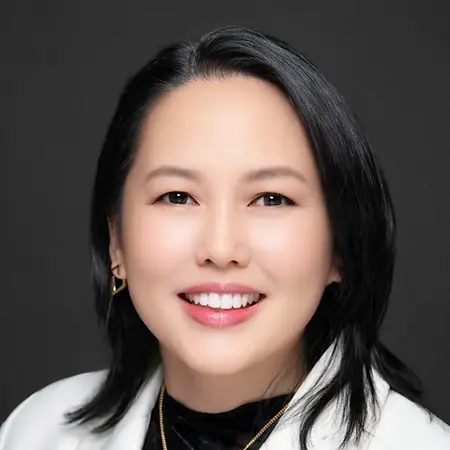
About Melanie
Melanie W. is an accomplished Information Systems Project Manager with a strong background in leading complex, cross-functional initiatives within both healthcare and banking environments. Currently serving as Project Manager – AVP at Orrstown Bank, she brings nearly a decade of experience in IT project management, specializing in enterprise systems, HRIS support, and large-scale implementations. Known for her ability to manage multifaceted projects such as ATM installations, Melanie effectively balances technical requirements, operational needs, and stakeholder expectations to deliver successful outcomes.
Throughout her career, Melanie has demonstrated expertise in project coordination, process improvement, and systems integration, leveraging tools such as Microsoft Project, SharePoint, Lawson/Infor CloudSuite, and document management platforms to enhance efficiency and collaboration. Her professional journey began in healthcare at Penn Medicine, where she advanced through roles in HRIS and ERP project coordination, building a strong foundation in data management and organizational systems. Her strengths in communication, scheduling, and problem-solving have consistently contributed to streamlined workflows and improved operational performance.
Melanie is currently pursuing her MBA at Peirce College, complementing her Bachelor of Science in Information Technology and further strengthening her leadership and strategic capabilities. Recognized for her impact and dedication, she was honored as Orrstown Bank’s 2025 Rookie of the Year—an achievement reflecting both her contributions and the respect of her peers. Committed to continuous growth and excellence, Melanie remains focused on driving innovation, fostering collaboration, and delivering meaningful results across every project she leads.
Her Interview
Ten minutes with Melanie
01What do you attribute your success to?
I really attribute my success both personally and professionally, to the people around me. Whether that’s my friends, my children, or the teams I work with, I don’t do anything in isolation. As a project manager especially, there’s no such thing as success without a strong, hardworking team.
I also credit my support system growing up. My parents were American‑born Chinese and adopted me from Taiwan, and they grew up during the Great Depression. They instilled in me a strong sense of ethics, responsibility, and work ethic from a very young age. Those values shaped how I approach my work and relationships today, and they’ve been foundational to who I am.
02What’s the best career advice you’ve ever received?
The best career advice I ever received came from an executive I worked with earlier in my career, who told me to stop apologizing for things unnecessarily and instead focus on how to move forward. I used to walk into meetings leading with statements like, ‘I’m sorry this wasn’t completed,’ or ‘I’m sorry this didn’t go as planned.’ What I learned was to reframe that approach. Instead of apologizing, I focus on the opportunity, what we’ve learned, how we can improve, and what the next step is. Now I’ll say something like, 'Here’s where we are, and here’s how we’re going to move this forward.’ That shift in perspective has been incredibly valuable and has helped me show up with more confidence and clarity.
03What advice would you give to young women entering your industry?
The first piece of advice I would give is to remember that you belong in the room. It can be intimidating, especially when you’re walking into spaces where you may be one of the only women or, in my case, one of the only people who doesn’t look like everyone else. But you’re there because you’ve done the work and you’ve earned that seat. I tell this to my daughters all the time. They’re multiracial, and I remind them that even when something feels uncomfortable or unfamiliar, that doesn’t mean they don’t belong. And if there ever is a situation where there’s been a misunderstanding or misalignment, my advice is to be transparent about it. Clear, honest communication goes a long way, and confidence comes from knowing your value and standing in it.
04What are the biggest challenges or opportunities in your field right now?
I think one of the biggest challenges right now is the fear around artificial intelligence. There’s a lot of talk about AI ‘taking over’ or replacing people, and I don’t think that’s an accurate or productive way to look at it. Having worked with different AI models, I see that we’re still a long way from AI being fully reliable or autonomous.
What I do see is an opportunity. AI can take some of the more repetitive or administrative work off people’s plates, but it still requires human judgment, in other words, people to review outputs, apply context, and make decisions. So while it may change how certain roles function, I don’t believe it eliminates the need for people at any level. The real opportunity is learning how to use AI responsibly as a support tool, not viewing it as a replacement for human expertise.
05What values are most important to you in your work and personal life?
Integrity is the value that matters most to me, both professionally and personally. For me, that really comes down to two things: honesty and ownership. Being honest in how I communicate, and also being willing to fully own my actions, whether things go well or not. On a personal level, that means having a clear understanding of who I am, recognizing my strengths, and being aware of the biases I bring into situations. Professionally, it shows up as accountability and transparency. I believe that when you take ownership of your work and your decisions, it builds trust and creates clarity. That kind of integrity is something I try to carry into everything I do.
Join Influential Women and start making an impact. Register now.