Influential Woman · Publishing, Journalism, and Media
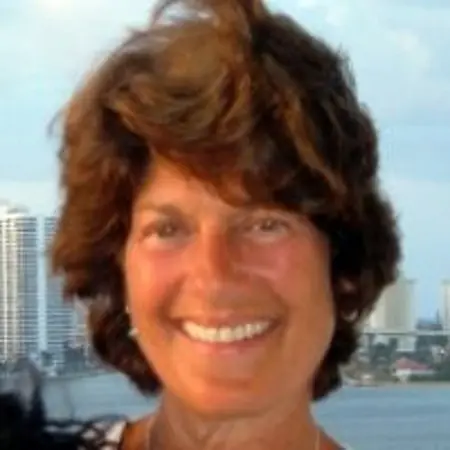
Melinda Blau
Journalist, Author, and Speaker, Self employed
New York, NY 10016
Her Story
About Melinda
Melinda Blau is a longtime journalist, author, speaker, and consultant whose career has spanned more than five decades. Based in New York, she began her professional life in educational publishing before breaking into magazine writing in her 30s, an especially competitive field at the time. Her first major magazine piece appeared in New York Magazine, helping establish her reputation as a thoughtful writer on relationships, parenting, and social trends. Over the years, she has written more than 300 articles and 16 books while building a career as a freelancer, combining her love of writing with her background in education and teaching.
Blau is best known for her bestselling Baby Whisperer series, co-authored with the late Tracy Hogg, including Secrets of the Baby Whisperer, Secrets of the Baby Whisperer for Toddlers, and The Baby Whisperer Solves All Your Problems. She has also written extensively about parenting, divorce, co-parenting, family communication, and human connection in books such as Families Apart, Family Whispering, and Consequential Strangers, co-authored with psychologist Karen L. Fingerman. Throughout her work, she has focused on helping people build stronger, healthier relationships and live more connected lives.
In recent years, Blau has become an outspoken voice on aging, ageism, and intergenerational relationships. Her latest book, The Wisdom Whisperers, was inspired by the friendships she developed with women in their 90s and 100s, relationships that helped her embrace aging with confidence, humor, and resilience. Now in her 80s, Blau continues to write for outlets such as Medium, Substack, Huffington Post, and Psychology Today, while also accepting select speaking engagements around the world. Her work reflects her enduring values of authenticity, honesty, human connection, and the belief that every stage of life offers opportunities for growth and meaning.
Her Interview
Ten minutes with Melinda
01What do you attribute your success to?
I attribute my success to hard work, some luck of being in the right place with the right people, and good skills. The nice thing about writing is that your skills get better - it's one of the few things that does get better with age. A lot of fields, I guess, you age out of, but as long as I have my mind, then I can use my fingers, or I can dictate too. Writing is one of the things I think that you do get better at. I think it's probably psychologists get better at what they do, also. Experience helps.
02What’s the best career advice you’ve ever received?
The best career advice I ever received came from T. George Harris, who was a legendary editor at New York Magazine and my first editor there. I had never written for magazines before and had never even taken a course in journalism. I was very lucky to have him take a liking to me. After the third draft of my first article, he shouted at me: 'You skip through life. Why are you lumbering on paper?' In that one sentence, he really opened my eyes to what good writing was. It does skip off the page. That was probably the best advice I ever got.
03What advice would you give to young women entering your industry?
First of all, the industry has changed so much now - it's not the same industry I entered. When I entered, there were a handful of magazines, a handful of publishers, and relative to the number of people trying to write today, a handful of writers. But the numbers have scaled up so dramatically because of the internet and because it's now a global market, not a local market. My advice would be to know your audience, who you're writing for. This is something that's true of the old world of writing and the new. You have to know who your audience is and imagine that one reader who's going to sit at your typewriter, or your computer, or whatever you compose at. Imagine your reader and who he or she is, and what would he or she need to hear. What would help her either make her smile, make her day better, make her more proficient at making her way through life. Know who you're writing for and why you're writing it. That hasn't changed with all the algorithms, and the websites, and the different things that the world of writing now has. The same principles apply, which is good writing. The cream comes to the top.
04What are the biggest challenges or opportunities in your field right now?
When I first started out, it was very hard to break into magazine writing. I lived in New York, and there were a handful of magazines. I was in educational publishing first, in the book business, and then I wanted to write for magazines, and that is very challenging to break in. There's just so many people who think they can write and want to write, so it's definitely a difficult thing to get a magazine to take you seriously, especially a major magazine. The first magazine I published with was New York Magazine, which was quite a feat, and that helped. After that, it was a lot of hustling - if an article was my idea, I'd have to write a pitch letter and think of the reader, the potential reader, and why the editor should assign me that particular piece. But oftentimes, an editor called me when they had a piece in mind. Now the industry has changed dramatically because of the internet and it's become a global market. The numbers have scaled up so much. But I have to say I'm not saying that it's bad, because I can write a piece on Substack now and 300 people could see it. I might have written an article for New York Magazine, and that was terrific, but it didn't get to as many people. The whole scale of everything has just changed everything for a writer.
05What values are most important to you in your work and personal life?
The first value that's most important to me is authenticity. I try to write what I believe in, who I am, and not candy-coat things. Clarity is extremely important - people like to use a lot of words and a lot of big words, and nobody wants to read them. So I think clarity is important. Honesty is a corollary of authenticity. I also believe very much in responsibility - what you put out there, you have to know is going to be listened to by lots of different ears and taken in by lots of different kinds of people, and you have to be responsible for what you're putting out there and what you're saying, and be sensitive that not everybody's going to see it the same way you do. I also have a huge, tremendous value on connection. I really care about people. I like people. I talk to strangers during the day, and I have a dog, so that makes that easy. But I think connection is, to me, and I can tell you this at my age, the single most important thing. There's a lot of things that make for better aging, but certainly connection, and knowing people, and being able to pick up a phone, or to walk down the street, and just know that you're not the only person in the world, is a really vital life skill.
Join Influential Women and start making an impact. Register now.