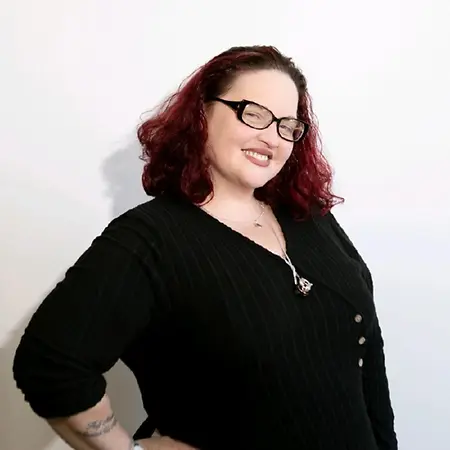
Melinda McMichael shares her seven-year journey as a Certified Peer Recovery Supervisor/ Doula in Chicago, highlighting the transformative power of compassion and community support for women and families affected by Substance Use Disorder.
Her Story
About Melinda
Melinda McMichael is employed at Haymarket Treatment Center as a Peer Doula (Certified Peer Recovery Specialist, Certified Birth Doula/ Postpartum Doula). She currently has seven years' experience with working in the recovery field with pregnant and postpartum women and families that have been affected by substance use disorder and mental illness under a state funded wrap around program. She uses her lived experiences with addiction recovery to provide wrap around services to these families in the hopes of having better recovery outcomes. She specializes in motivational interviewing, trauma informed care, and advocacy to help aid and support unrepresented populations with peer support and doula support services. She supervises clients at Haymarket Center in early recovery while they are working towards obtaining the peer recovery support certification from ICB. She also mentors two new peer doulas and offers them her personal and professional experiences in what it means to be a Peer Doula. She identifies as a woman in long-term recovery and has practiced a program of entire abstinence since January 29, 2018.
Melinda is a dedicated professional who obtained her Certified Peer Recovery Specialist (CPRS) credential from the Illinois Certification Board in 2021. In the same year, she earned her Birth Doula CD(DONA) certification. She then became internationally certified as a Full Spectrum Birth and Postpartum Doula through DONA International in 2022. With experience in assisting over 30 drug-free births, Melinda is currently pursuing a bachelor’s degree in applied science for Human Service Professionals at Purdue University Global.
In addition to her educational pursuits, Melinda actively contributes to her community by serving on three advisory boards for Salt and Light Coalition, a non-profit organization that supports women affected by sexual exploitation and trafficking. She also serves on the board at Malcolm X College for their CRSS Success Program and collaborates with the State of Illinois and DCFS on the Implementation Task Force for Plans of Safe Care initiatives.
Her Interview
Ten minutes with Melinda
01What do you attribute your success to?
As a recovery person and peer doula, I attribute my success to a few things that all work together — lived experience, consistency, humility, and purpose.
Recovery taught me that connection heals what isolation destroys. I stopped trying to “perform” recovery and started practicing honesty, accountability, and willingness one day at a time. The moments that changed me most were not the big victories — they were the small choices to keep showing up, ask for help, stay teachable, and help someone else even when I was still healing myself.
As a peer doula, my strength comes from understanding people beyond their worst moments. I’ve learned that people do not need perfection from us — they need safety, compassion, advocacy, and someone willing to sit beside them without judgment. My lived experience allows me to connect with people in a way that feels real, not clinical. I can hold hope for someone until they can hold it for themselves.
I also attribute my success to service. Service gave my pain purpose. Whether it’s recovery support, advocacy, motherhood work, birth work, or simply listening to someone who feels unseen, helping others keeps me grounded and reminds me why I fought so hard for my own healing.
Another huge part is resilience. I’ve learned how to survive difficult seasons without abandoning myself. Recovery taught me discipline, but it also taught me grace. I no longer measure success by being flawless — I measure it by growth, integrity, and the impact I leave on people.
Most importantly, I stay connected: to recovery principles, to community, to spirituality, and to the belief that people can change. That belief has carried me farther than talent ever could.
And I think the reason people trust me is because I never pretend to have all the answers. I just promise to walk beside people honestly, compassionately, and with hope.
02What’s the best career advice you’ve ever received?
In recovery work, peer support, and doula spaces, people don’t connect to polished resumes nearly as much as they connect to honesty, reliability, and presence. The people who make the biggest impact are usually the ones who: keep showing up, stay teachable, protect their own recovery, and turn pain into service without losing themselves in the process.
03What advice would you give to young women entering your industry?
Protect your recovery and your peace first. You cannot pour from an empty cup in this work. Loving people through crisis, relapse, trauma, grief, and systems failures can become emotionally heavy very quickly. Your recovery, boundaries, support network, and self-care are not optional — they are part of your job.
Your lived experience is valuable, but it is not your only qualification. Get trained. Keep learning. Ask questions. Take certifications seriously. Learn documentation, ethics, crisis response, motivational interviewing, and professional communication. Your story opens the door, but your professionalism keeps it open.
You do not have to “look broken” to belong in recovery spaces. Young women especially get judged unfairly in this field — too emotional, too ambitious, too soft, too strong. Ignore that noise. Be authentic. You can wear makeup, pursue degrees, speak professionally, laugh loudly, and still be deeply rooted in recovery.
Boundaries will save your career. You are not responsible for rescuing everyone. Some clients will relapse. Some will disappear. Some will test boundaries because trust and safety are unfamiliar to them. Compassion matters, but boundaries are compassion too.
Find mentors — especially women who lead with integrity. Pay attention to the people who are respected both professionally and personally. Learn from women who: stay humble, maintain healthy recovery, support others without competition, and advocate without burning themselves out.
Never underestimate your presence. Sometimes the most healing thing for someone is simply seeing a woman who survived what they’re surviving and built a meaningful life afterward. You may become hope for someone before they can find hope for themselves.
And lastly: Do not let this field consume your identity. You are allowed to have joy outside of service. Have hobbies. Rest. Travel. Laugh. Fall in love with your life again. Recovery is not just surviving addiction — it’s learning how to fully live.
04What are the biggest challenges or opportunities in your field right now?
Biggest Challenges
Burnout and compassion fatigue- Peer workers often carry enormous emotional weight. Many are supporting people through overdose loss, homelessness, trauma, mental health crises, child welfare involvement, and relapse while also managing their own recovery. A lot of peers are expected to “give endlessly” without enough support themselves.
Low pay despite high impact- Peers are increasingly recognized as essential, but compensation and career advancement often lag behind the responsibility of the work. Many peer workers are underpaid while doing frontline crisis intervention and systems navigation.
Professional stigma- Some systems still treat peer professionals as “less than” clinicians or case managers. There can be judgment around lived experience, recovery pathways, education level, or background. Many peers have to constantly prove their professionalism.
Boundary confusion- Because peer support is relational and rooted in shared experience, newer workers sometimes struggle with over-identifying with clients, overextending themselves, or trying to rescue people. That can lead to exhaustion or relapse risk.
---
Biggest Opportunities
Peer support is finally being recognized as essential- Hospitals, courts, treatment centers, reentry programs, colleges, shelters, and community organizations are increasingly integrating peer support workers into their systems. The field is growing rapidly.
Women are reshaping recovery leadership- More women are stepping into leadership roles and changing the culture of recovery spaces: trauma-informed care, maternal health advocacy, recovery doula work, family-centered recovery, harm reduction, and holistic healing approaches.
Someone with lived experience and education can build an entire career pathway now — not just volunteer service work.
05What values are most important to you in your work and personal life?
Authenticity. People can tell when someone is being real with them. I never want to pretend to have it all together or act above anyone. Recovery taught me that honesty creates connection, and connection creates healing.
Compassion with boundaries. I believe deeply in helping people, sitting with them in hard moments, and treating everyone with dignity — but I’ve also learned that healthy boundaries are part of love and service too.
Service. I want my life to mean something beyond myself. Whether it’s peer support, advocacy, recovery work, or simply showing up for another person, purpose matters to me more than status.
Growth. I never want to stop learning or evolving. Recovery is not just about staying sober; it’s about becoming emotionally healthier, more self-aware, more educated, and more grounded over time.
Integrity. Doing the right thing when nobody is watching matters to me. In this field, trust is everything. I want my words, actions, and intentions to align.
Hope. A lot of people enter recovery believing their life is over. I value being the kind of person who helps others see possibility again — not through empty inspiration, but through consistency and lived example.
Connection. Community saved me. Friendship, mentorship, fellowship, laughter, honest conversations, and being truly seen by others are things I value deeply in both work and life.
And personally, I think one of the biggest values I hold is this: Turning pain into purpose without letting pain define me. My past shaped me, but it does not own me. I want my life to reflect resilience, compassion, and freedom — not just survival.
Her Content Hub
Articles by Melinda
We Won’t Go Unnoticed: A Journey as a Certified Peer Recovery Doula in Chicago
Compassion, Advocacy, and Hope: A Peer Doula's Journey in Supporting Women with Substance Use Disorder

Introduction
In the bustling city of Chicago, where skyscrapers touch the sky and streets pulse with life, there exists a quieter yet profoundly impactful world. This is the realm of Peer Doulas—individuals who dedicate their lives to supporting women and families affected by Substance Use Disorder (SUD).
My name is Melinda McMichael, and for the past seven years, I have served as a Certified Peer Recovery Supervisor/ Doula at a nonprofit organization. Through this journey, I have witnessed both the triumphs and tribulations that accompany this vital work. This article is a testament to the resilience, hope, and transformation that occur when we refuse to let these stories go unnoticed.
The Call to Serve
My journey began with a simple desire: to make a difference.
As someone who has witnessed the devastating effects of SUD firsthand, I felt compelled to offer support and guidance to those navigating similar challenges. Becoming a Peer Doula was not merely a career choice—it was a calling.
Working as a Peer Recovery Doula for a nonprofit organization where I fought for my own sobriety, I found a community dedicated to empowering individuals through compassion, dignity, and understanding.
Understanding Substance Use Disorder
Substance Use Disorder is a complex condition affecting millions of individuals and families worldwide. In Chicago, its impact is especially profound.
Understanding the complexities of SUD is essential to providing effective support. This includes recognizing the psychological, social, and physical factors that contribute to addiction, as well as understanding the stigma that often accompanies it.
The Role of a Peer Doula
As a Peer Doula, my role extends beyond traditional caregiving.
We are advocates, educators, and emotional anchors for our clients. Our work involves guiding women through pregnancy, childbirth, and postpartum experiences while addressing the unique challenges associated with SUD.
We provide nonjudgmental support, helping women navigate healthcare systems, access resources, and build healthy relationships.
Building Trust and Connection
Trust is the cornerstone of our work.
Many women impacted by SUD have faced judgment and discrimination, making it difficult for them to seek help. As Peer Doulas, we strive to create safe spaces where women feel valued, respected, and understood.
Building trust requires patience, empathy, and genuine connection—a process that unfolds over time.
Navigating Challenges
The path is not always smooth sailing.
We encounter numerous obstacles, from systemic barriers to personal struggles. Yet each challenge presents an opportunity for growth and learning.
Whether advocating for better healthcare access or addressing mental health concerns, we remain steadfast in our commitment to supporting our clients.
Celebrating Successes
Amid the difficulties, there are moments of profound joy and success.
Witnessing a mother overcome addiction, deliver a healthy baby, and embrace motherhood is deeply rewarding.
These victories remind us of the power of resilience and the importance of celebrating every step forward.
The Impact on Families
SUD affects not only individuals but entire families.
As Peer Doulas, we extend support to partners, children, and extended family members. By fostering open communication and understanding, we help families heal and rebuild stronger connections.
Collaboration and Community
Our work is strengthened through collaboration with professionals and organizations throughout the community.
We partner with healthcare providers, social workers, and community leaders to ensure comprehensive care.
Together, we create a network of support that empowers women and families to thrive.
Personal Growth and Reflection
Over the years, my experiences as a Peer Doula have shaped me in ways I never imagined.
I have learned the importance of self-care, resilience, and continuous education.
Reflecting on my journey, I am deeply grateful for the opportunity to grow alongside the remarkable women and families I serve.
Looking Ahead
The future holds promise and possibility.
As awareness of SUD grows, so does recognition of the vital role Peer Doulas play in recovery and empowerment.
I remain committed to expanding our reach, advocating for policy change, and ensuring that no story goes unheard.
Conclusion
Being a Certified Peer Doula Supervisor in Chicago is more than a job—it is a mission.
Through compassion, dedication, and unwavering support, we help illuminate paths toward healing and hope.
This article is a tribute to the strength and courage of women and families impacted by SUD.
Their stories inspire us to continue this work, knowing that together, we can make a lasting difference.
Acknowledgments
I extend my deepest gratitude to the incredible team I work with, whose passion and commitment drive our mission forward.
To the women and families who have entrusted us with their journeys, thank you for allowing us to be part of your lives.
Your resilience and determination continue to inspire us every day.
About the Author
Melinda McMichael is a Certified Peer Doula Supervisor at a nonprofit organization in Chicago. With seven years of experience, she has dedicated her career to supporting women and families impacted by Substance Use Disorder.
Her work focuses on advocacy, education, and empowerment, ensuring that every story is heard, valued, and honored.
Join Influential Women and start making an impact. Register now.