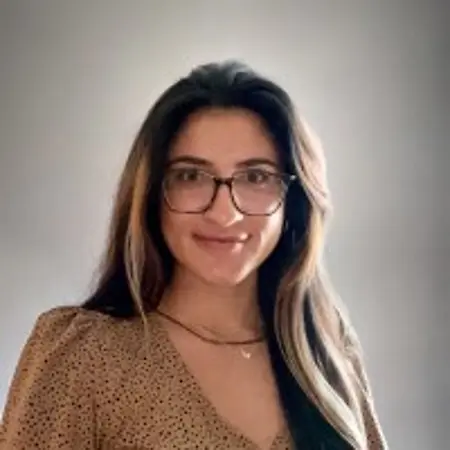
Influential Woman · Science, Biochemistry, Scientific Consulting
Melissa Mena-Schneller
Biotechnology Consultant, MeLi MeThoDS, LLC
Westfield, IN 46047
Her Story
About Melissa
With a scientific career spanning more than 15 years, Melissa Mena-Schneller most recently served as a Senior Chemist at Eli Lilly and Company. During her tenure, she contributed to research and development, manufacturing quality, and hazardous exposure safety. In 2025, she represented Eli Lilly at the Pharma Forum hosted by the American Industrial Hygiene Association where she presented on scientific data integrity, a milestone she considers one of her proudest professional achievements.
She has now transitioned from corporate leadership to entrepreneurship as the Founder of MeLi MeThoDS, a scientific consulting practice based in Indiana. Her firm is guided by Science and Stewardship as she partners with startups and local businesses to strengthen audit readiness, reinforce scientific credibility, and improve science literacy around wellness and integrative health.
Recognized as a 2026 Influential Women 100 honoree, she continues to bridge rigorous science with meaningful community impact.
Her Interview
Ten minutes with Melissa
01What do you attribute your success to?
Success is not built in the high moments; it’s built in the quiet decisions to keep showing up when quitting feels easier. My success comes from the ability to face myself honestly, not with avoidance, but with courage. Being guided by my faith has made my perspective and sense of purpose steadfast. It has reminded me that perseverance is not just willpower; it is trust.
I also owe an enormous amount to my mother, an elementary school teacher who saw possibility in me when I struggled to see it in myself. I have ADHD, and she never treated it as a limitation. She gave me structure, tools, and unwavering belief. She helped me understand that what felt scattered could become creative, focused energy, and even brilliance.
Ultimately, my success comes from staying true to who I am, keeping my goals in sight, and choosing (again and again) not to abandon myself.
02What’s the best career advice you’ve ever received?
The best career advice came from my dad. He taught me to show up with integrity and honesty about what I’m good at and equally honest about what I’m not. Don’t exaggerate. Don’t overpromise. If you can do something well, stand confidently in that. If you can’t, say so. Credibility is built in truth, not in performance.
He also told me to work toward the best outcome for all parties involved. If the values, goals, and expectations aren’t aligned, no contract or compensation will fix that. But when alignment is right, trust follows and long-term success becomes sustainable.
03What advice would you give to young women entering your industry?
My advice is simple: avoid rash decisions, but always trust your intuition.
There might be pressure to say yes quickly, to accept every opportunity, or to stay in environments that don’t feel quite right. Ambition is important, but so is discernment. Keep making those pros and cons lists, girls. If something consistently makes you uneasy, don’t ignore that intuition. Intuition is often experience speaking before we consciously recognize it. You don’t have to stay in spaces that diminish you to prove your strength. The right opportunities will challenge you without compromising your integrity.
04What are the biggest challenges or opportunities in your field right now?
One of the biggest challenges in science and health innovation right now is the widening gap between advancement and understanding. We are seeing extraordinary breakthroughs in AI-powered peptide optimization and personalized medicine. Yet, many people feel overwhelmed or excluded from the conversation about their own health. Too often, medical communication is overloaded with technical language, dense terminology, or fear-based framing.
In my experience, I have yet to meet someone who is incapable of understanding the science behind their food and medicine. It’s not about intelligence; it’s about transparency. People don’t need a science degree to understand how a treatment or food affects their body.
This intersection of expertise and empowerment is where I see the greatest opportunity. That is what led me to build MeLi MeThoDS, LLC. My mission is not just to present scientific truth, but to teach the science behind health options in a way that empowers people. Transparency means respecting the public enough to educate rather than intimidate. Innovation without understanding erodes trust. When we combine rigorous science with stewardship and clear communication, we create a future where people can participate confidently in their own care.
05What values are most important to you in your work and personal life?
In my work, my core values are Science and Stewardship. My work experiences have shown me the already incredible rigor of scientific research, business strategy, and strong ethical standards in western medicine. Those structures matter. I also recognized that stewardship as the careful, human-centered guidance of scientific knowledge is often overlooked.
Living and working in America, where food and drug innovation is vast, patients are presented primarily with western pharmaceutical options. However, there are medical approaches that work with the body’s existing mechanisms, supporting repair, regulation, and restoration at the source, rather than introducing synthetic compounds designed to adjust or override specific functions. Many of these approaches are grounded in the same scientific principles that underpin western pharmaceutical science, even demonstrating preferred clinical outcomes. They should not be framed as “alternatives” when the underlying mechanisms are evidence-based and aligned with how the body already functions. Natural and synthetic medicine do not have to compete to be rooted in transparency, physiology, and informed choice.
In my personal life, I value connection to the earth, to movement, and to community. I use martial arts and personal spiritual doctrine to ground myself. Self-discovery and love for my community hold my beliefs steadfast. I believe true well-being is strengthened in community, where we support one another in growth, discipline, and care. Empowerment begins when the people of our communities understand how their own bodies work and are given access to care models that aim to restore function, not simply modify symptoms.
Join Influential Women and start making an impact. Register now.