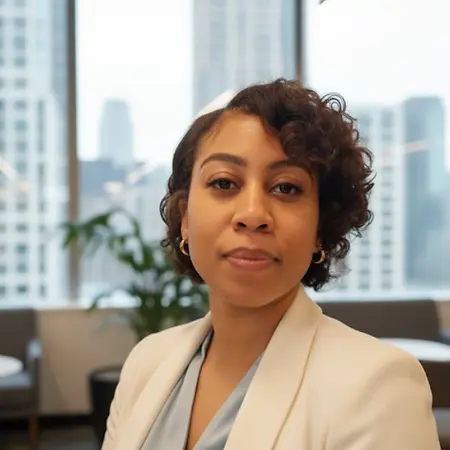
Her Story
About Melissa
My main expertise is data entry for the federal government but my true passion lies in advocacy work helping vulnerable, justice-impacted people, including both youth and adults. I have a paralegal background from studying at Catholic University of America, though I wasn't able to finish due to financial reasons. My original plan was to use that degree to work with people in the system, particularly juveniles or adults who were given life sentences when they were minors, as well as youth in the foster care system, because there's a foster care to prison pipeline just like the school-to-prison pipeline. I've been doing this advocacy work for over 11 years now. I work with incarcerated people and returning citizens in various ways, including writing pen pal letters and advocating on their behalf. I've written letters to incarcerated people through The Free Minds Book Club, a nonprofit organization in Washington, D.C. that works with people who are incarcerated and coming home, and they hire returning citizens. I've also done volunteer work with the National Reentry Network for Returning Citizens. On my own, I reached out to Mr. Parker Coleman, who has a life sentence for marijuana and is trying to get a pardon from the president. His case has received a lot of attention and has been featured on the Last Prisoner Project website, which works with people given sentences for marijuana-related offenses. Additionally, my friend and I started our own reentry business called the Freedom Bridge LLC, where I serve as a partner. My hobbies are exercising and writing poems.
Her Interview
Ten minutes with Melissa
01What do you attribute your success to?
I would say having a good support system is one of the most important things, and I know that's what a lot of people lack, both adults and children. If you don't have a support system, none of us got to where we are in life without any help - that's impossible. Just having a support system like my mother, siblings, and people that I've met along the way has been crucial. Even at my age, there are people I go to for advice. I seek advice from God first, but also having mentorship is important - you can have a mentor at any age. When I'm having doubts or I feel like I can't do something, it's that support system that helps. They tell me not to let my doubts get in the way, and don't let things from my past affect me. So just having a good support system is what I attribute my success to.
02What’s the best career advice you’ve ever received?
The best advice I have received comes from my mother, though other people have told me the same thing, but she was the first person who told me this: Try. You can try. Because at least if you get to see, you can say you tried. And then try again, and try again. And keep trying until you find what works for you. What I would tell myself, and I've told it to plenty of people, even the people that I assist in the reentry field, is that your mistakes don't define who you are. Everybody makes mistakes, but everybody's mistakes are not the same. You don't bounce back from your past - your past is a stepping stone to who you are now and who you are about to become. Nobody is perfect. When you talk to these people, they have regrets, they feel like they're going to be judged going back into society, and I let them know that you can't change the past, you can't worry about other people too - they got skeletons in their closet, but they're not the same as yours. Use your past as a testimony, because your past is what shapes you. What I've been through in life and the mistakes I've made make me the person that I am, and it makes me want to continue to run harder in life.
03What advice would you give to young women entering your industry?
The advice I would give, because it is male-dominated, is don't focus on that. Definitely stay focused, and especially when it's a male-dominated field, you deal with a lot of men trying to hit on you and stuff like that, but just remain professional. That's important. Maintaining a level of professionalism and staying focused - that's key for me.
04What are the biggest challenges or opportunities in your field right now?
The biggest challenges are lack of support and the need for more resources, particularly pertaining to mental health and housing. Those are the three big issues. Even though there has been progress over the years, there is a lot that needs to be improved. You have a lot of people that are coming home and they're dealing with trauma that they never got the help that they needed for, like therapy. Mental health is real. They're still dealing with drug issues and housing problems. You need that stability. If you research it, you'll see housing and mental health are major issues, along with just overall support.
05What values are most important to you in your work and personal life?
Respect. Respect will take you a long way in life, and I've experienced that. It's also about treating people who you don't know nicely, which is the same thing as respect, because you don't know what they're going through. But respect will take you a long way in life. People will forget what you've done for them, but they won't forget if you disrespect them. Respect will open up doors for you. I don't care if you're a professor - respect is what matters.
Join Influential Women and start making an impact. Register now.