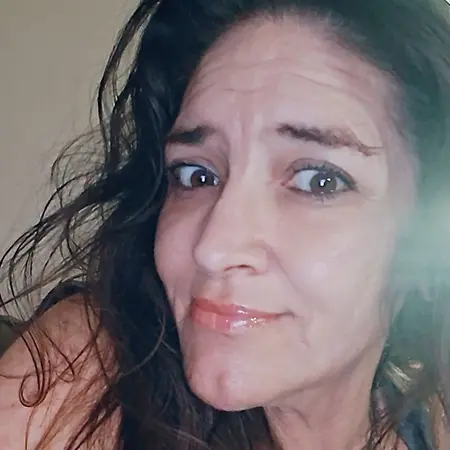
A woman in recovery shares her experience with meth addiction, relapse, and healing, offering honesty, empathy, and a reminder that recovery is possible.
“
At 48, I returned to my dream of becoming a counselor. Recovery taught me that my story wasn't something to hide, but to steward; turning pain into purpose.
Melody E. Conklin · In Her Own Words
Her Story
About Melody
At 49, she is redefining what resilience, accountability, and leadership look like. She is a student at Marion Technical College in Marion, Ohio, pursuing her calling to become a drug and alcohol counselor, guided by lived experience, compassion, and an unshakable commitment to service.
She is a single, disabled mother in recovery whose journey includes profound loss. During active addiction, she lost custody of her daughter—an experience that reshaped her life and deepened her resolve. Today, she plays an active and loving role in her daughter’s life, grounded in honesty, growth, and presence. Rather than turning away from her past, she has chosen to face it fully and transform it into purpose.
Her path forward is driven by a desire to support other women before they reach the same crossroads. She believes in meeting women with empathy rather than judgment, and in breaking cycles through truth, education, and compassion. Balancing motherhood, college, and personal healing, she embodies courage with grace and responsibility.
Her story is not one of perfection, but of accountability, restoration, and hope. Through her work and her voice, she is committed to reducing stigma, amplifying women’s stories, and reminding others that redemption is built through action—and that it is never too late to choose a different future.
Her Interview
Ten minutes with Melody
01What do you attribute your success to?
I attribute my success to resilience shaped by lived experience, radical self-accountability, and a deep commitment to healing—mind, body, and spirit. Living with a disability has taught me patience, adaptability, and how to honor my limits without letting them define my worth. Navigating mental health challenges showed me the power of slowing down, listening inward, and choosing self-compassion as a form of strength.
As I approach 50 next year, I stand grounded in the truth that growth has no timeline. This season of my life feels intentional, awakened, and deeply aligned. Music and poetry are my heartbeat—they keep me connected to emotion, creativity, and honesty. Meditation and prayer steady me, offering peace and clarity when the world feels loud. Spirituality gives my life rhythm and meaning, reminding me that even broken paths can lead somewhere sacred.
Motherhood reshaped my soul, recovery rewired my values, and education gave my purpose direction. I choose progress over perfection, presence over performance, and authenticity over approval. Success, to me, is vibing with my truth—showing up whole, evolving with grace, and using my story to help other women see that healing is possible, power can be reclaimed, and it is never too late to rise into who you were always meant to be.
02What’s the best career advice you’ve ever received?
The best career advice I’ve ever received is to show up as your full, authentic self—not just the version you think the world wants, but the one shaped by your experiences, values, and purpose. Skills and credentials matter, but the courage to bring your heart, your story, and your voice into your work is what sets you apart.
Before returning to school and navigating motherhood, I built a career in customer service, working in both business and retail settings. That experience taught me patience, empathy, and how to connect with people from all walks of life. I learned to listen deeply, solve problems creatively, and approach challenges with both professionalism and heart. These lessons became the foundation for how I interact with others and the kind of counselor I aspire to be.
I’ve learned that being honest about your journey, owning your growth, and leaning into your passions—whether through mentorship, service, or leadership—creates opportunities that titles or resumes alone cannot. Success isn’t just about climbing a ladder; it’s about aligning your work with your purpose, building bridges for others, and making an impact that feels meaningful.
In my journey through recovery, motherhood, and education, this advice has been a compass, reminding me that authenticity is both powerful and magnetic, and that when you lead with your heart, doors open in ways you never expected.
03What advice would you give to young women entering your industry?
Entering a field like counseling or human services is not just a career choice—it’s a calling, and one that asks you to bring your whole self to the table. For young women stepping into this space, my advice is simple but powerful: trust your voice, embrace your story, and lead with empathy. Your experiences, your struggles, and your growth are not obstacles—they are your strength. They give you perspective, compassion, and the ability to connect with people in ways that textbooks can’t teach.
As someone who has walked through addiction, recovery, motherhood, disability, and the challenges of returning to school at 49, I know firsthand how important it is to nurture your mental, emotional, and spiritual health. Music, poetry, meditation, and prayer have been my anchors, helping me stay centered, grounded, and aligned with purpose. These practices are more than coping tools—they are the fuel for resilience, creativity, and compassionate leadership.
Build your village, seek mentorship, and don’t shy away from asking questions or making mistakes. Every challenge is a lesson, every setback an opportunity to grow. Celebrate the small victories, honor your journey, and stay true to your authentic self. Leadership in this field isn’t about perfection—it’s about presence, integrity, and the courage to show up fully for others while caring for yourself.
Above all, remember that your work has the power to ripple far beyond the immediate moment. When you lead with heart, you create spaces for healing, growth, and transformation—not just for the people you serve, but for the generations of women who will look to you as an example. Your journey, your voice, and your authenticity are your greatest gifts—bring them boldly, vibrantly, and unapologetically to the work you were born to do.
04What are the biggest challenges or opportunities in your field right now?
In the field of addiction counseling and recovery support, there are both significant challenges and powerful opportunities shaping the work today.
One of the biggest challenges is the ongoing stigma around addiction and mental health. Many people still struggle in silence because of judgment or misunderstanding, which creates barriers to seeking help and accessing care. This stigma affects individuals, families, and communities, and it influences how systems are structured. Part of the work in this field is not only to support healing but to shift the narrative so that recovery is approached with dignity, empathy, and respect.
Another challenge is the growing demand for services paired with limited resources. Communities across the country need more trained professionals, more accessible treatment options, and more culturally responsive support. Balancing caseloads, navigating insurance limitations, and ensuring equitable care for all—especially for women, people with disabilities, and those from underserved backgrounds—is a daily reality for many in this work.
Within these challenges lie important opportunities. There is increasing recognition that holistic, person-centered care matters, which opens doors for approaches that integrate mental health support, trauma-informed practices, peer mentorship, creative expression, spirituality, and community-building. Young professionals entering the field have the chance to help shape a more compassionate and inclusive landscape for recovery.
There is also growing focus on prevention, education, and early intervention. Supporting women and families before crises occur can change trajectories and build resilience. Advocacy, public awareness, and community partnerships are creating fresh pathways for support and breaking down barriers that have long existed.
The challenges highlight the urgency of the work, while the opportunities show why it is meaningful. Every step toward understanding, connection, and dignity is a step toward transforming lives, and there has never been a more important time to be part of that change.
05What values are most important to you in your work and personal life?
As a student and a professional in training, the values that guide both my work and personal life are integrity, empathy, and growth. Integrity means showing up honestly and authentically, staying true to my word, and making decisions that align with my principles, even when it is difficult. Empathy drives my interactions with others—listening deeply, understanding different perspectives, and responding with compassion, especially in challenging or vulnerable situations.
Growth is central to everything I do. As a student, I value learning, reflection, and the willingness to embrace change. I approach both my education and personal journey as opportunities to evolve, expand my skills, and deepen my understanding of myself and the world around me.
Other core values include resilience, accountability, and service. Resilience helps me navigate obstacles, whether in school, personal challenges, or recovery. Accountability ensures I take responsibility for my actions and commitments. Service reminds me that my purpose is not only to succeed for myself, but also to support, uplift, and empower others along the way.
Ultimately, these values guide me in creating a life and career rooted in authenticity, compassion, and meaningful impact.
Her Content Hub
Articles by Melody
When the Noise Finally Stopped: Meth, Compulsion, and the Long Way Back
A personal reflection on meth addiction, relapse, recovery, and learning how to love, heal, and stay—one honest day at a time.

I am writing this from inside recovery, not after it.
Not from the comfort of distance or the certainty of “years later.”
I am writing this with a little over four months sober—one day at a time—standing on ground that still feels tender beneath my feet.
Meth addiction rarely announces itself as destruction. It often arrives disguised as relief.
To me, it arrived quietly.
For the first time in my life, my brain stopped racing.
The constant internal noise—the anxiety, the looping thoughts, the pressure of trying to outrun myself—fell silent. My mind finally rested. That silence felt like peace. It felt like safety. It felt like something I had been searching for my entire life without knowing its name.
That is what makes meth so dangerous.
Not only what it takes from you, but what it convinces you it gives you.
What Meth Feels Like
Meth is a powerful stimulant that floods the brain with dopamine, the chemical connected to pleasure, motivation, focus, and reward. Heart rate increases. Body temperature rises. Energy spikes. Attention sharpens. Confidence appears.
People often assume meth use is about wanting to feel euphoric. For many of us, it isn’t.
It’s about wanting to feel okay.
Meth didn’t just give me energy. It gave me stillness. It quieted a mind that had never stopped. And when you have lived inside constant mental noise, stillness can feel like rescue.
But the calm doesn’t last.
When meth wears off, the crash comes quickly—fatigue, depression, anxiety, hunger, emotional emptiness. The silence disappears and the noise returns louder than before. To avoid that crash, many people use again and again, sometimes every few hours, in what’s known as a binge or “run.”
This cycle builds dependence fast. Tolerance grows. The brain begins to rely on meth just to feel normal.
This isn’t a lack of willpower.
It’s chemistry colliding with pain.
What Meth Does to the Brain
Repeated meth use disrupts the brain’s dopamine system. Over time, the brain struggles to regulate pleasure and motivation on its own. Joy becomes muted. Energy disappears. Life feels flat.
This is where anhedonia enters.
Anhedonia is the stage where you feel nothing at all.
No excitement.
No happiness.
Sometimes not even sadness.
Music doesn’t move you. Food loses flavor. Love feels distant. This stage can last weeks or months into recovery and is one of the most vulnerable times for relapse.
People don’t return to meth because they miss chaos.
They return because they miss feeling something.
Anhedonia is not failure. It is the brain healing slowly, unevenly, and without shortcuts.
How Quickly Everything Fell Apart
Less than two years of meth use dismantled my life.
I went bankrupt in every way—spiritually, physically, mentally, emotionally, financially, and legally. Addiction does not politely take things from you. It strips everything down to the frame and leaves you standing in the wreckage wondering how it happened so fast.
During that time, I lost custody of my daughter.
This is difficult to say. It still carries shame. But I share it because silence protects addiction, not families.
Today, I am an active parent in her life. She comes over when she wants. I make myself available to her all the time. I answer the phone. I show up. I stay.
I am deeply grateful that she still loves and adores me.
Recovery did not erase the loss—but it gave me the chance to become safe again. It gave me the opportunity to rebuild trust through consistency instead of promises.
Learning How to Love Without Conditions
Recovery has taught me something I didn’t understand before—not because I lacked care, but because I didn’t yet know how to love without conditions tied to my own pain.
Today, I try to show up for the people in my life with steadiness rather than intensity. Not perfectly. Not without fear. But with a willingness to stay present even when it’s uncomfortable.
I am learning that love doesn’t need to be loud to be real. Sometimes it looks like answering the phone when it rings. Sometimes it looks like listening without fixing. Sometimes it looks like allowing people to be who they are without asking them to fill the empty spaces inside me.
Recovery has softened me. It has taught me how to care without controlling, to love without bargaining, and to remain connected even when I cannot make everything better. I hold deep, unconditional love for the people in my life—not as something I claim, but as something I practice imperfectly, guided by humility and gratitude.
Compulsion Beyond the Drug
There is a part of meth addiction that is rarely discussed openly.
Meth doesn’t only affect substance use. It can fuel compulsive behaviors, including sexual compulsions, obsessive thinking, and risk-taking patterns that feel impossible to stop. For some people, these behaviors appear during active use. For others, they continue into sobriety.
This topic is uncomfortable. Many people feel shame naming it. Some don’t feel safe discussing it in traditional recovery spaces.
But it matters.
Meth rewires the brain’s reward system. It lowers inhibitions. It blurs boundaries. For individuals carrying trauma, rejection, or a deep hunger for connection, compulsive behaviors can feel both soothing and destructive.
Stopping meth does not always stop compulsion.
For many, healing requires additional support—trauma-informed therapy or fellowships such as Sex Addicts Anonymous (SAA). Seeking help for compulsive behaviors does not mean recovery is failing. It means recovery is layered.
Healing often asks us to be honest about what we don’t want to say out loud.
Communities Carrying the Heaviest Weight
Meth has devastated rural towns, small cities, and places where access to care is limited and stigma is loud.
The LGBTQIA+ community has been especially impacted.
Many queer and trans individuals grow up carrying rejection, discrimination, or violence—sometimes from family, sometimes from systems meant to protect them. When belonging feels conditional, substances can become a way to cope, connect, or survive.
Recovery must be culturally affirming. It must make room for people to heal without hiding who they are.
Women—especially mothers—face harsher judgment. Our mistakes are punished faster and forgiven slower. Shame keeps women silent, and silence keeps addiction alive.
Meth addiction deserves more conversation—and more diverse voices.
Relapse and Returning
Last year, I relapsed. What followed was nearly a year of struggle—regaining footing, rebuilding structure, and surviving the shame that often follows relapse.
Relapse did not erase my recovery. It reminded me how real this illness is—and how necessary support truly is.
Today, I am working the 12-step program of Crystal Meth Anonymous (CMA). I have a sponsor with 21 years of sobriety, someone who has stayed through the long arc of recovery. I will be working the steps again with them, because recovery is not about pride—it’s about honesty.
CMA gives me language for my experience and a community that understands meth specifically. It reminds me I don’t have to do this alone.
I walk with a cane now. I am disabled. My pace is slower. Recovery doesn’t always look strong. Sometimes it looks careful. Sometimes it looks like listening to limits instead of pushing past them.
I am also in school to become a drug and alcohol counselor. I believe lived experience and education belong together. Addiction is not a moral failure—it is a health issue that deserves dignity, compassion, and care.
What Helps People Stay
There is no single solution to meth addiction. But certain supports save lives:
- Peer support and sponsorship
- Trauma-informed therapy
- Mental health care
- Sober living and stable housing
- Structure and accountability
- Compassion over punishment
Crystal Meth Anonymous (CMA) offers in-person and online meetings and a 24-hour helpline.
Narcotics Anonymous (NA) provides virtual meetings accessible worldwide.
Alcoholics Anonymous (AA) continues to support millions through shared experience.
Sponsorship matters. Having someone who answers the phone, who stays when things are uncomfortable, who reminds you that relapse doesn’t erase worth—this matters more than most people realize.
Why I’m Saying This Out Loud
It is embarrassing to admit I lost custody of my child.
It is vulnerable to say I relapsed.
It is uncomfortable to talk about compulsion and shame.
But I am saying it anyway.
Because maybe another woman is reading this, telling herself it won’t go that far.
If my honesty pauses her long enough to reach for help, then my discomfort is worth it.
Recovery is not clean.
It is not linear.
But it is possible.
And it begins with telling the truth.
Resources & Support
Crystal Meth Anonymous (CMA)
• 24/7 Helpline: (855) 638-4373
• Online meetings: https://www.crystalmeth.org/meetings/?type=online
Narcotics Anonymous (NA)
• Virtual meeting search: https://na.org/meetingsearch/virtual-meeting-search/
Alcoholics Anonymous (AA)
• Meeting finder: https://www.aa.org/find-aa
Sex Addicts Anonymous (SAA)
Crisis Support (U.S.)
• Call or text 988 – Suicide & Crisis Lifeline
• If in immediate danger, call 911
Meth addiction needs more conversation, more compassion, and more culturally inclusive spaces.
You are not broken.
You are not alone.
You are he
Join Influential Women and start making an impact. Register now.