Her Story
About Merav
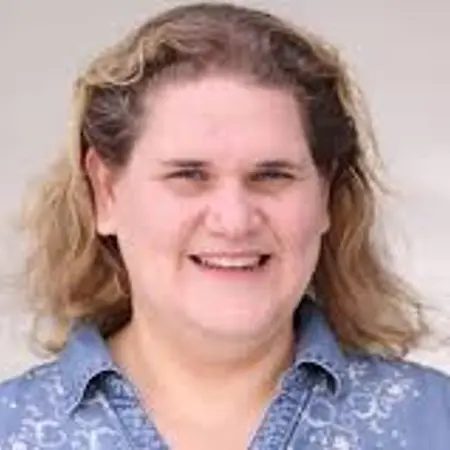
Dr. Merav Stern, PhD, is a Research Fellow at The Rockefeller University, specializing in theoretical neuroscience and biological networks. With a strong foundation in applied mathematics, cognitive science, and biology, she investigates the dynamics of neural circuits and complex biological networks using computational modeling, large-scale simulations, and analytical frameworks adapted from statistical mechanics. Her work bridges theory and experiment, ensuring that her models are both scientifically rigorous and directly relevant to real-world neuroscience research.
Before joining Rockefeller, Dr. Stern held a postdoctoral fellowship at the University of Oregon, focusing on cortical circuits and their dynamic timescales, and completed her PhD in theoretical neuroscience through a collaborative program between the Hebrew University of Jerusalem and Columbia University. Early in her career, she also served as a research associate at the University of Washington and as a tutor at the Okinawa Institute of Science and Technology Graduate University, experiences that strengthened her passion for mentorship and interdisciplinary collaboration.
Beyond her research, Dr. Stern is dedicated to mentorship and education, devoting an hour each day to guide students and young researchers. She draws on her early teaching experiences, including working with high school dropouts, to cultivate inclusive learning environments and empower future scientists. Known for her open-minded leadership style, she emphasizes trust, active listening, and equipping mentees with the tools they need to succeed. Outside the lab, she enjoys dancing, figure skating, and exploring new ways to merge her scientific curiosity with creative pursuits.
Her Interview
Ten minutes with Merav
01What do you attribute your success to?
I attribute my success to my determination, passion for my work, and consistently seeking opportunities where I can contribute and make a meaningful difference.
02What’s the best career advice you’ve ever received?
The best career advice I’ve received is: “They can’t give you more than they have,” which taught me the importance of self-reliance and initiative in my professional journey.
03What advice would you give to young women entering your industry?
I advise young women to be true to themselves and trust their instincts. Develop your scientific expertise, understand where and with whom your work can have the greatest impact, and seek win-win contributions in collaborative environments.
04What are the biggest challenges or opportunities in your field right now?
One of the biggest challenges is preserving scientific truth and combating misinformation. Additionally, gender imbalance and academic stereotypes continue to present obstacles, along with the non-linear paths of research careers, such as those impacted by medical or personal life events.
05What values are most important to you in your work and personal life?
Honesty, genuine listening, and empowering others through mentorship and responsibility are the values I prioritize both professionally and personally.
Join Influential Women and start making an impact. Register now.