Her Story
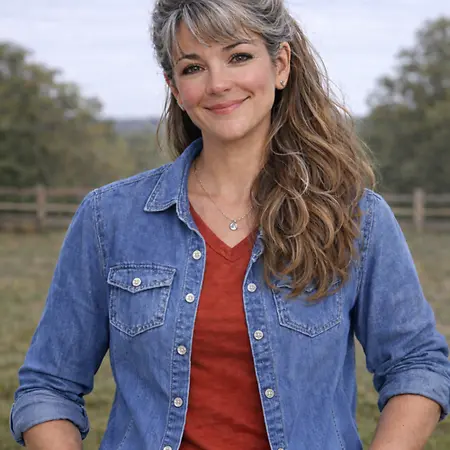
About Michele
Michele Johnson (MJ) is the founder of Rural Success Architect, a Georgia-based consulting practice dedicated to helping farms, ranches, and rural operations close what she calls the “Success Gap”—the space between how systems are supposed to work and how they actually perform in the real world.
Based in Cochran, Georgia, MJ brings more than 25 years of hands-on experience in land, livestock, and operational systems. Her work bridges practical, field-tested knowledge with research-driven insight, helping clients move from guesswork and frustration to clarity, confidence, and long-term results. Through both on-site and remote consulting, she serves everyone from first-time rural property owners to established agricultural operations seeking greater profitability, resilience, and operational performance.
MJ’s expertise spans animal science, wildlife management, livestock nutrition, pasture and forage systems, breeding programs, conservation practices, and infrastructure evaluation. She holds a Bachelor of Applied Science in Animal Sciences and Wildlife Management from McNeese State University and a Diploma in Animal Acupuncture and Animal Health Therapy from the International College of Equine and Canine Therapies.
Her professional background is as diverse as it is practical. It includes work in high-precision surveying on DOT and USGS-related projects, commercial feed operations, industrial robotics environments, and decades of heavy equipment operation in construction and aircraft-adjacent settings. This rare combination allows her to evaluate not only animals and land, but also the equipment, workflows, and infrastructure that support successful operations.
In addition to consulting, MJ owns and operates a 25-acre working farm, where she manages livestock, pasture systems, horse breeding and show preparation, and conservation-focused land stewardship. This keeps her work grounded in daily reality—not theory, not trends, and not presentation-driven strategies.
Known for her field-first philosophy, MJ prioritizes logic, evidence, and real-world testing over assumptions. She also conducts performance validation for tools, equipment, footwear, and operational systems in demanding environments—identifying failure points before they become costly or dangerous.
At the heart of her work is a simple belief: good systems should work where it matters most—on the ground, under real conditions, over the long term. Through Rural Success Architect, MJ is committed to helping clients build operations that are not just well-designed, but reliable, resilient, humane, and built to last—creating success that can be sustained and passed on to the next generation.
Her Interview
Ten minutes with Michele
01What do you attribute your success to?
I attribute my success to a genuine hunger for knowledge and a refusal to stay on the surface of things. When I find something I don’t understand, I don’t just want a quick answer—I want to know how it works, why it works, and how it fits into the bigger system I’m trying to build. That curiosity has shaped every chapter of my life.
Even in college, I followed that instinct relentlessly. I took far more credits than were required for my major because if I wanted to understand something, I took the class. I never carried less than 18 credit hours a semester, and many semesters I had to get written permission to go over 20. There were semesters when I carried as many as 26 credit hours—and I completed them. Not because I had to, but because I wanted to understand how the pieces fit together.
That same mindset is exactly how I work today. Whether I’m helping someone design a farm, solve a livestock health problem, improve nutrition, or build a long-term land plan, I’m always looking at the whole system—not just the symptom in front of us. My clients don’t just get answers; they get understanding, structure, and a clear path forward.
I believe real success comes from connecting knowledge across disciplines and turning it into practical, real-world results. That hunger to learn—and to translate what I learn into something useful for others—is still what drives my work every day.
02What’s the best career advice you’ve ever received?
The best career advice I’ve ever received is that if you love what you do, it doesn’t really feel like a job. I’ve always believed that when people say, “If you love what you do, you’ll never work a day in your life,” they’re really talking about purpose—doing something that energizes you instead of drains you.
For me, that purpose is helping people improve what they already have and make the best possible use of it. Whether it’s land, animals, or an operation they’re trying to build, I genuinely love helping others see what’s possible and guiding them toward better results.
So in the end, my career has never been about chasing a title or a paycheck. It’s been about doing what I love and using that to help other people succeed—and that’s what makes the work meaningful to me.
03What advice would you give to young women entering your industry?
Don’t just learn things—learn how the pieces fit together. When you start connecting ideas from different areas, the light bulbs begin turning on faster and faster, and your judgment gets sharper. That’s when you stop just following instructions and start truly understanding your work.
Do what you know, and put your passion into it. Be patient with the learning curve and don’t rush past the fundamentals. Real competence is built in the field, by solving real problems, and by doing what’s right even when no one is watching. Your reputation is built in those quiet moments.
Don’t worry about being a woman in the industry. Let your competence do the talking. The more you can prove, the more people will be amazed. I actually believe women bring something incredibly valuable to the table—we tend to have a sharper eye for detail, more finesse, and a natural ability to fine-tune systems and results. A lot of times, the heavy lifting gets the job done, but it’s the fine-tuning that makes it excellent. That’s where women shine.
And remember—if your competition is talking about you, you’re worrying them. That means you’re doing something right. Keep going.
04What are the biggest challenges or opportunities in your field right now?
The biggest challenge in my field is that a lot of people don't like to hire women. They think that we don't have the knowledge because it's an outdoors industry. I find that here in my state of Georgia, though when I lived in Florida and Louisiana, I didn't really find that challenge, so I think it's state by state. It used to happen a lot, but it's not as often as it was. I try to deal with it by not speaking above men when I'm talking to them, because a lot of men don't like that. I try to speak on the same level and be very knowledgeable, but not like a know-it-all, so that they'll like me and want to hire me. As far as opportunities, I've had a lot of women's organizations call me and want me to write little articles for things they publish and send out to young women entrepreneurs. I've had offerings to write for livestock magazines like The Goat Ranch and different small circulation publications. I've been invited to different places to speak and talk to 4-H and FFA students.
05What values are most important to you in your work and personal life?
Stewardship, integrity, and competence are at the core of everything I do. I believe in taking responsibility for what’s been entrusted to you—whether that’s land, animals, a business, or people—and leaving it better than you found it.
Integrity means doing what’s right even when no one is watching, and competence means caring enough to do the work well, not just get it done. I value clear thinking, practical wisdom, and the discipline to keep learning and improving.
I also believe deeply in compassion—especially for animals and for people who are trying to build something meaningful. You can hold high standards and still be kind. In fact, I think the best work comes from that balance.
Finally, I value legacy. I care about building things that last, teaching what I’ve learned, and helping others create systems and lives that can be passed on to the next generation. Those values guide my work, my relationships, and the way I try to show up every day.
Join Influential Women and start making an impact. Register now.