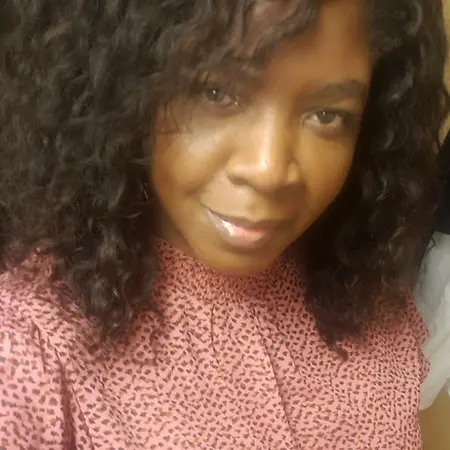
Her Story
About Michelle
I started my nursing career in 1990 in med-surg at New York Hospital, where they recommended you needed at least 5 years of med-surg experience before doing anything else. I worked with 9 patients, multitasking and learning meds, but it didn't feel like the nursing I thought I was signing up for. A recovery room nurse encouraged me to explore other opportunities, and when I toured the recovery room and saw nurses had just two patients and could actually talk to them and ask questions, I was amazed. I transferred there after about 5 years and loved it - it was a very acute recovery room where we kept patients overnight, including ICU patients, so I got really good exposure. Then I made the difficult decision to move to Delaware because I was concerned about raising my son in New York as a single parent. I was heartbroken to leave a job I loved, and initially could only get a one-year travel job doing med-surg at Einstein, which was the longest year of my life. Eventually I got a position at Christiana and went back into the recovery room. At Penn, I became a nursing administrative coordinator, which was basically being the supervisor of the whole house. During that time, we transitioned to a Level 1 trauma center, which was unprecedented - no one had done that. It was really nice having nursing input in what the new building was going to be, from the curtains to the equipment to how it was set up inside. This gave me the foundation to become a nurse manager and eventually Chief Nursing Officer at Select Specialty Hospital, where I oversaw nursing, respiratory, and physical therapy. My leadership style has always been servant leadership to the max - I work for my staff, I try to remove barriers, make sure staffing is good, and maintain an open door policy. My work comes last, so I'm often at work late because I spend my days on the floor with my team, making sure they see me and know I'm visible and approachable.
Her Interview
Ten minutes with Michelle
01What’s the best career advice you’ve ever received?
The best career advice I ever received was that you can be passionate, but becoming over-passionate sometimes can take away from your message. I remember being very upset when I got that message from a manager - I was like, what do you mean? Passion is important! But as I became a little bit more knowledgeable in leadership, I understood exactly what it meant. She told me that sometimes if you let the passion overtake the message, people really still don't ever hear the message, so it's important to contain it in some situations. Eventually I was able to get it, and it's very true, depending on the room you're in. Nurses are filled with passion because we're advocating for our staff and for the patients, but we have to remember that we're not always - our audience is not always the same. Having the passion is good, but also having factual data, making sure you can support what you're saying with facts, and being to the point, is really important in some rooms. I see it more and more as I've moved up the ladder. The people who are too passionate, you can see in the room, it gets real quiet. People are like, is she okay? So I receive that advice now, but I think it's the best advice I've ever had as I've moved up the ladder.
02What advice would you give to young women entering your industry?
I think nursing is in a different place post-COVID - it's very, very different than I've ever seen it. The women that I see coming in are fierce. There's a different attitude - they're not afraid to speak up for what they want and what they need, and I think that's really one of the things that we didn't have as older nurses. I don't think the communication was clear. We communicated with frustration when it got to be too much. We didn't lay it out on the line when we got there. Now they come in with a really nice, clean slate to say, this is what I want, this is what I expect from my job, and these are my terms, basically, which we never had a voice for. One of the things that I would tell women coming in is get into the business of healthcare. Get into the knowledge and business of your profession, because there is definitely the patient side and the staff side, but it is a business, and shying away from it doesn't help us uplift our profession. I think we've done a lot of damage by staying at the bedside for so long and not really engaging or going up into all the other areas of nursing that really has business. There are other people making decisions for us that have no idea what even nursing does or healthcare, but because we think that's not a part of nursing, we get very upset when people say nursing's a business, but it is. And we have to be a part of the conversation so that we are navigating our career and our profession the way we see it needs to go, and not someone from somewhere else.
03What are the biggest challenges or opportunities in your field right now?
One of the biggest opportunities I think are the medical errors in healthcare - that keeps me up at night, I have to say. It really does, because I don't think people do it on purpose, but does it happen? Absolutely. And I think we have to be more forthcoming with things. I think our society has become very litigious, so people hesitate to tell the truth. But I think that's our responsibility - that's part of the integrity piece. As much as you want to shy away from giving people so much information because you're wondering if people are going to sue, there are some things that they need to know. They need to know that before you take them to the OR, that this patient probably won't make it out - all the things that we don't always want to be - we call it we're just trying to give them the best options, but I think you have to give them all of the options so that they can make the best decision. I also think the pathway for nursing is a challenge. I always feel like the nurse who you think should be the leader is not always the leader, and I often wonder what that walk was with leadership, and how can we make it more so that people who are great kind of rise to the top. Not all the time do people in leadership want to hear the truth, and I think it's unfortunate because they lose some of the other side of the aisle. It's important to have balance, because if not, you have people in high places who navigate their career with just having people say yes all the time, and that doesn't lead to a very good culture either. It produces more of a toxic culture where it's more about favoritism. Leadership is about being able to hear both sides of the coin and able to rationalize what's the best decision moving forward with both sides.
04What values are most important to you in your work and personal life?
Integrity, I would say. Integrity is a very important thing for me. I don't want to feel like, depending on who's here, I'm going to do something different. I could never live with myself. And it makes it very difficult to navigate sometimes, because you're not always surrounded with people who have integrity. But it's important for me to have it, and in my work, I need to have it. So whatever that looks like, I have to make sure that it's there for me. I know there are things that are not going to be exactly the way I want it. For instance, if we're talking about people coming in on time, I don't ever have a problem. I think we set up roadblocks for people to tell the truth. We're telling people one minute late is late, when is it my desire for someone to get into a car accident trying to hustle to work? No. Should they give themselves time? Absolutely. Do things happen? Yes. I'm okay with that, and I understand that the organization has this one-minute, you're late policy, but when I think about how I'm always asking my staff to stay late or to come in early, the give and take of that, I feel bad for them when they're talking about doing attendance models and we should be writing people up. If it's a consistent issue, I think you gotta address the person. But I think there is a piece of that that makes people not have integrity. People are parking in front of the hospital and then running in and punching the clock just to say they got here on time. When really, I would rather you be late and tell me the truth, as long as you know that you're gonna be held accountable, but we're not monsters, and we're not computers. Things do happen. That's definitely my thing. Integrity is a big thing for me, and I think we don't do it enough in healthcare.
Join Influential Women and start making an impact. Register now.