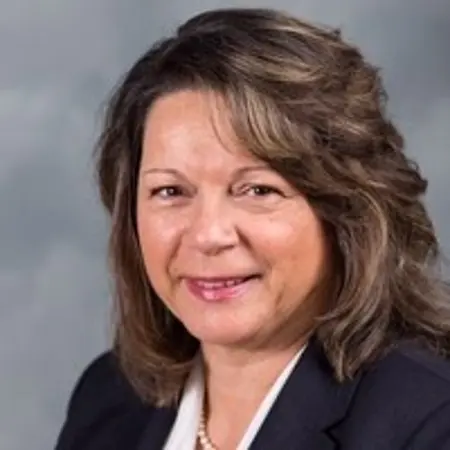
Influential Woman · Education
Miriam Witmer, Ph.D.
Associate Professor of Educational Foundations, Millersville University of Pennsylvania
Millersville, PA 17551
Her Story
About Miriam Marguerita Gomez
Miriam Witmer, Ph.D., is an Associate Professor of Educational Foundations at Millersville University and an educator with more than 41 years of experience in the field of education. She began her career as a high school English teacher, where she taught for 16 years and was recognized for her excellence in teaching, before transitioning to higher education, where she has served for the past 27 years. She holds a Ph.D. in Education from Temple University with a focus on Educational Psychology and Urban Education, and an M.S. in Clinical Psychology from Millersville University. Across her career, she has remained committed to preparing future educators through courses in educational psychology and modern foundations of education, including school history, law, philosophy, and contemporary issues shaping the profession today.
Her work is deeply grounded in a commitment to diversity, equity, inclusion, and belonging. At Millersville University, she advises student organizations focused on recruiting and retaining teachers of color and directs the Future Educator Pathways program, which brings high school students to campus for immersive, week-long experiences designed to introduce them to teaching as a career. She also leads the Color of Teaching Mentoring Program, which supports students of color in pursuing and sustaining careers in education. Through these initiatives, she has built a lasting legacy of expanding access and opportunity in the teaching profession while cultivating the next generation of diverse educators.
Dr. Witmer is widely recognized for her leadership in mentoring and professional development within education. She serves as co-editor of Mentor Connect magazine for the International Mentoring Association, sits on its executive board, and acts as a lead trainer for mentor certification programs. In addition to mentoring students, she provides ongoing guidance to professional women pursuing or considering doctoral studies. Her transition from being a Teacher of the Year in secondary education to a leader in higher education reflects her enduring mission: to multiply her impact by teaching teachers who will, in turn, positively shape the lives of their own students.
Her Interview
Ten minutes with Miriam Marguerita Gomez
01What do you attribute your success to?
I truly believe that what I’ve been through has helped me grow and move forward. Adversity can be a powerful catalyst—it challenges you to improve, to keep learning, and to become stronger. I want to frame that as a positive: the setbacks I faced have contributed to who I am today.
One of the most practical pieces of advice I can offer is to surround yourself with the right people. Friends, family, and colleagues who genuinely support you can make a lasting difference. I’m very grateful for the friends and colleagues who have walked this journey with me—they’ve helped me navigate difficult moments, and we’ve supported each other along the way. So yes: keep faith in your people. With the right support system, you can accomplish a lot of what you set your mind to.
02What’s the best career advice you’ve ever received?
"Get your doctorate!" was the best career advice I received. Earning my doctorate has absolutely opened doors for me professionally. Initially, it felt a bit counterintuitive—after teaching for years, I thought my experience and credibility should speak for themselves in higher education. I questioned why I needed a credential to validate what I already knew and had practiced.
But once I entered my doctoral program, I gained a much deeper understanding. It wasn’t only about academic advancement; it was also about personal growth and developing a higher level of critical thinking. The process strengthened how I approach problems, evaluate ideas, and think more strategically—which, in turn, made a meaningful difference in my professional work.
I’m also proud of the accomplishment itself. While I’ve heard that doctorates are relatively uncommon, I don’t want to focus on any statistic—because that wasn’t my motivation. The real value has been the significant growth I achieved both personally and professionally through the program, and the opportunities that followed.
03What advice would you give to young women entering your industry?
If you’re a young woman thinking about a career in education—or any demanding career—I’d encourage you to start with one thing: find your people. This work can be challenging, and you’ll thrive much more when you’re surrounded by people who are like-minded, supportive, and genuinely invested in your growth.
I also want you to remember this: teaching is one of the most powerful professions there is. It gives you real opportunities to affect change—not only in an individual student’s life, but also in the broader community. The relationships you build, the guidance you offer, and the challenges you help students face can create impact that lasts.
So if teaching is your calling, live it. If you are passionate about another career, just do it! Share your expertise, spread your impact, and keep choosing to be a positive force —now and for years to come.
04What are the biggest challenges or opportunities in your field right now?
The opportunity is real: you can make a positive difference in the world. In my work, I teach students—many of them are young adults, around 19 to 23—and I see firsthand how powerful it is when people engage deeply with ideas. In our classes, we have meaningful, challenging conversations, including discussions about inequities in education. Those discussions matter, and I genuinely believe my students are part of the change our society needs. They bring energy, fresh perspectives, and the ability to think critically about how systems can be improved.
That’s the hope. And the challenges are clear, too. In recent years, federal mandates and public backlash have turned topics like diversity, equity, and inclusion into loaded phrases. Because of that, some people are pulling back—they’re afraid to speak openly, to teach honestly, or to do the work that those issues require. For many of us, this is more than a job; it has been our life’s work to push for a more equitable education system. Seeing that progress questioned or discouraged has been a serious and disheartening obstacle.
Still, we need to be hopeful. When students are willing to learn and leaders are willing to act, progress doesn’t stop—it adapts. Keep talking, keep teaching, and keep building community. The work is difficult, but it is also possible, and when we find your people, we don’t have to do it alone.
05What values are most important to you in your work and personal life?
I would say one principle that matters in both personal and professional settings above all else is respect. It’s the foundation for healthy relationships, effective collaboration, and trust.
I also place a strong value on diversity, equity, inclusion, and belonging. I genuinely see diversity as an asset, and I work—consistently, though not perfectly—to create welcoming spaces wherever I am: in classrooms, teams, and mentoring relationships.
With my students, I often talk about the idea of six degrees of separation—that we’re more connected than we realize. If we stay curious and engage with one another, we can often find a shared connection: a person, a place, an idea, or a path forward. And with that connection comes responsibility. When we, especially women, understand that we can support one another through shared humanity and community, we contribute to a better, stronger world.
That philosophy—respect, inclusion, and caring for others—directly aligns with how I mentor. When you care, listen, and show up for people, growth follows.
Join Influential Women and start making an impact. Register now.