Her Story
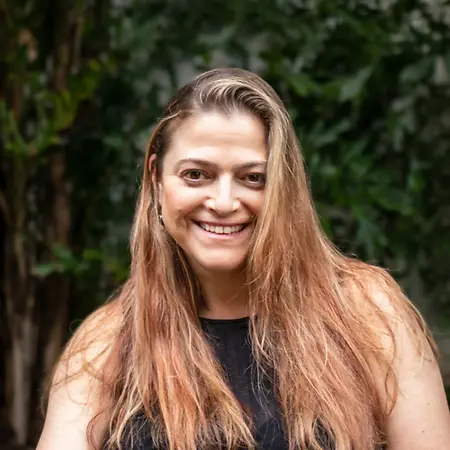
About Mirit
"As a clinical chaplain at Summa Health, I work primarily in the Behavioral Health building where I see patients with different diagnoses, and I also serve the main hospital across all departments and units. My day involves conducting spiritual care groups where we talk about topics like hope, connection, belonging, and meaning within the healing process. I tell patients that yes, meds are important, and physical symptoms are important, but your spirituality is part of who you are, and if we want to offer complete healing, we can't just talk about physical aspects - we have to talk about other aspects, and part of it is your spirit. I see patients one-on-one, support family members and caregivers who come with patients, and I also support the team - our nurses, our doctors who carry a burden. If we want to make sure, they're doing their work sustainably and help prevent burnout, we have to allow them to address their emotional and spiritual burden as well. This brings a very diverse portfolio for me because I see patients, nurses, doctors, and admins in one-on-ones and meetings. Sometimes they'll ask me to come do a blessing before a board meeting starts, and sometimes it's to address someone who just got a really bad diagnosis and there's a family member who doesn't know how to deal with it, so I support them. This is a regular day in a chaplain's week."
Her Interview
Ten minutes with Mirit
01What do you attribute your success to?
"First, the creator. Then, I think I had very good teachers - Cleveland Clinic was the best place to learn this profession. I learned at what we kind of call the Disney World of Spiritual Care, so learning at the best place possible really helped me. When I go to other places, I know what needs to happen. It's also helpful that I have a supportive family and that my husband earns enough for me to be a chaplain, because it's not something you do for the money, not at all. So that is also something I'm grateful for. I think my success comes from having a very strong drive - I'm very good at what I do. I ask for a lot of feedback. I'm not afraid to make mistakes. I ask patients to tell me how can I do better, and they give me answers, and then I get better, and that's how I succeed."
02What’s the best career advice you’ve ever received?
A mentor told me something that I tell myself when there's a challenge: what is happening is not who I am. So if there's a challenge, or if things don't work, or if there are changes in leadership that make my work more complex, I try to keep it - not without emotions - but say, what is happening is not who I am. I'm not derived, like my identity is not dependent on this. I am doing the best I can, and the rest will follow. It was very good advice.
03What advice would you give to young women entering your industry?
Don't think that it's either fulfillment and success and a full heart, or money. You could do both.
04What are the biggest challenges or opportunities in your field right now?
The biggest challenge is to see a patient, know that I can't help them, and still be there for them. I see people without homes - people whose accessibility to healthcare is very limited. We basically know that once they're done with us, they're gonna go back to the streets. Knowing that there's not a lot that I can do other than just sit with them and help them feel like people, keep their dignity, keep their sense of self, is good, but in my heart, I know it's broken. Seeing the brokenness, knowing that there's nothing I can do about it, is very frustrating, and I think it's the hardest part of my job. I will also say that in relation to women, it's very hard for me to see how women always get it worse. Because we're caregivers, because stereotypically or generally speaking we are the caregivers, so when a mom is in the hospital, there are kids at home, and if there isn't a home, there are kids in the street. We're usually picking the traditional parts of caregiving, so somehow for women it's always harder. I have more women that are hurt by men than women that are about to lose all their assets if they don't go back to the house than men. This is a part that is very hard for me to see, to watch, to know that it's like that, and there's not a lot that I can do.
05What values are most important to you in your work and personal life?
Compassion, dignity, and integrity.
Join Influential Women and start making an impact. Register now.