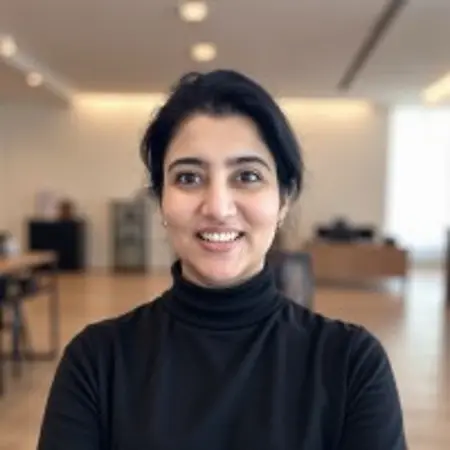
Her Story
About Mitali
Mitali (Li) Chauhan is a healthcare analytics executive and population health strategist based in Baton Rouge, Louisiana, with a strong track record of turning complex data into meaningful, actionable insights. Currently serving as a Senior Healthcare Economics Consultant at Optum, she specializes in analyzing medical utilization trends, developing KPI dashboards, and partnering with stakeholders to improve care delivery while managing costs. With nearly a decade of experience across provider, payer, and consulting environments, she has built a reputation for using data not just to inform decisions, but to shape strategies that drive measurable outcomes.
What sets Mitali apart is her ability to bring a human-centered lens to analytics. With a background in psychology, she approaches data as more than numbers—recognizing that every data point represents real people, families, and lived experiences. She is particularly skilled in the storytelling aspect of analytics, identifying which data matters most and translating it into a clear narrative that highlights both opportunities and realistic expectations. Her work consistently balances financial impact with practical considerations, ensuring that recommendations are grounded, ethical, and aligned with the realities of patient care.
Throughout her career, Mitali has worked closely with nurses, physicians, and clinical teams, gaining deep insight into the operational and human dynamics of healthcare. She is a strong advocate for patient-centered care and believes that nurses, with their compassion and attention to detail, are the true backbone of the healthcare system. Driven by a commitment to improving outcomes, she continues to focus on bridging the gap between analytics and operations—helping healthcare organizations not only understand their data, but act on it in ways that truly make a difference.
Her Interview
Ten minutes with Mitali
01What do you attribute your success to?
I attribute my success to the combination of my background in psychology and my expertise in analytics. This allows me to move beyond the numbers and tell meaningful, data-driven stories that account for human behavior and real-world complexities. I’ve also been intentional about working closely with clinicians and operations teams, ensuring that my insights are not only accurate but also practical and actionable. That collaboration has been critical in bridging the gap between data and decision-making.
02What’s the best career advice you’ve ever received?
One of the biggest challenges in healthcare today is addressing the human factors that impact patient adherence, along with gaps in operational standardization and documentation. Regulatory requirements, such as prior authorizations and HIPAA, also add complexity, and having difficult but necessary conversations with patients remains a persistent hurdle. At the same time, there are significant opportunities to translate analytics into meaningful operational change. I see great potential in developing stronger patient advocacy resources and designing innovative incentive structures that encourage better engagement, ultimately improving both outcomes and efficiency.
03What advice would you give to young women entering your industry?
The values that guide me most are compassion, human-centered care, and patient advocacy. I strongly believe in collaboration and in respecting the expertise of frontline clinicians, especially nurses, who play such a vital role in patient care. These principles shape how I approach my work—ensuring that every analysis, recommendation, and decision keeps people at the center while striving to make a meaningful impact.
04What are the biggest challenges or opportunities in your field right now?
Healthcare sits at the intersection of art and science. While we often know what works from a clinical and data perspective, influencing human behavior is far more complex and cannot be solved by analytics or AI alone. One of the biggest challenges is patient adherence—encouraging individuals to consistently make decisions that support their long-term health. This requires creativity, thoughtful incentive structures, and a deeper understanding of human behavior. At the same time, there are ongoing gaps in documentation and a need for more effective ways to navigate difficult but necessary conversations with patients, particularly when non-adherence could lead to serious future outcomes.
I also see a significant opportunity to strengthen patient advocacy within the healthcare system. Many patients struggle to navigate denials or understand where to turn for support, and this highlights the need for dedicated advocacy resources within payer organizations. In parallel, fostering more open and direct communication between patients and providers—rather than avoiding uncomfortable discussions—can lead to better engagement and improved outcomes. Ultimately, healthcare must continue evolving toward a more supportive, patient-centered model that empowers individuals to take an active role in their care.
Another critical area of focus is recognizing and elevating the role of nurses and frontline clinicians. In my experience, nurses bring an exceptional level of compassion, attention to detail, and patient understanding that is essential to delivering quality care. As the industry moves forward, I believe there is a meaningful opportunity to ensure they receive the recognition and respect they deserve, while also integrating their insights more deeply into care strategies and decision-making processes.
05What values are most important to you in your work and personal life?
At the core of both my professional and personal life is a deep commitment to compassion and human connection. I believe we need to become more intentional about seeing people as individuals with unique stories, rather than reducing them to data points or statistics. In my work, I’m always mindful that the numbers I analyze represent real people—someone who could easily be me or a loved one. That perspective keeps me grounded and ensures that my approach to analytics remains thoughtful, empathetic, and centered on improving real lives.
I am also deeply passionate about recognizing the value and wisdom of older generations. Too often, as people age, they become overlooked or feel invisible, despite having a lifetime of experience to offer. This is something I’m conscious of both professionally and personally, and I strive to instill that same respect in my family. I believe that honoring and learning from others—especially those who have lived through different stages of life—enriches both our communities and our decision-making.
Collaboration and patient advocacy are equally important to me. Delivering meaningful outcomes in healthcare requires a team-based approach that includes clinicians, caregivers, and families working together. I strongly believe in involving support systems when appropriate and ensuring that patients feel heard and supported throughout their care journey. I also have immense respect for frontline clinicians, whose dedication and compassion inspire me every day. These values guide how I approach my work—always with the goal of making healthcare more human, inclusive, and impactful.
Join Influential Women and start making an impact. Register now.