Recovery extends far beyond initial treatment. True transformation requires stable housing, employment, community support, and systemic investment in long-term stability—not just sobriety.
“
From navigating addiction and incarceration to leading a recovery community, my story is proof that transformation is possible when you choose to rebuild with purpose.
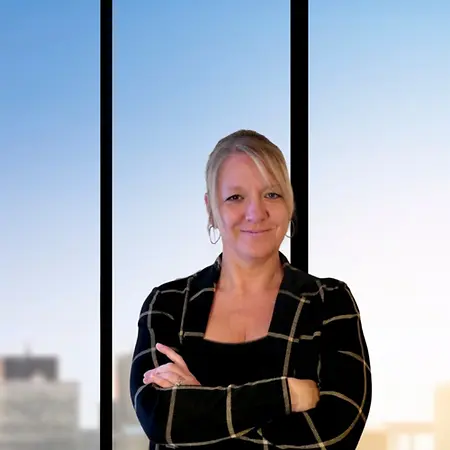
Molly Kelly · In Her Own Words
Her Story
About Molly
Molly Kelly is the Executive Director of The Upper Room Recovery Community in South Bend, Indiana, where she leads programs that provide safe, structured housing and recovery support for individuals rebuilding their lives after addiction.
Her leadership is deeply rooted in lived experience. Having overcome addiction, incarceration, and the challenges of starting over, Molly understands firsthand the barriers individuals face in recovery. Today, she uses that experience to create pathways for others to achieve stability, independence, and lasting change.
Under her direction, The Upper Room serves men and women transitioning from homelessness, incarceration, and substance use disorder, with a strong focus on accountability, employment, and long-term success. She is also leading the development of the Bridges to Recovery Center, expanding access to critical resources such as life skills training, employment support, and community connection.
Molly is passionate about restoring dignity, strengthening families, and changing the narrative around addiction and recovery. Through collaboration with community partners, she continues to build a system of support where individuals are not only able to recover — but to thrive.
Her Interview
Ten minutes with Molly
01What do you attribute your success to?
I attribute my success to resilience, lived experience, and a deep sense of purpose.
I’ve walked through addiction, incarceration, and the challenges of rebuilding my life from the ground up. Those experiences didn’t just shape me — they gave me clarity about what truly matters and a drive to create change for others walking a similar path.
I’ve also been fortunate to have people who believed in me when I was still learning to believe in myself. Today, I carry that forward by building environments where others feel supported, seen, and capable of success.
02What’s the best career advice you’ve ever received?
The best advice I’ve received is that my story is not a weakness — it’s my greatest asset.
Owning my journey has allowed me to lead with authenticity, build real connections, and create meaningful change. The moment I stopped trying to separate my past from my leadership was the moment I truly stepped into my purpose.
03What advice would you give to young women entering your industry?
Own your story and don’t shrink to fit into spaces you were meant to lead in.
Whether your path has been traditional or not, your experiences have value. In this field, authenticity and compassion are just as important as credentials. Stay committed to growth, set strong boundaries, and don’t lose sight of why you started.
04What are the biggest challenges or opportunities in your field right now?
One of the biggest challenges in the recovery and behavioral health field right now is the growing demand for services paired with a shortage of resources and workforce.
More people than ever are struggling with substance use and mental health challenges, yet access to care remains limited. Workforce shortages, burnout, and funding instability make it difficult for organizations to meet the need, especially at the community level.
At the same time, there is a major opportunity to rethink how we approach recovery — by focusing more on long-term support, housing, employment, and community connection, not just short-term treatment.
There is also growing recognition of the value of peer support and lived experience in recovery, which is helping reshape the field in a more human-centered and effective way.
05What values are most important to you in your work and personal life?
Integrity, compassion, and accountability are at the core of everything I do.
I believe in being honest about where I’ve been and intentional about where I’m going. Compassion allows me to meet people where they are, while accountability helps create real, lasting change.
In both my work and my personal life, I value creating spaces where people feel safe, supported, and empowered to grow.
Her Content Hub
Articles by Molly
Recovery Doesn't End at Treatment - That's Where It Begins
Why Long-Term Support and Stable Housing Are the True Foundations of Recovery
When most people think about recovery, they think about treatment. They think about detox, inpatient programs, or short-term care. And while those are critical first steps, they are only the beginning.
What happens after treatment is where recovery is truly tested.
For many individuals, leaving treatment means returning to the same environments, the same challenges, and the same instability that contributed to substance use in the first place. Without structure, support, and a clear path forward, the risk of relapse is high—not because people don’t want to change, but because they don’t yet have the foundation to sustain it.
Recovery is not just about sobriety. It’s about stability.
It’s about having a safe place to live, access to employment, consistent support, and a community that reinforces growth and accountability. These are the pieces that turn short-term success into long-term transformation.
As someone who has personally experienced addiction, incarceration, and the process of rebuilding my life, I understand how critical this phase is. I also see it every day in my work as the Executive Director of The Upper Room Recovery Community in South Bend, Indiana.
At The Upper Room, we provide sober housing and recovery support for men and women who are ready to move forward but need the structure and stability to do so. Our residents are not just working toward sobriety—they are working toward independence. They are finding employment, rebuilding relationships, and learning how to navigate life in a healthy and sustainable way.
What we’ve seen is clear: when people are given the right environment, they succeed.
But there is still a significant gap in how we approach recovery as a system. Too often, funding and attention are focused on short-term treatment without equal investment in what comes next. This leaves many individuals without the continued support they need during one of the most vulnerable times in their journey.
This is where we have an opportunity to do better.
We can begin to shift the conversation from “How do we get people sober?” to “How do we help people stay well?” That means investing in recovery housing, peer support, employment pathways, and community-based resources that provide long-term stability.
It also means recognizing the value of lived experience. Those who have walked through addiction and recovery bring insight, connection, and credibility that cannot be taught. When we include those voices in leadership, we create systems that are not only more effective but more compassionate.
Recovery doesn’t happen in isolation. It happens in community.
When individuals are surrounded by support, accountability, and opportunity, they don’t just survive—they rebuild. They grow. They lead.
And that’s where real change begins.
Recovery is not the end of a story—it's the beginning of a new one. The question is whether we are willing to build the systems that allow that story to succeed.
Join Influential Women and start making an impact. Register now.