
Transportation is not a luxury—it is the foundational infrastructure that determines whether reentry and workforce programs can actually succeed. Without reliable mobility, even well-designed systems fail.
In Conversation
Molly Oliver for Bold. Brilliant. Unstoppable.
Read the transcript
Molly Oliver: Being an influential woman means recognizing that I have the power to shape outcomes. And with that power comes a deep responsibility to others. It means working closely with diverse partners to lead meaningful change, using my position to elevate perspectives that are too often unheard. By serving as a voice for others, I help ensure these voices are not only included, but respected and embedded in the decision-making process.
What's one piece of advice you would give to younger women chasing their dreams?
Molly Oliver: I would encourage women to recognize that progress does not have to be dramatic to be meaningful. Every win, no matter how small, moves you closer to your goal and lays the foundation for bigger successes.
Full transcript available
Her Story
About Molly
My work has always been grounded in helping people build stable, successful lives—no matter the arena. I began my career right out of high school through AmeriCorps, serving for two years and moving from a small rural town in Indiana to a much larger city. That transition was a profound culture shock and a formative experience. As a white woman raised in a very rural environment, my exposure to different cultures had been limited. Suddenly finding myself as a minority in the room prompted ongoing reflection and shaped how I approach leadership, equity, and service.
Throughout my career, I have worked in youth ministry with teens from diverse backgrounds, in nonprofit roles connecting individuals to critical community resources, and in statewide domestic violence outreach across Indiana. I have also partnered with transit organizations such as IndyGo and CIRTA, designing commuter‑friendly solutions by connecting people to carpools and vanpools. A personal moment early in my career—losing my car and learning to “just ride the bus”—sparked my interest in transportation access and revealed how mobility directly affects opportunity, dignity, and quality of life.
Today, I serve as Director of Employment Services at 2nd Chance Indiana, where I oversee both transportation and employment teams focused on supporting justice‑impacted individuals during reentry. We partner with Commute with Enterprise to operate seven vanpools across the state, with a growing waitlist that reflects the need for this work. Our transportation program is about more than getting to work—it’s about stability, belonging, and the ability to thrive. We don’t just talk about second chances; we live them. Some members of our team have been formerly incarcerated, and together we work to ensure no one is left behind because of a past mistake. People deserve dignity, opportunity, and respect—and I’m proud to be part of work that actively puts those values into practice.
Her Interview
Ten minutes with Molly
01What do you attribute your success to?
I definitely attribute my success to God—along with a lot of hard work, perseverance, and the willingness to walk through doors that opened while accepting, with humility, when others closed. From a young age, I was deeply inspired by Mother Teresa. I remember reading about her life and her work, and those stories stayed with me, shaping how I understood service, compassion, and purpose. While people often ask, “What would Jesus do?” for many years I found myself asking, “What would Mother Teresa do?”
Just as importantly, I recognize the role of mentors and support systems along the way. Although I grew up in a dysfunctional home, I was fortunate to have several adults—teachers, community members, and mentors—who saw potential in me and encouraged me to imagine a life beyond a small town in Indiana. They challenged me, believed in me when I didn’t fully believe in myself, and helped guide me toward opportunities I might never have pursued otherwise. Their encouragement made a lasting difference and continues to influence how I try to show up for others today.
02What’s the best career advice you’ve ever received?
The best career advice I’ve ever received was to slow down when an opportunity presents itself—to explore it, sit with it, and avoid making rash decisions. An opportunity may be a door that won’t open again, or it may be a door that leads somewhere entirely different—and even better—than you expected. Taking the time to reflect has helped me recognize when to step forward, when to pivot, and when to trust that growth sometimes comes through paths I hadn’t originally planned.
03What advice would you give to young women entering your industry?
I would tell young women entering this field that empathy and accountability can—and should—coexist. Too often, this work is approached with a rigid tone, but real impact comes from taking the time to understand people as individuals rather than reducing them to their background or past mistakes. When you come alongside someone, listen to their story, and see their humanity, you’re not only better able to help them—you’re also protecting yourself from burnout. Leading with compassion while maintaining clear expectations creates stronger outcomes for everyone involved.
04What are the biggest challenges or opportunities in your field right now?
One of the biggest challenges in my field is funding—it’s a constant reality for nonprofit organizations. Beyond that, the individuals we serve face significant barriers when reentering society. When someone is released from jail, they are often quite literally released with no clear plan, limited resources, and little support. Access to housing, transportation, employment, and basic stability is often lacking, leaving many people vulnerable to being left behind before they’ve even had a chance to restart.
Employer stigma remains another major challenge. While progress has been made and more employers identify as “fair‑chance,” there is still a disconnect between intention and action. We frequently see individuals apply for jobs, only to be excluded once their background is disclosed. At 2nd Chance Indiana, we’ve participated in studies comparing the work performance of justice‑impacted employees to those without criminal records, and the data consistently showed no significant difference. In some cases, individuals who had spent longer periods incarcerated actually demonstrated stronger performance and commitment than their counterparts.
Despite these challenges, the opportunities in this field are powerful. There is a tremendous opportunity to change how we view people with criminal backgrounds—not as risks, but as individuals with potential. This work allows us to build more inclusive communities, strengthen the workforce, and meaningfully reduce recidivism. As one of my team members often says, when people get out, they have to go somewhere—so the real choice is whether we want individuals cycling back into incarceration or contributing to society through stable employment.
Building community and connection is one of the strongest protective factors against returning to jail. This field offers an opportunity to go beyond words and truly put values into action. Justice‑impacted individuals represent a largely untapped talent pool, and employers willing to invest in them often gain dedicated, resilient employees. For me, that’s not just an opportunity—it’s a responsibility.
05What values are most important to you in your work and personal life?
My personal and professional values are deeply rooted in my Christian faith, which shapes how I approach people, leadership, and challenges. At the core of that faith is a belief that every person deserves dignity—regardless of who they are, where they come from, or what they’ve done. While offering grace and respect isn’t always easy, I believe we were all created by God with inherent worth and purpose. That belief guides how I show up in my work and reminds me to see the humanity in everyone, even in the most difficult moments.
Her Content Hub
Articles by Molly
Transportation Is Reentry Infrastructure
Why Transportation Infrastructure Is the Missing Foundation of Reentry Success

As leaders, we spend a great deal of time asking why well-designed reentry and workforce programs underperform. We invest in job readiness, recovery supports, supervision reform, and employer engagement. We commission studies. We pilot evidence-based models. Yet too often, outcomes collapse at the most basic level of execution.
The inconvenient truth is this: many reentry systems are not failing because people are unprepared or because programs are weak. They are failing because transportation is still treated as an auxiliary service rather than essential infrastructure.
I write this leader to leader—not as criticism, but as a shared reckoning. When systems repeatedly produce predictable breakdowns, the issue is structural. Transportation is one of those structures, and it is time we treat it with the same seriousness as every other pillar of reintegration.
When Systems Expect Participation Without Providing Access
Across reentry systems, participation is assumed. Employment requires reporting consistently and on time. Supervision requires appearing as scheduled. Recovery requires regular attendance. These expectations are reasonable. However, they become unrealistic when individuals are placed in environments without reliable means of mobility.
When transportation fails, the consequences compound quickly. Missed shifts erode employer trust. Job loss destabilizes housing and income. Missed appointments trigger supervision violations. What follows is often framed as noncompliance or lack of commitment, even when the true root cause is lack of access.
This pattern is not accidental. It is the predictable outcome of treating transportation as a discretionary add-on instead of a foundational condition for success.
Transportation Deserts Are Not a Mystery
We know where the gaps are. Rural and peri-urban communities across the country have long been identified as transportation deserts, particularly for individuals without access to personal vehicles. Public transit is limited or nonexistent. Employment opportunities often require early morning, overnight, or rotating shifts that do not align with fixed transit routes—when those routes exist at all.
Despite this, these same regions are frequently targeted for workforce expansion, second-chance hiring initiatives, and reentry investments. The disconnect is not due to a lack of data. It is a failure to align infrastructure with policy goals.
Organizations working on the ground witness this reality daily. At 2nd Chance Indiana, transportation has consistently emerged as a determining factor in whether justice-impacted individuals can sustain employment. Coordinated mobility strategies—including vanpools and employer-integrated transportation—have demonstrated that when transportation is reliable, job stability improves and employer partnerships strengthen.
Yet even with proven models, expansion into known transportation deserts remains constrained by limited, short-term funding. This challenge is not unique. It reflects a broader systems design that funds transportation reactively, temporarily, and separately from the outcomes it directly shapes.
Fragmentation Is a Leadership Problem, Not a Capacity Problem
Transportation support for justice-impacted individuals is typically fragmented across agencies, programs, and funding streams. Each carries its own eligibility requirements, timelines, and accountability measures. As a result, responsibility is diffuse, and reliability becomes no one’s mandate.
In one region, vehicles may sit underutilized due to staffing or scheduling barriers. In another, individuals may have no viable transportation options at all. From a leadership perspective, this is not a scarcity issue. It is a governance issue.
When transportation is treated as infrastructure, it is planned regionally, coordinated across systems, and funded with long-term sustainability in mind. When it is treated as auxiliary support, it becomes vulnerable to budget cuts, pilot limitations, and temporary workarounds. The difference between these approaches determines whether systems function as intended or repeatedly stall during implementation.
Employment Stability Depends on Transportation Stability
Employment remains one of the strongest predictors of successful reentry—but only when it is sustainable. Job placement alone does not reduce recidivism. Retention does. Transportation instability undermines retention faster than almost any other factor.
From an employer’s perspective, missed shifts and inconsistent attendance quickly overshadow job performance. From a systems perspective, each transportation-related job loss represents a failed investment. Over time, these failures discourage employer participation and weaken the public-private partnerships we depend on to expand opportunity.
If we want employment to serve as a stabilizing force, transportation must be treated as a prerequisite—not an afterthought.
What Leadership Looks Like at This Moment
This is not a call for more programs. It is a call for strategic realignment.
First, transportation planning must be embedded into reentry and workforce development strategies from the beginning, rather than addressed only after disruption occurs.
Second, funding structures must evolve. Multi-year investments and braided funding approaches are essential if proven mobility models are to scale into regions already identified as transportation deserts.
Third, leadership responsibility must be explicit. When transportation is everyone’s peripheral concern, it becomes no one’s core accountability. Clear ownership, shared performance metrics, and cross-agency coordination are essential if reliability is the objective.
Finally, leaders must recognize that capable implementers already exist. The issue is not a lack of innovation or commitment at the provider level. It is the absence of infrastructure-level investment necessary to scale effective solutions.
Why This Matters
The consequences of ignoring transportation are not theoretical. They manifest as lost jobs, broken trust, and repeated system cycling for individuals who are doing exactly what we ask of them. Over time, these failures erode confidence in reentry systems themselves.
We can do better—and we already know how.
Transportation enables participation.
Participation enables stability.
Stability enables reintegration.
Each link depends on the one before it.
Recognizing transportation as infrastructure is not a political stance. It is a leadership decision. It signals a willingness to align systems with outcomes and to take responsibility for the conditions we expect people to navigate.
When transportation is treated as core infrastructure, systems begin to function as designed. The work then shifts from managing repeated breakdowns to sustaining access, stability, and opportunity over time.
A personal journey through transportation insecurity reveals how mobility shapes opportunity, dignity, and survival—especially for women reentering society after incarceration. Vanpooling emerges as a powerful, overlooked solution to transportation deserts.
The Road Back to Opportunity: How Losing My Car Opened My Eyes to Transportation Deserts — and What That Means for Women Reentering Society
How losing my car revealed the hidden crisis of transportation deserts and why vanpooling could transform reentry for women.
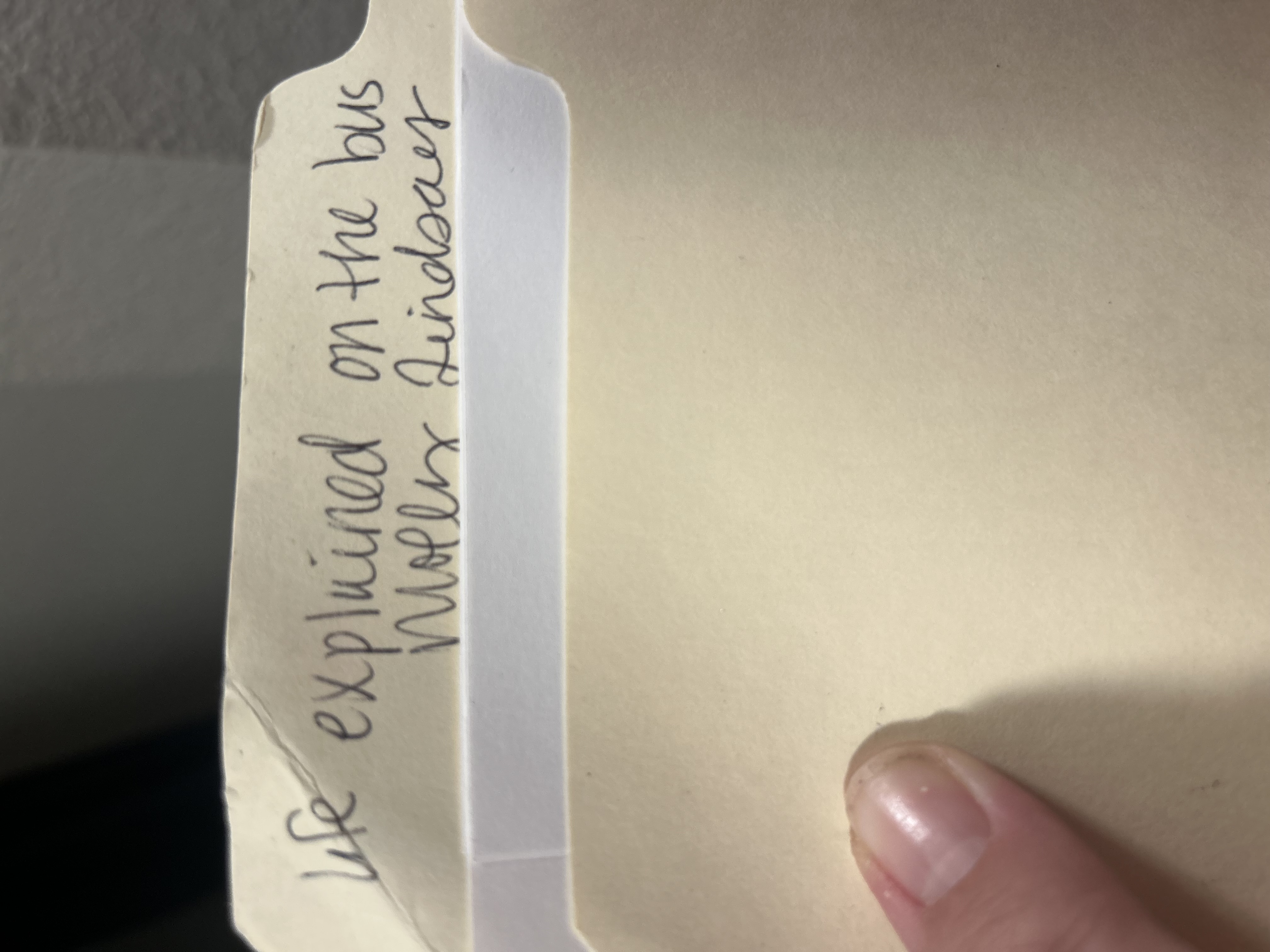
My Story: The Moment Mobility Disappeared
I didn’t understand what a transportation desert was until the day I suddenly found myself living in one.
I had just moved from a small rural town in northern Indiana—the kind of place where public transportation simply doesn’t exist. Growing up there, mobility meant one thing: you either had a car, or you stayed home. I never questioned it. I never had to.
That changed the day I totaled my car.
In an instant, my entire life shrank. I wasn’t justice-impacted. I wasn’t navigating probation, court dates, or reentry requirements. I was simply a woman who lost her vehicle—and suddenly, I had no idea how to get to work, buy groceries, or keep up with daily responsibilities.
A friend from my AmeriCorps team invited me to ride IndyGo, Indianapolis’s public transportation system. I remember stepping onto that bus for the first time, feeling both grateful and embarrassed that I didn’t know how any of it worked. But as the days turned into weeks, and the bus became my primary mode of transportation, something shifted.
Every delayed bus, every long walk to a stop, every missed connection taught me something I had never considered: transportation isn’t just about getting from point A to point B—it’s about access, dignity, opportunity, and survival.
And what was an inconvenience for me is a crisis for many women.
Transportation Deserts: The Invisible Barrier to Stability
A transportation desert is more than a place without buses. It’s a community where mobility is limited, unreliable, or inaccessible—and where people’s opportunities shrink because of it.
Transportation deserts restrict access to:
- Jobs
- Healthcare
- Education and training
- Childcare
- Food and essential services
Research shows that transportation barriers are deeply intertwined with economic vulnerability. A meta-synthesis of reentry studies found that transportation “connects complex obligations” and that deficiencies “exacerbate vulnerability,” especially for people navigating multiple systems at once.
My own experience was temporary. But for many women, especially those returning from incarceration, transportation insecurity is a daily reality with far higher stakes.
Why Transportation Hits Women Reentering Society Harder
Women reentering society face a landscape shaped by gendered realities: trauma histories, caregiving responsibilities, unstable housing, and limited access to resources. Research consistently shows that women experience both individual and structural barriers during reentry, including limited access to transportation, healthcare, and family reunification support.
The Office of Justice Programs highlights that women returning from incarceration must navigate employment, addiction recovery, mental health needs, housing instability, childcare, and family reunification—all of which require reliable transportation.
Transportation isn’t just a logistical issue for these women. It’s a lifeline.
One missed bus can mean a missed probation appointment.
One missed appointment can mean a violation.
One violation can mean reincarceration.
This isn’t about personal responsibility—it’s about structural barriers that disproportionately affect women.
Vanpooling: A Practical, Dignified Solution
Vanpooling is one of the most effective—and most overlooked—tools for addressing transportation deserts, especially for women navigating reentry.
Research shows that transportation is a critical factor in navigating post-release conditions and that reliable mobility reduces vulnerability and increases stability.
Vanpooling works because it:
- Provides reliable transportation to work
- Reduces the cost burden of commuting
- Builds community and accountability
- Supports consistent employment
- Helps prevent technical violations related to missed appointments
For women rebuilding their lives, vanpooling can be the difference between surviving and thriving.
When I reflect on my own experience, I realize how much a program like this would have changed my daily life during those months without a car. If it made that much difference for me, imagine what it could do for women rebuilding their entire lives.
Conclusion: Mobility Is a Justice Issue—and a Women’s Issue
Losing my car taught me something I never expected: mobility is one of the most powerful determinants of opportunity. It shapes whether people can work, parent, heal, comply with requirements, or simply show up for their own lives.
If transportation insecurity could destabilize my life—with no legal barriers, no reentry conditions, and a support network—then the impact on women returning from incarceration is immeasurably greater.
The research is clear:
- Women face unique, gender-specific barriers during reentry
- They juggle more caregiving responsibilities and complex obligations
- Transportation deficiencies increase vulnerability and risk
But the solutions are also clear.
Vanpooling, community-based transit, and gender-responsive reentry programs can transform outcomes for women—not by asking them to do more, but by removing the barriers that should never have existed in the first place.
Transportation is not a luxury. It is a foundation. And when women have access to mobility, they have access to possibility.
Influential women—leaders, policymakers, philanthropists, and employers—have the power to ensure that mobility is not an accident of circumstance, but a right.
Because when women can move freely, they can rebuild freely.
And when women rebuild, entire communities rise.
Join Influential Women and start making an impact. Register now.