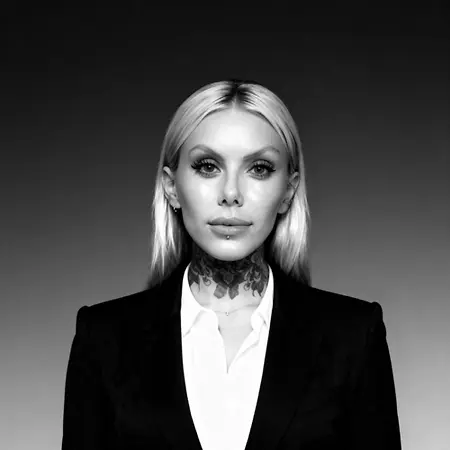
A candid reflection on an unconventional career journey from sociology aspirations to fintech product leadership, exploring how authenticity and curiosity drive professional growth and meaningful impact.
“
My career pivoted from bank teller to product leader, with the most defining shift at Dao Card, where I built core financial systems from the ground up in a true zero-to-one environment.
Mona Mehdi · In Her Own Words
Her Story
About Mona
At Dao Card, I lead the full product lifecycle — from concept through market launch — for our business credit card platform designed to help small businesses access and build credit from day one.
I’m responsible for shaping the product vision, strategy, and roadmap as we bring to market financial products that remove barriers for early-stage businesses. This includes launching Dao’s MVP card programs (unsecured, secured, and referral), managing key partnerships with our issuing bank and operational vendors, and ensuring compliance and risk controls are built into everything we deliver.
My work bridges technical execution and customer experience: collaborating with engineering, risk, and data teams to refine underwriting and fraud models, while designing intuitive application and credit-building journeys for small business owners. Beyond launch, I focus on scaling the platform—expanding partnerships, optimizing retention, and evolving Dao into a comprehensive credit education and financial growth layer for SMBs.
Ultimately, my mission is to create a transparent, structured path that empowers entrepreneurs to understand, build, and leverage business credit as a true engine of growth.
Her Interview
Ten minutes with Mona
01What do you attribute your success to?
I’m a first-generation high school and college graduate. That came with a very strict, traditional upbringing and parents who worked multiple jobs just to stay afloat. In many ways, I attribute my success directly to that environment.
My parents weren’t around much, which meant I had to figure a lot out on my own, early on. I grew up in situations where it was truly sink or swim—and that mindset shaped me profoundly. Interestingly, even learning how to swim was literal in that sense.
That upbringing taught me how to think on my feet, adapt quickly, and keep moving forward instead of staying static. I’ve realized I actually thrive in that space—where I’m challenged, forced to pivot, and expected to solve problems as they come. It’s where I’ve found both confidence and enjoyment.
02What’s the best career advice you’ve ever received?
The best career advice I ever received was, “Don’t stop being you.” It resonates deeply with me because I’m naturally very direct. Earlier in my career, that directness was sometimes labeled as brash—or even as complaining.
Now, at the level I’m at, it’s something my teammates truly value. I don’t sugarcoat issues. If something is wrong, I’ll say it’s wrong, and I’ll push for it to be fixed—urgently.
I’m grateful I didn’t fold or try to become someone else. Staying true to myself is exactly what helped me grow. Today, my directness isn’t seen as difficult; it’s understood as coming from a place of accountability and care.. There’s a mutual respect that I’m doing this for the right reasons—and that makes all the difference.
03What advice would you give to young women entering your industry?
I would tell them not to fixate on a single role, but to focus on getting in the door and giving themselves the space to explore and learn. Where you start is not necessarily where you’ll end up.
I graduated with a degree in sociology and was convinced I was going to get my PhD and become a professor. But when I realized I couldn’t afford the master’s program, I had to pause and rethink my path. I shifted from my role as a teller to a universal banker, and that move changed everything.
Along the way, I learned that while I can be bubbly, what really drives me is understanding how things work. That curiosity kept pulling me into new roles, deeper problems, and broader responsibilities—step by step—until I eventually found my way into product.
I didn’t even know what a product manager was when I was a teller. And yet, here I am. That’s why I believe so strongly in staying open, being curious, and letting your career evolve as you learn more about yourself.
04What are the biggest challenges or opportunities in your field right now?
One of the biggest challenges today is staying current—both with rapidly evolving technology and with regulations that are constantly changing. Shifts in leadership and government priorities often lead to new regulations being introduced or existing ones being updated, and keeping up is only part of the challenge. Equally difficult is interpreting what those regulations actually mean in practice, especially when the guidance can be vague or open to interpretation.
Technology presents a similar challenge. Payment rails, for example, have evolved dramatically. Not too long ago, wiring money internationally was slow and expensive; today, funds can move across borders in minutes for just a few dollars. The pace of change is relentless.
Right now, AI is at the center of that conversation. I think AI has tremendous potential and can be incredibly powerful when used thoughtfully—but I don’t believe it should simply replace people. One of the most important challenges ahead is finding the right balance: defining where AI adds value and efficiency, while being clear about where human judgment, accountability, and decision-making need to remain in control. Determining that line between human ownership and AI assistance is going to be critical.
05What values are most important to you in your work and personal life?
In my personal life, I’m extremely transparent and direct. If you ask me a question, I’m going to answer it honestly—I don’t sugarcoat, and I don’t believe in lying. That approach carries over very naturally into how I show up at work.
One of my core values is being judged on the quality of my work rather than appearances. I have a lot of tattoos—and I’ve actually been turned down for roles because of that. What matters to me is that my work, my experience, and my skills speak for themselves. That’s how I believe people should be evaluated.
I try to bring that same mindset to how I work with others. I make a conscious effort to focus on the quality of someone’s work, their experience, and their judgment. I don’t care how you look or how many hours you sit at your desk—as long as the work is getting done and it’s high quality, there’s no need for micromanagement.
I’m also a strong advocate for collaboration. Title doesn’t matter to me—whether someone is above me or below me on the org chart, we can work together to solve problems and fix issues. I value transparency, directness, and teamwork, and I believe the best outcomes come from working together with mutual respect, regardless of role or title.
Her Content Hub
Articles by Mona
From Social Science Graduate to Head of Product
From Academia Dreams to Product Leadership: How Unexpected Pivots Led to Finding My True Calling

When people look at my career today, they see product leadership, fintech, and credit innovation. What they don’t see is that none of this was part of the original plan.
Ten years ago, if you had asked me where I thought I’d end up, I would have told you I was going to pursue a PhD and become a professor in sexuality studies. After earning my degree in sociology, that was the path I envisioned for myself. But like many people graduating with student debt and limited financial support, reality forced me to reassess what was financially possible.
So I stayed in banking.
I started as a teller and worked my way through both large and community banks before eventually pivoting into investment operations and asset movement. What fascinated me wasn’t wealth management itself, but the mechanics behind how money actually moves — the systems, the operational complexity, the infrastructure most people never think about.
Still, I hadn’t found the thing that truly excited me.
In 2020, I moved to New York City believing I was about to take the next step in my career. Instead, COVID changed everything. Positions I had interviewed for suddenly disappeared or were frozen indefinitely. Like many others during that time, I had to pivot quickly. I moved back to Florida after accepting a role simply because I needed stability.
At that point, I still felt uncertain about where I belonged professionally. I thought maybe I’d eventually return to an RIA or investment firm. Then something unexpected happened.
One company I had interviewed with years earlier called and offered me a position on the spot. At the same time, I was already interviewing with Green Dot. I ultimately chose Green Dot, and it became one of the best decisions I’ve ever made.
For the first time in my career, I found myself in an environment where there wasn’t a rigid hierarchy or constant ego. I had leaders who valued curiosity, initiative, and problem-solving over titles. I was initially hired into operations management, not product management. But when a Lead Product Manager left the company, some of his responsibilities were transitioned to me. Within months of joining, I was leading my first product initiative.
That was the moment everything clicked.
I realized I loved building. I loved solving problems. I loved understanding customer pain points and figuring out how systems, operations, compliance, and technology could come together to create better experiences.
More importantly, I finally found a place where I didn’t feel like I had to shrink myself to succeed.
Throughout my earlier career, my directness was often misunderstood. In traditional environments, being outspoken or assertive as a woman can easily be misinterpreted. But in product, my directness became an asset. My ability to challenge ideas, think critically, and push conversations forward was valued instead of questioned.
Even things like my tattoos and piercings — which had once felt like distractions in more conservative spaces — stopped mattering. My work spoke for itself.
For the first time, I could fully be myself while still being taken seriously.
I’ve also realized over the years that I’m not the kind of person who comes to work simply for social politics, small talk, or performative culture. What motivates me is growth — being surrounded by people who challenge ideas, think long term, and genuinely want to build something meaningful.
I want to work in environments where people are encouraged to think beyond their title and contribute freely. Too often, rigid hierarchy limits potential and feeds ego. Some of the most transformative ideas can come from the one person who normally wouldn’t be included in the conversation. I’ve seen firsthand how a single perspective from someone closest to the problem can completely shift strategy and move an entire team in a better direction.
That’s one of the reasons product leadership resonates so deeply with me. The best teams aren’t built around status — they’re built around trust, collaboration, curiosity, and the willingness to listen to good ideas no matter where they come from.
Over the last several years, I’ve continued growing within fintech and product leadership, launching credit and payment products, building credit-building experiences, and helping shape customer journeys from the ground up. But growth also forced me to ask myself bigger questions about where I wanted to go next.
Last year, when my company announced it was being sold, I took a hard look at my future. I realized I had become too comfortable. I wasn’t stagnant because I lacked ambition — I was stagnant because I hadn’t clearly defined the next version of myself yet.
So I challenged myself.
I threw myself into interviews, sought feedback after rejections, analyzed where I could improve, and completely changed the way I approached opportunities. Even after difficult interviews or setbacks, I never questioned whether product was the right path for me. Instead, I became more certain that it was exactly where I belonged.
That persistence eventually led me to my current role as Head of Product at Dao Card, where I now help build financial products designed to guide small businesses toward credit growth and SBA readiness.
Looking back, none of my career progression was linear. I didn’t follow a perfectly structured roadmap, and I certainly didn’t arrive here the way I originally imagined.
But I’ve learned that careers are rarely built in straight lines.
Sometimes the most important thing you can do is remain open to reinvention, trust your instincts, and continue moving forward even when you don’t fully see the outcome yet.
Today, my goal is bigger than simply climbing a ladder. I want to help shape strategy at the highest levels, contribute to broader industry conversations, and build teams filled with extraordinary people who think differently, challenge convention, and create products that genuinely improve people’s lives.
Because ultimately, that’s what product taught me:
The best things are rarely built by fitting in.
Join Influential Women and start making an impact. Register now.