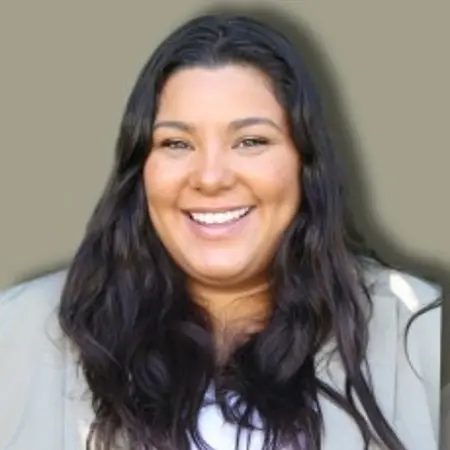
I almost turned down a leadership role outside my comfort zone, but saying yes transformed my career and taught me that the most uncomfortable opportunities are often the ones that expand you the most.
Monica Mejia · In Her Own Words
Her Story
About Monica
Monica began her career in direct service, supporting youth and families in under-resourced communities across the Bay Area. Through that work, she developed a deep understanding of both the transformative power of community-based programs and the structural challenges that limit their long-term sustainability. This insight led her to focus on strengthening the systems behind the work—recognizing that lasting impact depends on how organizations are designed, resourced, and governed.
She has since built expertise in developing operational infrastructure, implementing financial and HR systems, and leading cross-sector collaborations that expand access to holistic, wraparound services. Her leadership is grounded in the belief that strong systems are a form of equity—ensuring that communities are not only served, but supported with consistency, dignity, and long-term opportunity.
Monica’s leadership is deeply informed by her lived experience as an immigrant and as someone who directly benefited from nonprofit support systems. This perspective fuels her commitment to building pathways where communities can truly thrive. In addition to her professional work, she serves on the San Mateo County Charter Review Committee, contributing to efforts that advance equity, governance, and accountability in public systems.
She leads with compassion, strategic clarity, and a vision for systems-level change that extends beyond any single organization.
Her Interview
Ten minutes with Monica
01What do you attribute your success to?
I attribute my success to leading with both discipline and heart. This work requires more than effort—it requires purpose. My leadership is grounded in a deep commitment to the communities I serve, but I’ve also learned that sustainability matters just as much as passion.
Earlier in my career, I experienced burnout from being constantly “on,” even during moments that were meant for rest. A defining moment for me was realizing that I couldn’t effectively serve others if I wasn’t taking care of myself first. That shift changed how I lead.
Today, I prioritize balance intentionally. I’ve created clear boundaries that allow me to recharge, stay grounded, and lead with clarity. That balance enables me to think strategically, make thoughtful decisions, and show up fully—not just for my work, but for my life.
02What’s the best career advice you’ve ever received?
The best advice I’ve received is to not wait until I feel fully ready to step into leadership. Many of the roles that have shaped my career required me to grow into them, not arrive fully prepared.
I’ve learned that leadership is not about having all the answers—it’s about having the courage to step forward, ask the right questions, and build the systems and relationships needed to move work forward. Growth happens in the stretch, not in comfort.
03What advice would you give to young women entering your industry?
Don’t limit yourself to the roles you see most often represented. In the nonprofit sector, many women are in program-facing roles, but leadership also requires strength in operations, finance, and strategy.
If you want to influence long-term change, learn how systems work. Understand budgets, organizational design, and decision-making structures. That knowledge gives you the ability to not only support programs—but to shape them.
And just as importantly, take care of yourself along the way. This work is meaningful, but it should also be sustainable.
04What are the biggest challenges or opportunities in your field right now?
One of the biggest opportunities in the nonprofit sector is moving beyond siloed approaches to service delivery. No single organization can meet the full scope of community needs, yet many systems are still designed to operate independently.
There is tremendous potential in building more intentional, collaborative ecosystems—where organizations focus on their core strengths while working in partnership to provide holistic, wraparound support.
At a broader level, I believe the sector must continue shifting toward systems-level thinking—addressing root causes rather than symptoms. Long-term, the goal is not just to sustain nonprofits, but to help build systems where fewer people need them in the first place.
05What values are most important to you in your work and personal life?
I value community-centered collaboration, sustainability, and leading with purpose. I believe in building systems that honor dignity, access, and equity for all.
Equally important is balance. I believe effective leadership requires both resilience and reflection. Staying connected to purpose while maintaining well-being allows me to lead with clarity and contribute in a way that is both meaningful and sustainable over time.
Join Influential Women and start making an impact. Register now.