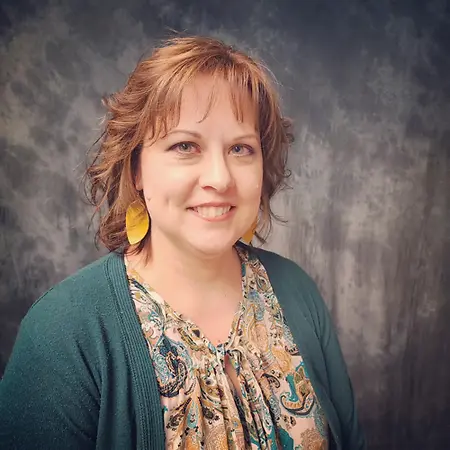
Either you consciously choose to take the time to slow down, or your body will force you to. I learned downtime is just as much of a priority as tasks.
How She Learned To Slow Down Without Feeling Guilty
Explore moreEvolution means embracing change and letting ambition adapt. I've learned to foster relationships, support others, and recognize when it's time to evolve.
Morgan Newman, DNP, RN · In Her Own Words
Either you consciously choose to take the time to slow down, or your body will force you to. I learned downtime is just as much of a priority as tasks.
How She Learned To Slow Down Without Feeling Guilty
Explore moreHer Story
Morgan Newman is a dedicated healthcare leader with a 25-year career spanning clinical and administrative roles. She began her journey as a nursing assistant to fund her college education and progressively advanced through positions in acute care nursing, nursing education, infection control and progressive leadership roles. Morgan has taught nursing at the University of South Dakota, where she was recognized as one of the top six instructors for the School of Health Sciences in 2014 for her work in the newly adopted bachelor of nursing program. She then served as an infection control coordinator with the VA Black Hills Healthcare System before returning again to education through South Dakota State University's bachelor of nursing program. Her career reflects a deep commitment to improving patient care and operational processes within healthcare settings. Currently, Morgan serves as the Associate Chief of Nursing for Surgery and Acute Care ICC at the U.S. Department of Veterans Affairs. In this leadership role, she focuses on optimizing interprofessional workflows, enhancing surgical care delivery, and fostering collaboration among clinical teams in the acute care area. Her previous experience includes directing ambulatory operations at Monument Health, where she streamlined processes across multiple clinics to improve access and quality of care. As part of attaining a Doctor of Nursing Practice (DNP) degree, Morgan's project "Improving Nurse Mentor Retention Through the Use of Nurse Residency Programs" has been shared and downloaded over 1000 times and captures her commitment to advancing nursing practices, mentoring the next generation of healthcare professionals, and preparing teams to meet evolving healthcare challenges. Throughout her career, she has demonstrated a passion for leadership, education, and continuous improvement, combining hands-on clinical expertise with strategic operational insight to positively impact both patients and healthcare teams.
Her Interview
01What do you attribute your success to?
I attribute my success to hard work, perseverance, and the willingness to take chances and explore new fields, guided by the valuable mentorship I’ve received from multiple people along the way. My family sustains my fortitude to continue my journey to make lasting changes in healthcare that will endure long after I'm gone.
02What’s the best career advice you’ve ever received?
With the wide-ranging experiences in healthcare, there are different pieces of advice I have received for different contexts.
Clinical: "Prove it" - If you are concerned for a patient and need to decide between action or monitoring...prove it. Prove there is a problem or prove there is not a problem to act on. Collect the data/evidence for or against it like you are making a case in court. When one side outweighs the other, you will know which path to take.
"People won't care how much you know until they know how much you care." So many people, when they enter the healthcare workforce, are concerned with knowing everything to empower their decisions. This is absolutely necessary, however don't lose your humanity along the way. We are people treating people - sometimes in the worst of circumstances. If you don't know. Say you don't know but that you will figure it out together. If you were wrong, say you were wrong and try to make it right. Care about your patients and even your fellow coworkers first.
Leadership: "Seek first to understand before being understood." Listening has become such a commodity with leaders. When leading people, they may not always need you to solve their problem, they may just need you to listen. Further, when leaders are only concerned with their agenda, they will lose their audience.
"There is no reality, only perception" Once you understand where people are coming from, it makes it easier to find a middle ground.
03What advice would you give to young women entering your industry?
My advice to young women entering nursing is to explore the many facets of the field beyond what you see in media, find the areas that truly interest you, and commit to continuous learning while connecting with professional organizations to grow your skills and network. Further, use your work, your voice, your influence to help nursing elevate their position in the healthcare continuum to equal that of other healthcare professions.
04What are the biggest challenges or opportunities in your field right now?
The biggest challenge I find that nurses face right now is the quantification of their work. Healthcare, while caring for humans, still functions as a business. In so many cases, nursing services are billed a standard room charge. Thus, when cost containment is attempted, nurses are often categorized as an expense and are adjusted with a similar mindset. Nursing, as a profession, delivers services unique to nursing that cannot always be done by other disciplines. As such, nursing services should be it's own reimbursable service by insurers and only then will nursing truly perpetuate the autonomy it deserves.
05What values are most important to you in your work and personal life?
Communication - Never underestimate the value of a face-to-face conversation. So many understandings can be reached through this approach.
It's not a work-life balance, it's a work-life "juggle." As women, we will never be able to balance all of the responsibilities or challenges thrown our way. One or the other will always have to give. If you can be successful at one, during any given point in time, you will move mountains.
Join Influential Women and start making an impact. Register now.