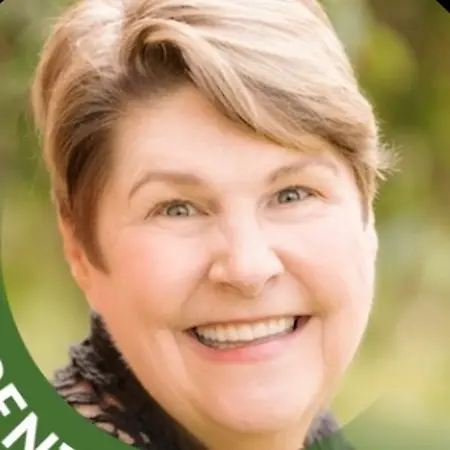
Her Story
About Nan
Nan E. Nelson, M.D., MBA, is a board-certified psychiatrist with over 25 years of experience in adult and child psychiatry, specializing in perinatal mental health. She has practiced across inpatient, outpatient, hospital-affiliated behavioral health programs, community mental health centers, and telepsychiatry, focusing on trauma-informed, patient-centered care that integrates psychopharmacogenetic testing for more precise and effective treatment. Nan emphasizes treating the whole person, helping patients develop skills alongside medication management, and collaborating closely with care teams to ensure comprehensive support.
Her career path reflects a blend of leadership, clinical expertise, and education. After a stint as a regional sales manager for a publishing company, Nan pursued medical school later in life, earning her M.D. from UT Health San Antonio and completing her residency in adult and child psychiatry at Case Western Reserve University, where she served as Chief Resident. She has also earned an MBA and taught extensively, designing and delivering psychiatric education for physicians, nurses, social workers, and community organizations. Her clinical work spans adult, adolescent, child, and geriatric populations, with a particular focus on infertility, loss, postpartum, and peripartum psychiatric conditions.
In addition to her clinical practice, Nan is an accomplished author and educator. She has written five books, including Amazon bestsellers on women’s mental health, grief, and psychiatric care, as well as a children’s book addressing grief. She has presented internationally on perinatal mood disorders and continues to advance precision psychiatry through pharmacogenomic interpretation, reducing the trial-and-error approach in medication management. Committed to community and patient advocacy, Nan’s philosophy centers on inclusive communication, collaborative decision-making, and empowering patients to understand and participate in their own mental health care.
Her Interview
Ten minutes with Nan
01What do you attribute your success to?
When I was young, I had a near-death experience - an out-of-body experience where I was with an angel, and it was the most love and peace I'd ever known. I could see this little girl laying in my bed in her nightgown, her mouth was gray, her fingernails were gray. When I eventually went back in my body, I started asking why I was here and why I didn't die. I was at the stage of saying, if I'm here, I'm going to make a difference for other people. I think because I grew up in Alaska, where people were very active in each other's lives and very influential, I saw that people really do make a difference, and that I could do that. I was obviously bright enough that I could do my work and somebody else's work. I really began to figure out that we could help each other, and if you just sit by and watch it happen, that's not very helpful. I personally can't do that. I can see that we can make a difference, and that's what drives me.
02What’s the best career advice you’ve ever received?
You either win, or you learn. That's what Dr. Daniel Amen says, and I really believe in that. We all have tough days - days when we have a migraine, days when the kids tromp mud through the house, or the dog peed on the floor. But why give up because of that? If you're a child and you're standing up and cruising around trying to walk, and you go plump and fall on your tush, you don't say 'oh, I'll never walk.' You get your tush back up and you try it again. Sometimes you bonk your head and you cry, but you get back up. You don't say 'oh, I'll never be a person who walks.' Even people who are in physical therapy and it's taking them forever to do it - the only way you can do it is to try again. You either win, or you learn.
03What advice would you give to young women entering your industry?
Do it, honey. We need women in medicine. We need women in every kind of job there is. Medicine obviously changed when women got into it - for example, any study that involved having your monthly cycle, they wouldn't include women. Well, you just mark down when they're having their period, and if you don't, how are we ever going to know this stuff? We need women in medicine, we need women who are accountants, teachers, attorneys, judges - we need women in every single part of this world because we're half the population. In China, there's a saying that women hold up half the world, and I'll tell you, I think it's higher than that. Learn it, figure it out, stand on your own two feet. Stand up, speak out, talk back, otherwise you'll get run over. Find a support group if you can't do it by yourself. There are other women who are just scared by the previous generation of men. Pick up your placard and go forward. We're not going to change if we don't do something. There's a Jewish song that says, if I'm not for myself, then who am I? If that's all that I am, then what am I? And if not now, then when? You may not make it the first time, but that doesn't mean you won't the second time, or the third time, or the 50th time.
04What are the biggest challenges or opportunities in your field right now?
The biggest challenges in my field right now are insurance, getting in to see providers, and providers not having enough time. What they want me to do is see patients, give them a drug, and go on, and I rail against that. I would say there's not enough providers out there. Access to providers is hard, and what they put providers through to get to these people can be tough. Funding is huge - if I was given 85 million dollars, I'd go start a women's center with a primary care physician or nurse practitioner, someone to put women on birth control, someone to look in kids' ears for ear infections, an attorney for divorce filings, therapists, support groups, grandparents talking to teenagers, someone teaching martial arts for self-protection, a room with outgrown suits for job interviews, and a room with baby stuff that can be cleaned and handed on. What became cracks in the health system before COVID have now become chasms. I would actually say much of mental health - actually all of medicine - is broken, because the things that we did in the past don't necessarily work for us now. You may get a doctor who doesn't make eye contact, doesn't listen, just clicks in the computer, and when you ask a question they go 'huh?' That's not how humans need to be treated.
05What values are most important to you in your work and personal life?
Love, kindness, peace, joy, compassion, and giving. I almost always tell somebody who's really depressed and says they can't do anything because they're stuck at home - go down to the next elementary school and find a kid who doesn't have some of the things you need. Go to the next holiday and choose for that family what they would want to go under the Christmas tree or in Easter baskets. Choose something that you could give them. Ask the school counselor - there are lots of kids who don't have those things. Go to a church and ask them. Finding and doing something for somebody else makes you feel you can do something, and it takes the focus off you and helps you look at somebody else. If you're depressed, go find somebody who's worse off than you - that's not hard to find - and you'll feel better about yourself. I think we all need each other, and we can pretend otherwise, but that's the truth. Because if we can't hang on to each other, what happens? We all go under.
Join Influential Women and start making an impact. Register now.