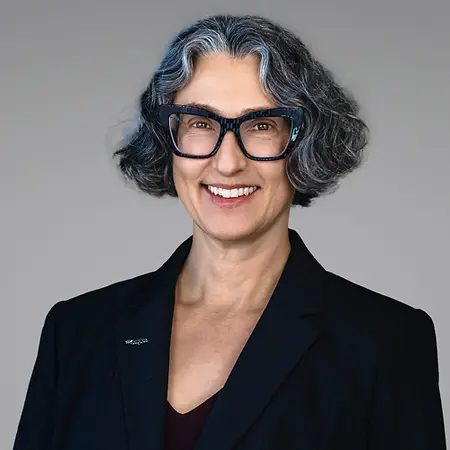
Her Story
About Nanette
I completed my undergraduate degree in 1990 and began my career in the military within the Army Medical Department earning a master's degree in human resources management and another master's in computer information systems (CIS) along the way. In 1998 upon graduation from CSU with a MSBA (Computer Information Systems), I specialized in health IT, and I've been working in that space ever since. Upon my retirement from the Army, I transitioned from the military side to the industry side of acquisition in 2014. I currently serve as a Capture Manager — a specialized discipline within project management focused on securing government contracts. In this role, I lead multifunctional, cross-disciplinary teams through the full capture lifecycle, collaborating closely with solution architects, business development leads, and key stakeholders to align strategy, coordinate proposal artifacts, and position our organization to win. Across my career, one mission has remained constant: empowering individuals to take an active role in their own health and well-being. The healthcare industry has long operated within a paternalistic framework — one where patients are passive recipients of care rather than informed participants in it. I believe technology has the power to fundamentally change that dynamic. By leveraging digital tools to educate, guide, and support people in making their own health decisions, we can bridge the gap that exists when a physician simply cannot be present for every question, every concern, and every critical moment in a patient's journey.
Her Interview
Ten minutes with Nanette
01What do you attribute your success to?
I attribute my success to grit. My dad and my mom, they taught me grit - to tough things out. That's really what has carried me through my career and helped me achieve what I have.
02What’s the best career advice you’ve ever received?
The most valuable career advice I've received centers on the art of diplomacy and organizational savvy. Technical excellence and subject-matter expertise will only take you so far — true professional success requires the ability to navigate relationships at every level of an organization. That means understanding how to effectively manage up, lead your team with intention, and read the interpersonal dynamics that shape decisions behind the scenes. Competence earns you a seat at the table; it's emotional intelligence and political awareness that determine how far you go once you're there.
03What advice would you give to young women entering your industry?
One of the most honest things I've come to understand is that a truly fulfilling life requires intentional trade-offs. Gen X was raised on the idea that you can have it all — and while I believe that's possible, I've learned that 'having it all' is rarely simultaneous. Career ambition and family life are both deeply worthwhile pursuits, but they each demand significant investment, and there will be seasons of life where one takes precedence over the other. The most empowering thing you can do is make those choices deliberately — thinking carefully about when, and whether, you want to build a family, and what that means for your professional trajectory. It's not about limitation; it's about clarity. When you're honest with yourself about your priorities and intentional about your timing, you're far better positioned to thrive in both.
04What are the biggest challenges or opportunities in your field right now?
AI is no longer on the horizon — it's here, and it's reshaping the competitive landscape across every industry. The ability to effectively leverage AI in your daily work is quickly becoming a baseline professional skill, not a differentiator. Staying ahead means investing in your own fluency with these tools and understanding how they can sharpen your performance and output.
On the business side, I'm actively working to bring AI technologies and applications to the federal government — which presents its own unique set of challenges. The current environment is marked by significant institutional change and shifting priorities, and we're seeing opportunities pushed further down the timeline as a result. It requires patience, but more importantly, it requires adaptability.
In times of uncertainty, the organizations and individuals who thrive are those who remain ready, stay creative, and continue to find ways to use the very technology they're selling as a competitive advantage. For us, that means using AI not just as a product, but as a tool that sharpens how we compete, how we communicate, and how we position ourselves for what comes next.
05What values are most important to you in your work and personal life?
At the core of both my professional and personal life is a deep commitment to human empowerment — particularly when it comes to health and well-being. I believe that every individual deserves to be an informed, active participant in their own healthcare journey, not simply a passive recipient of decisions made on their behalf.
That belief has driven my entire career. Healthcare has historically operated within a paternalistic model — one where the clinician holds all the knowledge and the patient simply follows direction. I think we can do better, and I think technology is how we get there. When we use technology thoughtfully — to educate, to guide, and to support people in making decisions that lead to healthier long-term outcomes — we extend the reach of care beyond the walls of a clinic or the limits of a physician's availability. A doctor cannot be present for every question or every moment of uncertainty, but the right tools can be.
Personally, this value shows up in how I approach my own health and the well-being of those around me — with intentionality, self-advocacy, and a belief that informed people make better choices. That alignment between what I do professionally and what I believe personally is something I consider a privilege.
Join Influential Women and start making an impact. Register now.