Influential Woman · Arts and Culture
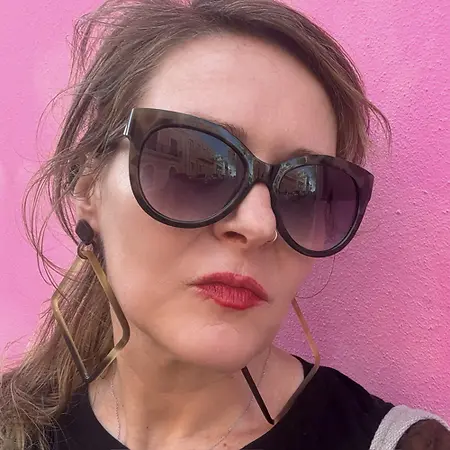
Natalia Latchezarova Ivanova
Founder & Director, Art Agency Reframed
New York City, NY 10002
Her Story
About Natalia
Natalia Ivanova is a cultural strategist, curator, and arts leader with over two decades of experience working at the intersection of nonprofit arts, cultural economies, and creative labor. Based in New York City, she is the Founder Director of Art Agency Reframed.
Art Agency Reframed operates as a living, generative proposition: an adaptive, off-market framework for experimenting with value, authorship, and relational practice. Positioned simultaneously within and against the formal art market, the Agency functions as a responsive ecology rather than a fixed institution—moving through networks of care, reciprocity, and alliance instead of hierarchy, ownership, or control. Its structure is murmuration rather than command, sustaining creative life through shared agency and collective stewardship rather than extractive systems of accumulation.
Through this work, Ivanova leads initiatives that center collaboration, sustainability, and equity, cultivating transnational networks of artists, institutions, and communities committed to structural change in cultural production. Previously, she served for nearly a decade as Executive Director of Pro Arts in Oakland, where she led a fundamental reinvention of the 50-year-old organization into a forward-looking platform for artistic experimentation, social justice, and solidarity-economy practices. During her tenure, she launched influential initiatives including Pro Arts COMMONS and The Teaching Institute for Art & Law, curated multidisciplinary programs and exhibitions, and collaborated with artists, activists, and civic partners on projects spanning urban planning, architecture, public art, and community-based economic development.
Ivanova’s practice is grounded in sustained scholarship, writing, and public engagement focused on fair labor, shared governance, and care-based cultural economies. As a writer, she produces essays, critical texts, and long-form research examining the mutual constitution of artistic, legal, and economic systems. Her work makes visible the often-obscured mechanisms that shape cultural value—mapping alternative economies, analyzing emergent forms of artistic governance, and identifying patterns within new art economies that resist extractive institutional models. Her writing functions as both conceptual infrastructure and speculative architecture for the cultural systems she actively works to build.
She is the author of “Reframing the Value of Art and Fair Labor in the Context of a Sharing Economy” and co-author, with Marc Herbst, of The Commons: of Friends and Lovers.
Her Interview
Ten minutes with Natalia
01What do you attribute your success to?
I attribute my success to a deep love for the arts and a lifelong commitment to standing alongside artists and cultural workers as they build sustainable, equitable creative ecosystems. That commitment has required listening closely, working collaboratively, and remaining accountable to the realities of creative labor, especially where artistic practice intersects with precarity, governance, and care. My work has been shaped by long-term relationships, shared experimentation, and a willingness to question dominant cultural models that prioritize extraction over stewardship. Success, for me, is not measured by individual achievement, but by the durability of the networks, practices, and forms of mutual support that make creative life possible over time.
02What’s the best career advice you’ve ever received?
The best career advice I’ve received is to build the work around your ethics, not around recognition or institutional validation. Careers unfold and institutions change, but the commitments you make to people, to shared responsibility, to care are what sustain you over time. I was also advised early on to move at the speed of trust rather than urgency, and to understand that meaningful cultural work is cumulative. Nothing lasting is built alone, and longevity comes from cultivating relationships and practices that can adapt, repair, and continue.
03What advice would you give to young women entering your industry?
I would say YES to everything, especially at the beginning. Say yes to the gigs, the conversations, the openings, the committees, the projects that place you in proximity to others. The arts are fundamentally relational; opportunities rarely arrive fully formed, and networks are built through presence, generosity, and shared experience. Extend your community intentionally and cultivate friendships alongside professional relationships, because these often become indistinguishable over time. At the same time, pay attention to how you are valued and how your labor is treated. Saying yes is a way of learning the field, but knowing when and how to set boundaries is how you sustain yourself within it.
04What are the biggest challenges or opportunities in your field right now?
One of the biggest challenges (and opportunities) in the arts right now is precisely what Fredric Jameson identified when he observed that it is often easier to imagine the end of the world than the end of capitalism. Cultural work remains deeply entangled with capitalist logics that normalize precarity, extraction, and scarcity, even as those systems are visibly failing the people they depend on.
The challenge is that post-capitalist cultural models are difficult to see, name, and sustain while we are still operating inside inherited institutional and market frameworks. Yet this is also the opportunity. Artists and cultural workers are already experimenting with alternatives: commons-based practices, cooperative governance, mutual aid, and care-centered economies that privilege relation over accumulation. The task before us is to recognize these practices not as marginal or provisional, but as legitimate infrastructures for cultural life and models that can be supported, replicated, and protected. The future of the field depends on our ability to make these emerging systems visible, durable, and collectively owned.
05What values are most important to you in your work and personal life?
The values that matter most to me are care, curiosity, and relationship. Young people keep me oriented toward what actually matters: attention, honesty, and the ability to imagine differently. They remind me to approach the world with a kind of generosity and naïveté that is not ignorance, but openness, and the willingness to love people, to stay in relation, and to believe that things can be otherwise.
In both my work and personal life, I try to continuously reframe my relationships: to move away from transaction and toward responsibility, mutual regard, and joy. Loving people, really showing up for them, is not separate from my practice; it is the practice. For me, sustaining creative and cultural life begins with how we care for one another, how we listen, and how we remain available to growth, repair, and possibility.
Join Influential Women and start making an impact. Register now.