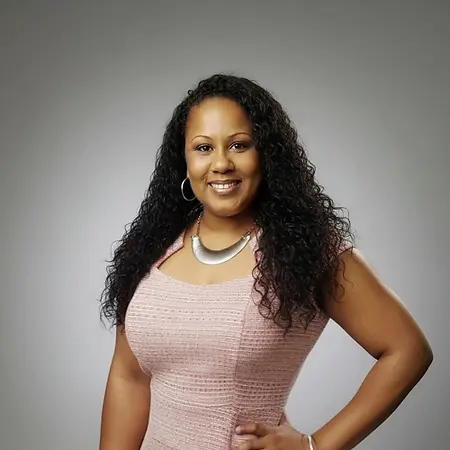
Her Story
About Dr. Natalia R.
Dr. Natalia Rivera, DSW, LCSW, CADC, is an accomplished behavioral health leader with extensive experience supporting military personnel, Veterans, and diverse clinical populations. Currently serving as a Licensed Clinical Social Worker at the Army Family Advocacy Program (FAP), Dr. Rivera provides services that prevent and intervene in the lives of victims and offenders of child abuse/neglect, domestic violence, elder abuse, and sexual assault by providing clinical counseling, support groups, education (like anger management), and coordinating with Command/legal/medical teams, and Child Protective Services, focusing on victim safety, offender accountability, and promoting healthy family dynamics to break the cycle of abuse and strengthen Soldier readiness.
Her career reflects a commitment to evidence-based practices, such as Cognitive Processing Therapy (CPT), Cognitive Behavioral Therapy (CBT), Eye Movement Desensitization and Reprocessing therapy (EMDR), Dialectical Behavior Therapy (DBT), Motivational Interviewing, Applied Behavioral Analysis Therapy (ABA) and Forensic Child Interviewing, and holistic approaches, including Mindfulness, Aroma Therapy, Light Therapy, Art Therapy, and Biofeedback.
Before her current role, Dr. Rivera held the position of the Georgia State Behavioral Health Manager at Babylon Healthcare Services Limited, where she supervised programs that integrated innovative and technological behavioral health solutions, such as the use of Artificial Intelligence (AI) to enhance patient care and outcomes and increase access to behavioral health care in rural areas in GA and to low-income populations.
After retiring from the U.S. Army in 2018, Dr. Rivera served as Program Director for the Psychosocial Rehabilitation & Recovery Center (PRRC) at the Charlie Norwood VA Medical Center in Augusta, GA, where she led initiatives to provide education, skills development, and community integration for Veterans with Serious Mental Illness (SMI). She also served as the Local Recovery Coordinator (LRC) and was responsible for providing education and support to Veterans, family members, and VA staff members about mental illness and recovery. As the LRC, Dr. Rivera promoted activities that removed barriers and stigma that may be associated with mental illness and ensured that Veterans with SMI had access to the rehabilitation and recovery services needed to attain their goals. During her time at the VA, Dr. Rivera directed the VA SMI Re-Engage Program, working in partnership with the National Psychosis Registry. This program is designed to find and reconnect Veterans with SMI who have lost contact with the VA health system, aiming to reduce premature mortality and improve continuity of care by proactively reaching out to these Veterans and bringing them back into treatment. It often involves personalized care coordination and access to services like Intensive Community Mental Health Recovery Services (ICMHRS). This program is a key implementation strategy to ensure effective behavioral healthcare delivery for high-risk Veterans.
She also held positions as a Licensed Clinical Social Worker with Psych Consultants, where she became the behavioral health provider for the Youth Challenge Academy in Augusta, GA, providing behavioral health clearance for enrollment to the program for at risk teenagers and led a multidisciplinary team of clinicians to provide behavioral health interventions such as psychotherapy, psychiatric medication management, psychological testing, and court-related services, such as drug testing, and drug and alcohol treatment. While employed at Psych Consultants and using her adept knowledge of the regulations for the Department of Defense, Dr. Rivera forged and established a Memorandum of Understanding with the military treatment facility in Fort Gordon to provide behavioral health services for active-duty service members and their dependents to increase access to care.
Dr. Rivera started her private practice called Mindcology Counseling Services in 2018 and uses the Betterhelp and SonderMind Platforms as an independent contractor, providing virtual evidence-based behavioral health services for diverse populations in the states of Georgia, California, North Carolina, South Carolina, New York, and Texas. She formed a partnership with the local U.S. Marine Recruiting Station and the Military Entrance Processing Station (MEPS), which is the joint-service facility where military recruits complete their enlistment process, and administers a comprehensive psychological assessment to recruits with a behavioral health history to determine psychological fitness and approve psychiatric clearance for military enlistment.
Dr. Rivera started her career in social work as a Military Social Work Officer in the U.S. Army, combining her professional passion with personal dedication to service and family stability. Before commissioning as an Army officer, Dr. Rivera enlisted in the U.S. Army at 38 years old as a combat medic for Field Artillery on Fort Bragg, NC, where she was assigned to a High Mobility Rocket System (HIMARS) and was Airborne qualified. During one of her deployments to Afghanistan, she was awarded the Army Combat Action Badge (CAB), which is a U.S. Army award recognizing soldiers of any Military Occupational Specialty who have personally engaged the enemy or been engaged by the enemy in combat.
Dr. Rivera earned her Doctorate in Clinical/Medical Social Work from Capella University, where she also completed a Post-Master’s Certificate in College Teaching. She has contributed to the field through scholarly publications on spiritually integrated cognitive processing therapy for PTSD and moral injury, particularly among military populations.
Beyond her professional achievements, she is actively involved with the National Association of Social Workers, the Veterans K9 Solutions Service Dog Training Program, and the Autism Society, creating innovative tools such as LEGO City as a tool in ABA therapy to support neurodiverse children, inspired by her own son, who is severely Autistic. Her career reflects a lifelong dedication to service, education, and advancing behavioral health care for vulnerable communities.
Her Interview
Ten minutes with Dr. Natalia R.
01What do you attribute your success to?
I attribute my success primarily to earning my doctorate, a milestone I pursued to make a meaningful impact on education and to advance my profession. Along the way, I was fortunate to have the guidance of two key mentors who shaped my journey: An Army Brigade Command Sergeant Major, Mr. Curtis Collins, who supported my military career, and Ms. Gail Bennett, LCSW, who introduced me to military social work and profoundly influenced my professional growth.
02What’s the best career advice you’ve ever received?
I was told to take control of my career because nobody cares about it as much as I should. Meaning, if I left my career in the hands of someone else, I would lose control of it. I was told once I figured out what I wanted, go for it. I now know that it was unlikely that my ideal career would have been served to me on a platter.
03What advice would you give to young women entering your industry?
I would advise young women entering my industry to remain dedicated and committed to hard work. The path can be challenging, but the rewards are meaningful, and the opportunities to make a significant impact are truly worth the effort.
04What are the biggest challenges or opportunities in your field right now?
The biggest challenges in social work currently revolve around massive workforce shortages, burnout, insufficient funding, and the escalating complexity of client needs (like mental health crises, poverty, and trauma), exacerbated by systemic racism and global events like COVID-19 recovery. Key opportunities lie in leveraging technology (telehealth and AI), addressing major social issues (climate justice, inequality, decarceration), and finding innovative solutions for service delivery and workforce retention.
05What values are most important to you in your work and personal life?
The values that are most important to me in both my work and personal life are compassion, resilience, and balance. In my role with the Family Advocacy Program, I work closely with military families on sensitive issues, which can sometimes be career-limiting but incredibly meaningful. I prioritize avoiding burnout by practicing self-care through activities like creating Velvet Art and volunteering at the Veterans’ K9 Solutions Service Dog Training Program, which helps me manage stress and stay grounded. I deeply value the flexibility that social work offers compared to clinical counseling, allowing me to engage in meaningful volunteer work, such as supporting K1-12 behavioral intervention plans, contributing to IEPs, and participating in breast cancer awareness initiatives. For me, making a difference in the lives of others while maintaining personal well-being is central to everything I do.
Join Influential Women and start making an impact. Register now.