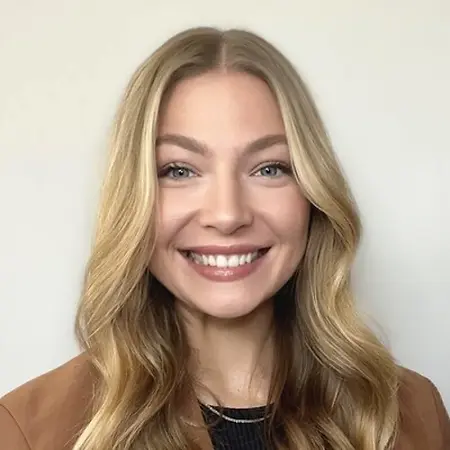
Her Story
About Natalie
My journey in healthcare began in 2017 when I started working as a personal trainer and PT tech, and I officially became a doctor of physical therapy in 2022. My career has taken me through incredibly diverse settings. I started in classic outpatient orthopedic care in Chicago, then moved to Manhattan where I did home health house calls and formed such deep connections with my patients that one woman even put me in her will to get her cat if she died. I still keep in touch with so many of my New York patients. I also worked in a fully remote telehealth position coaching powerbatics to clients all over the world, from Germany to Hawaii to the Bahamas, combining my personal training background with my PT knowledge to help people achieve skills like muscle-ups, backflips, and handstands. For the past two and a half years, I've been with Fox Rehab, and last August I stepped into the lead clinician role where I oversee the function and productivity of my team in a senior living community. I specialize in vertigo and lymphedema care for the geriatric population, which I absolutely love. I treat about 7 patients daily, working on balance and strengthening, making sure no one leaves without at least a little bit of sweat. But honestly, the biggest thing is we have a lot of fun. My practice is built on seeing patients as people, not just conditions, staying empathetic, and having the confidence to work independently and figure things out on my own.
Her Interview
Ten minutes with Natalie
01What do you attribute your success to?
I would attribute my success to my grandpa, Peter. When I was in late high school and early college, deciding I wanted to be a physical therapist, my grandpa was dying from cancer. I remember working with him and taking him for walks, even though I had no professional background at that time. He really taught me how to slow down with him, to walk at his speed, help him up, and help him get comfortable. Seeing how rapid the decline can be and how sensitive things truly are really reframed how I saw the elderly population and grew my empathetic side a lot more. I always keep him in mind when I'm treating patients who are having a hard day, or they're having more pain than usual, or they're on a rapid decline. It has really taught me to slow down. When I first thought about being a physical therapist, it was after I had a sports injury, and I wanted to help other athletes get back into their sport. But once he got sick, I actually rerouted and decided I wanted to work with the elderly. I gotta give my success to him.
02What’s the best career advice you’ve ever received?
The best career advice I received was from one of my clinical instructors who really helped develop my style of physical therapy. He reshaped the way that I dose exercise, because I think underdosing is a really big problem in the physical therapy realm. He taught me to not be afraid of pushing the older population to a point of fatigue and exertion and sweat. He really helped teach me that the level you work them at is going to be what makes the changes. By not underdosing, by not being scared of heavy exercise for the older population, I've learned to not be fearful of pushing the elderly hard when it comes to exercise, because it really does benefit their bone density, their endurance, their cardiovascular health, their heart, and their swelling. Obviously taking vitals into account and being safe with it, but not being scared of prescribing an appropriate amount just because it's tiring or just because they're old.
03What advice would you give to young women entering your industry?
I would say trust yourself. You've done the schooling, so treat the patient in front of you and don't stress so much about what you should be doing. Never go in with too much of a plan when you see a patient, just treat what they're showing you. If a patient's coming in and you thought you were seeing them for one thing and they're presenting completely different, trust that you know what you're doing. Don't go in too structured, always be adaptable. The book might say one thing, but your experience will guide you in another direction, so don't stress about a certain condition, always treat the person how they're presenting. One thing that I'm trying to teach my student currently, when she asks what should I focus on, I'm like, well, what hurts today? What are they doing? Let the patient in front of you guide you, and not the outside noise.
04What are the biggest challenges or opportunities in your field right now?
The biggest challenge in my field is the pressure to work at high volumes in classic outpatient orthopedic settings. Seeing 3 patients at once feels borderline unethical. There is no way you can give all of your attention to 3 patients at once, and it just felt a little bit like it was more about the money you're producing to the clinic than it was about the patient care. That's really what transitioned me into working in home health or outpatient home health setting, because I got to focus in on that one-on-one care, and it felt like it was about the physical therapy again. I think it's easy in an outpatient orthopedic clinic to kind of forget why you went into it, because you get all this pressure to bill at high volume and see multiple patients at once, and it just feels like it's less about the care and more about the business model. As far as opportunities, I have a lot more interest in the operations side than I thought I initially would. I love managing a team, I love boosting morale, and I love teaching. Right now I have my first PT student, and I think eventually I'll want to do a little bit more teaching in my career, so either being an adjunct part-time professor or a mentor of some sort. I want to continue growing in my mentoring and teaching, ideally working up within my own company and hopefully finding some sort of position working at a university in a PT program in the future as well.
05What values are most important to you in your work and personal life?
I think physical therapy can be such a sensitive place. No one's favorite person to see, right? But by the end of it, I think developing a connection and seeing them as more than just a patient, but a person. These people now feel like friends to me. I care about who they are, what they care about, and their goals are my goals. I treat not just the patient or the condition, but the person in front of me, because every person comes with their own goals, their own experiences, their own setbacks, their own mentalities. I take the time to not see them as a condition, but also see what might be affecting their progress mentally and emotionally. I take my empathy to the next level. If they are snapping at me, I understand that this is a difficult place for them to be, and I meet them where they are emotionally. That has always connected us deeper and made the physical therapy more optimized as well. Being empathetic to people and having understanding for where they are and not taking things personally has always made me have a better relationship with my patients. The more that I see them for their experiences, what they're going through, staying empathetic and staying listening, it's always just set us up for better therapy sessions. It's okay to stay soft, you know. You can be kind but also be assertive. You can be concerned without being aggressive. Staying soft while the world keeps getting more cruel.
Join Influential Women and start making an impact. Register now.