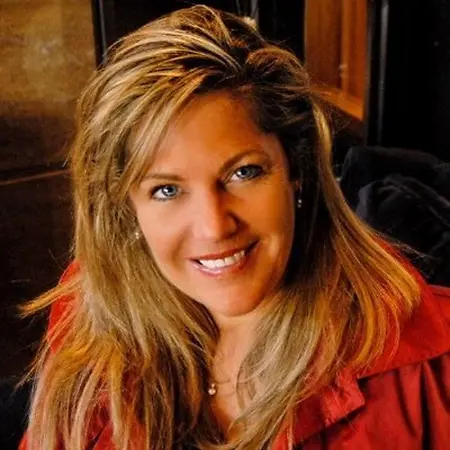
Her Story
About Natalie
Dr. Natalie Hofland, EdD, is a seasoned educator and Special Education Advocate with over 38 years of experience spanning general education, special education, and educational administration. Inspired by her mother, who devoted her life to serving children in underserved communities, Dr. Hofland developed a lifelong commitment to ensuring students’ rights and needs are met. She began her career teaching both general and special education, gaining hands-on experience in classrooms while developing expertise in instructional strategies, early literacy, and English Language Development.
Throughout her career, Dr. Hofland transitioned into leadership and special education law, serving as a Litigation Coordinator for the Los Angeles Unified School District. In this role, she managed mediations, due process resolutions, and compliance initiatives, helping resolve disputes while prioritizing student outcomes. She co-founded the New Open World (NOW) Academy, a pilot K-12 school focused on inclusion, social justice, and college readiness, where she designed the full inclusion program. Dr. Hofland also earned her Doctorate in Educational Leadership, Administration, and Policy from Pepperdine University and holds national board certification and a Tier II Specialist Credential in Special Education.
Today, Dr. Hofland leverages her extensive experience as a Special Education Advocate, working directly with parents to navigate the IEP process, understand educational interventions, and secure essential services for students. Her unique perspective, having worked on both the district and family advocacy sides, allows her to guide families toward solutions that are both effective and collaborative. Beyond her professional work, she is passionate about outdoor adventure, including skiing, sailing, and surfing, and values family, integrity, and compassion as guiding principles in all aspects of her life.
Her Interview
Ten minutes with Natalie
01What do you attribute your success to?
I attribute my success to my parents, especially my mother. They instilled in me the belief that we could be anything we wanted to be, and that life itself, and the act of learning, could be a source of joy. My parents gave everything to us when we were kids, and my mother, in particular, nurtured a deep sense of joy and wonder. She was hilarious and made life fun. My dad taught us how to ski when I was young, and they found creative ways to give us experiences - like when I won the first season pass by finding a Golden Easter egg, and then my father, who was an architect, would make us costumes for the Mardi Gras so we'd win every year and get season passes. We had to force my mother into retirement at 73 because she just loved teaching so much. No matter what happened - I've had so many skiing accidents - my parents were always there for me. My family, including my brother and sister, have been incredibly supportive. That foundation shaped who I am and how I approach everything I do.
02What’s the best career advice you’ve ever received?
If you’re going into a challenging field, make sure you take care of yourself and have interests outside of work. Life cannot revolve solely around your career; having things that bring you joy and fulfillment outside your profession is essential to sustain long-term success and well-being.
03What advice would you give to young women entering your industry?
Go with what's true to your heart, and make sure to have interests and friendships outside of your career. I tell every young teacher I mentor this - and this applies to whatever career path you choose - make sure you have friends outside of your career path. Your life can't revolve solely around work. Having things that bring you joy outside of your job isn't just about living a well-rounded life, it's essential for your well-being. When you have really tough jobs - like teaching in inner-city schools, working with kids who have been through trauma, social work, or working in dangerous neighborhoods or war-torn areas - you have to take care of yourself. You have to have things for yourself that make you happy so you can decompress. It's like the old saying about when you go on an airplane: make sure you put the oxygen mask on yourself first before you put it on others. I learned this as a lifeguard when I was younger - if you're going to go into a piling, you put the person you're saving in front of you, because if you're dead, you can't save the other person. So make sure you take care of yourself, do things to take care of yourself, and find what you love to do. That's what keeps me happy all the time - I go and ski, I spend time with people I love, and it makes me happy.
04What are the biggest challenges or opportunities in your field right now?
My biggest challenge right now is learning how other school districts work, because I'm used to working with LA Unified, which is the largest district. Each district operates differently, and I'm still learning. Another major challenge is the lack of federal funding - the federal government has never fully funded special education, so districts have to pull from the general education budget to cover it. I think the biggest challenge overall is the current political atmosphere towards public education. The government right now seems to be defunding it and getting rid of the Department of Education, which is very scary for parents of children with special needs because that's where the main funding comes from. The political climate and the way people feel about public education is deeply concerning. Unfortunately, our current leader makes comments about people with special needs that are very upsetting. It's challenging because I've worked on both sides - I understand that districts are also fiscally challenged. It's a fine line to walk. I don't like it when people ask for too much, but right now, luckily, I don't have any families that are greedy - they all just want what's best for their kids.
05What values are most important to you in your work and personal life?
Family is my foundation - family values are most important to me. I believe in doing unto others as you would want done to you. It's not about what a person says, it's what they do. I'm really big on being true to your word, integrity, and compassion. You never know what another person is going through. Because I've worked in special education and general education, I understand that behavior is a form of communication. When someone's acting out, there's something behind that - it's not necessarily about you, it's about something going on with them. Bullies are often kids who have things happening at home that aren't great. You always have to look at the whole picture and not take things personally. I try to look at what's going on and get to the bottom of why something is happening. Listening is crucial - really trying to listen, even though I like to talk. Being true to your word is something I learned from both of my parents. My mother was always bringing kids home from school - she worked in a poverty neighborhood in Michigan, a low socioeconomic school district - and she was constantly bringing kids home. Caring about your fellow human beings is essential.
Join Influential Women and start making an impact. Register now.