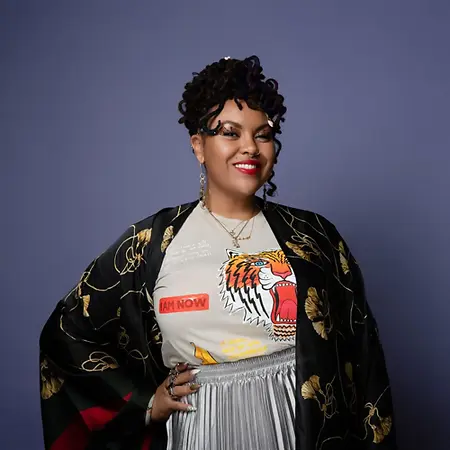
Influential Woman · Consulting
Natalie Poindexter, MPH, CHES
Founder and Principal Consultant, NPI Consulting House
Austin, TX 78741
Her Story
About Natalie
I’m Natalie Poindexter, MPH, CHES, a funding systems architect, public health leader, and founder who helps mission-driven organizations build the strategy and infrastructure to secure resources without losing themselves in the process.
I began my career in emergency and ICU care, where I watched inequity show up as policy, access, and outcomes, in real time, on real bodies. That experience shaped how I lead today: I build systems that make it easier for communities and the organizations that serve them to get what they need to thrive.
Through NPI Consulting House, I’ve helped clients secure over $20M in grants and non-dilutive funding, including a recent $4M award supporting youth STEM and community-based public health programming. I created Scaffina to close the access gap, a grant readiness and technical assistance platform that helps organizations gain clarity, confidence, and structure as they pursue funding. I also founded Net-Do Community, a global network of 500+ professionals and disruptors rooted in collaboration, wellbeing, and community impact.
My work has been recognized on stages including SXSW, I was named Miro’s 2025 Creator of the Year, and I serve as Chair of the Austin-Travis County Public Health Commission, where I advocate for policies centered on equity and community voice. At my core, I’m a builder and a connector. I help people turn their purpose into plans, and their plans into funding, sustainability, and momentum.
Her Interview
Ten minutes with Natalie
01What do you attribute your success to?
I attribute my success to three things:
(1) I’ve learned how to turn lived experience into leadership, especially as a woman of color navigating systems that weren’t built with us in mind.
(2) I’m disciplined about structure: I can take chaos, complexity, and urgency and turn it into a plan people can execute.
(3) I invest in relationships, not performative networking, but real connection. Funding moves through trust, clarity, and consistency… and I’m committed to all three.
02What’s the best career advice you’ve ever received?
The best advice I ever got was: don’t confuse being helpful with being responsible for everything. That changed how I price, how I partner, and how I lead. Especially for high-performing women (and especially Black women), it’s easy to get rewarded for over-functioning. I learned to set boundaries, define scope, and let my work speak, without bleeding myself dry to prove I’m worthy of the room.
03What advice would you give to young women entering your industry?
First: don’t wait to feel “ready”, get in motion and refine as you go. Second: build your skill stack and your support stack (mentors, peers, collaborators). Third: don’t shrink your pricing or your standards to make other people comfortable. And lastly: document everything! Your outcomes, your impact, your wins. The world will forget unless you keep receipts. (And yes, I mean that lovingly.)
04What are the biggest challenges or opportunities in your field right now?
A major challenge right now is capacity: organizations are expected to do more with less, while grant and compliance expectations keep getting heavier. There’s also a real access gap, not everyone has the inside track, the perfect language, or the staff time to compete. The opportunity is huge, though: with better systems, smarter workflows, and ethical tech, we can reduce the administrative burden and help more organizations pursue funding in a way that’s sustainable. That’s the lane I’m building in, not just “write better grants,” but “build better funding infrastructure.”
05What values are most important to you in your work and personal life?
Integrity is non-negotiable for me, I don’t sell dreams, I build plans. Equity matters because access shouldn’t be reserved for the resourced and the connected. And freedom is a personal value: I want a life where my work serves my purpose, not my exhaustion. I also value community and accountability. I’m big on relationships that are real, reciprocal, and rooted in growth (not performance).
Join Influential Women and start making an impact. Register now.